
In an era where cinematic production is often defined by sprawling crews, massive lighting rigs, and logistical complexity, director Gareth Edwards—the visionary behind The Creator, Rogue One: A Star Wars Story, and the upcoming Jurassic World: Rebirth—has championed a different path. Sony’s latest offering, the Cinema Line FX5, is the culmination of that philosophy. A compact, full-frame powerhouse, the FX5 promises to bridge the gap between "run-and-gun" agility and the high-end, 16-bit RAW image quality previously reserved for heavy-duty studio cameras.
Main Facts: A New Benchmark for Compact Cinema
The Sony FX5 arrives as a transformative tool for the independent filmmaker. Built around a newly developed full-frame, stacked Exmor RS CMOS sensor and powered by the BIONZ XR2 engine with dedicated AI processing, the camera represents a generational leap in performance.
Key technical specifications include:
- Resolution and Speed: Internal recording up to 5K at 60 fps, 4K at 120 fps, and Full HD at 240 fps.
- Open Gate Acquisition: The first FX-series camera to offer 3:2 full-sensor Open Gate recording, providing unprecedented flexibility for reframing and anamorphic production.
- 16-bit X-OCN Internally: For the first time, Sony has integrated its high-end 16-bit scene-linear X-OCN format directly into a compact body, with new, data-efficient variants (C1 and C2) that streamline RAW workflows.
- Dynamic Range and ISO: Boasting over 15 stops of dynamic range, the camera features a three-tier Base ISO system (800, 4000, and 12,800), allowing for exceptional low-light performance that effectively eliminates the need for aggressive noise reduction in post-production.
- AI-Driven Autofocus: The integration of human pose estimation—tracking eyes, heads, and bodies even in near-darkness—ensures that the focus remains locked during the most frantic, unpredictable shooting scenarios.
Chronology: A Global Field Test
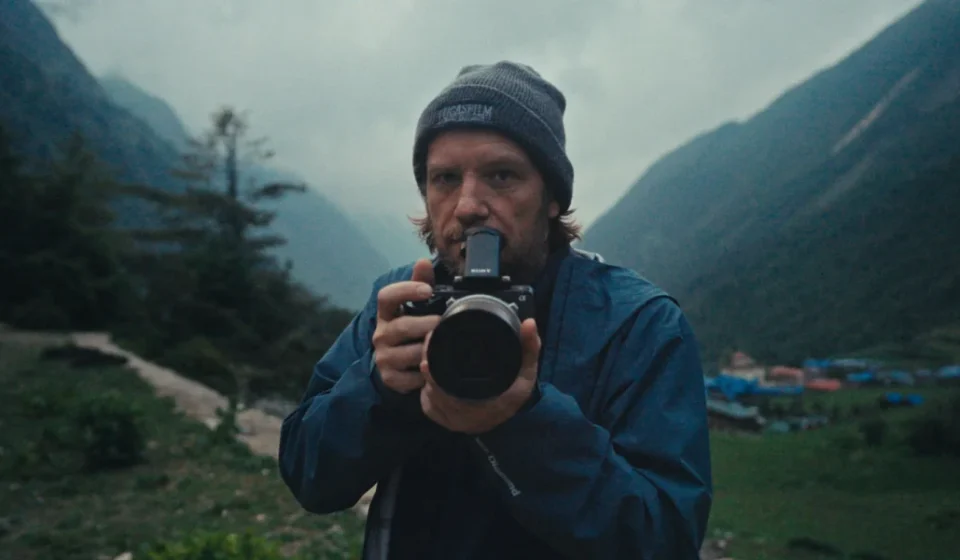
To put the FX5 to the ultimate test, Sony partnered with Gareth Edwards for a global field documentary. Edwards, who famously scouted over 80 locations across Southeast Asia for The Creator using the FX3, sought to see if the FX5 could push the boundaries of "guerrilla filmmaking" even further.
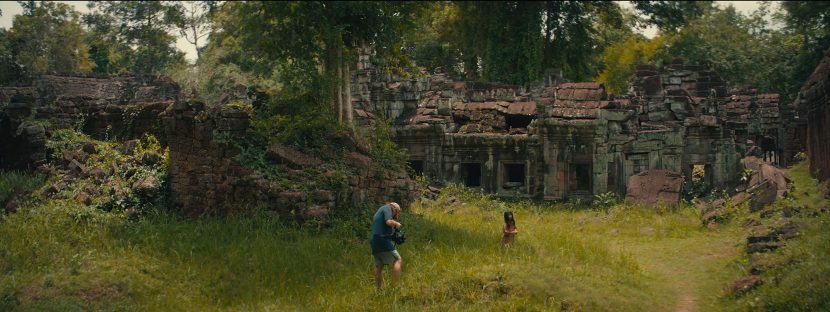
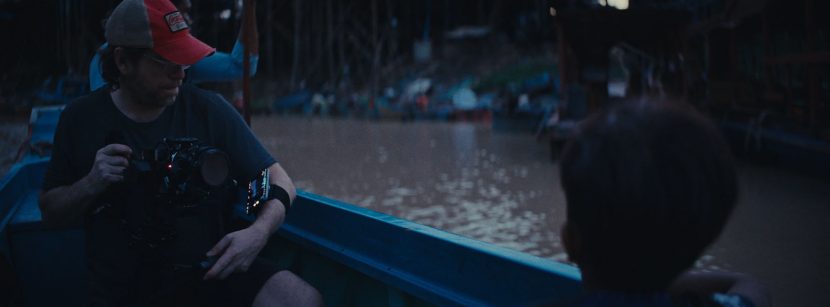
The production took place over one week, navigating the extreme environmental shifts of Cambodia, Thailand, and Nepal. The team encountered temperatures ranging from 35°C to -5°C, filming in everything from bustling urban centers to remote, quiet Himalayan monasteries.
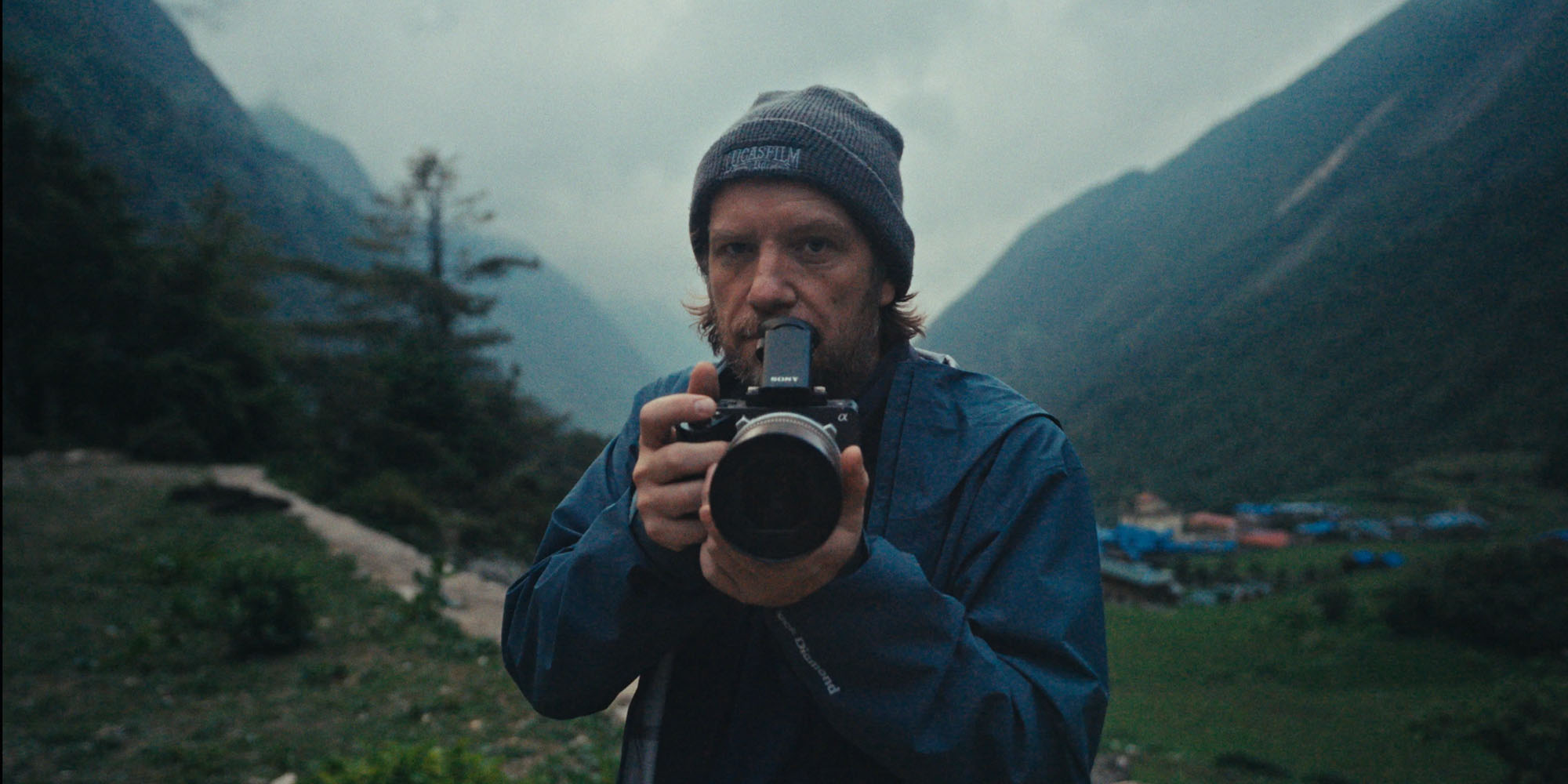
The logistical footprint was remarkably lean. The entire production—camera, accessories, and a compact dolly/slider—was packed into just three bags. By eliminating external recorders, heavy power rigs, and complex monitoring setups, Edwards and his team were able to maintain a level of mobility that is virtually impossible with traditional cinema equipment.
Supporting Data: The Tech Behind the "Invisible" Crew
The success of the FX5 in Edwards’ hands is rooted in its design, which prioritizes "invisibility" and efficiency.
The iPhone as a Command Center
Perhaps the most striking innovation showcased by Edwards is the use of the iPhone as a wireless viewfinder. By utilizing the Sony Monitor & Control 3.0 application, Edwards bypassed the need for traditional external field monitors and video transmitters. Because the camera supports internal X-OCN recording, he didn’t need an external RAW recorder, further shrinking the rig.
"The iPhone is so bright and the battery is so good, it’s better than any five-inch field monitor you could get," Edwards explains. The use of MagSafe magnets allowed him to swap the monitor between the gimbal, his wrist, and the camera body itself, ensuring that he could check framing from any angle without needing a specialized assistant to adjust gear.
Tri-Base ISO and Variable ND
The inclusion of three Base ISOs (800, 4000, 12,800) redefined how Edwards managed lighting. By staying at ISO 4000 for the bulk of his daylight shooting, he could rely on a single variable ND filter to manage exposure transitions between bright exteriors and dim interiors. As the sun set, the jump to ISO 12,800 allowed him to capture "magic hour" footage with a level of clarity that, according to the director, makes it difficult to return to cameras with lower sensitivity.
Official Responses: Insights from the Creator
During his debriefing with the production team, Gareth Edwards emphasized that the primary benefit of the FX5 is psychological, not just technical.
"I really don’t want to look like I’m making a movie," Edwards noted. "I want to look like I’m just passing through." This approach allowed him to gain access to sacred spaces—such as a Buddhist ceremony in a Himalayan monastery—that would have been strictly off-limits to a standard, intrusive film crew. By looking like a tourist, Edwards captured authentic human behavior, documenting moments that would have been lost had the "production" become the center of attention.
Sony’s design team, in turn, focused on the "BIG6" operability home screen, which consolidates essential settings like frame rates, LUTs, and exposure into a singular, intuitive interface. This alignment with the workflows of larger CineAlta cameras ensures that an operator can move from an FX5 to a larger Sony cinema system without a steep learning curve.
Implications: A Shift in Industry Standards
The release of the FX5 marks a potential inflection point for the film industry. For decades, the "cinema" look has been inextricably linked to the "cinema" rig—heavy, complex, and expensive to manage. The FX5 challenges this, suggesting that the democratization of image quality doesn’t have to come at the expense of a massive, heavy, or expensive infrastructure.
The Power of Data
Edwards’ shift in perspective regarding "RAW data" is significant. Initially a director who favored rigid control, the flexibility of 5K X-OCN files changed his workflow. "My exposures didn’t need to be that great," he admitted. "You can be quite out and, in post, slide it back to what you want." This capability to recover shadow detail and preserve skin tones without destructive color grading opens doors for independent filmmakers who lack the massive post-production budgets of major studios.
The Future of the Ecosystem
Sony has already laid out a roadmap for the FX5, with a major version 2.0 firmware update slated for August 2027. This update is expected to unlock 240 fps in X-OCN, a dedicated vertical-shooting interface, and XAVC S-I support for Open Gate recording.
By committing to long-term software support, Sony is positioning the FX5 not just as a camera, but as a platform that will grow with the user.
Conclusion: The TARDIS Effect
Perhaps the most poignant observation made by Edwards regarding the FX5 is its deceptive scale. As he stood in the field, knowing his footage was destined for a global theatrical release, he reflected on the weight of the moment: "I am carrying millions of people right now. In this shot, I’m holding them."
To feel that magnitude of responsibility while holding a device that, in his words, "has no weight to it," is the essence of the FX5. It acts like a TARDIS—small on the outside, but housing a vast, cinematic universe within. For the filmmaker who values mobility, spontaneity, and the pursuit of the "magical happy accident," the Sony FX5 is not just a tool; it is a fundamental re-imagining of what a professional cinema camera can be.
As the industry moves toward faster, smaller, and more efficient production cycles, the FX5 stands as a testament to the fact that when you remove the barriers of hardware, you allow the art to breathe. It is, as Edwards concludes, the run-and-gun camera to beat.