Beyond the Veil: How Star Trek: Strange New Worlds Uses Arthur C. Clarke to Bridge Science and Fantasy

In the expansive tapestry of the Star Trek universe, the line between scientific discovery and the supernatural has often been thin, yet rarely has it been addressed with such meta-textual flair as in the recent Star Trek: Strange New Worlds episode, "Once La’an a Time." By invoking the legendary words of science fiction titan Arthur C. Clarke, the series not only deepened its own lore but offered a masterclass in how serialized television can pay homage to the foundations of the genre.
The Core Phenomenon: "Once La’an a Time"
"Once La’an a Time" serves as a spiritual successor to the Season 1 fan-favorite, "The Elysian Kingdom." In that original outing, the crew of the USS Enterprise found themselves trapped within a psychic manifestation of a child’s fairy-tale book, brought to life by a mysterious consciousness residing within a nebula. The episode delighted audiences by forcing the stoic crew members into whimsical, Ren Faire-inspired archetypes—knights, wizards, and royalty.
The latest episode reveals that the "Elysian Kingdom" was not merely a fleeting psychological event, but a literalized, miniature earthen disk drifting through the cosmos, maintaining its fantasy inhabitants in a state of suspended animation. At the center of this narrative is La’an Noonien-Singh (Christina Chong). As she confronts a doppelgänger—a refined, delicate princess who lacks the hardened edge of the security chief—the show pivots from simple adventure to an exploration of identity. However, it is the crew’s initial encounter with the "magic" of this pocket dimension that sparks one of the most intellectually satisfying moments in the show’s history.
Chronology of a Classic: Clarke’s Three Laws
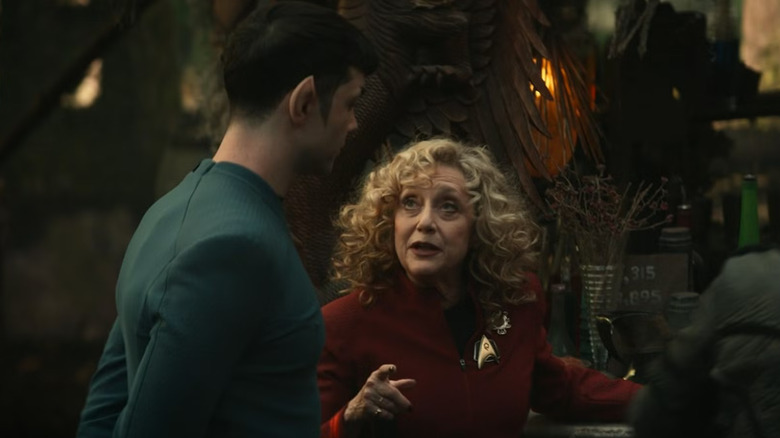
When Captain Christopher Pike (Anson Mount) and his science officer, Spock (Ethan Peck), arrive on the planet, they are confronted with phenomena that defy standard Starfleet sensors. Sorceresses conjure elements, and wizards defy the laws of thermodynamics. When Pike notes the impossibility of what they are witnessing, Spock interjects with the seminal observation: "Any sufficiently advanced technology is indistinguishable from magic."
This famous adage originates from Arthur C. Clarke’s 1962 collection of essays, Profiles of the Future: An Enquiry into the Limits of the Possible. To understand the weight of this reference, one must look at the "Three Laws" Clarke established to guide speculative thought:
- The Law of Perspective: "When a distinguished but elderly scientist states that something is possible, he is almost certainly right. When he states that something is impossible, he is very probably wrong."
- The Law of Exploration: "The only way of discovering the limits of the possible is to venture a little way past them into the impossible."
- The Law of Technology: "Any sufficiently advanced technology is indistinguishable from magic."
By having Spock cite the third law, Strange New Worlds reinforces the Star Trek ethos: there is no such thing as "supernatural"—only science that has yet to be decoded.
The Pelia Connection: A 5,000-Year-Old Consultant
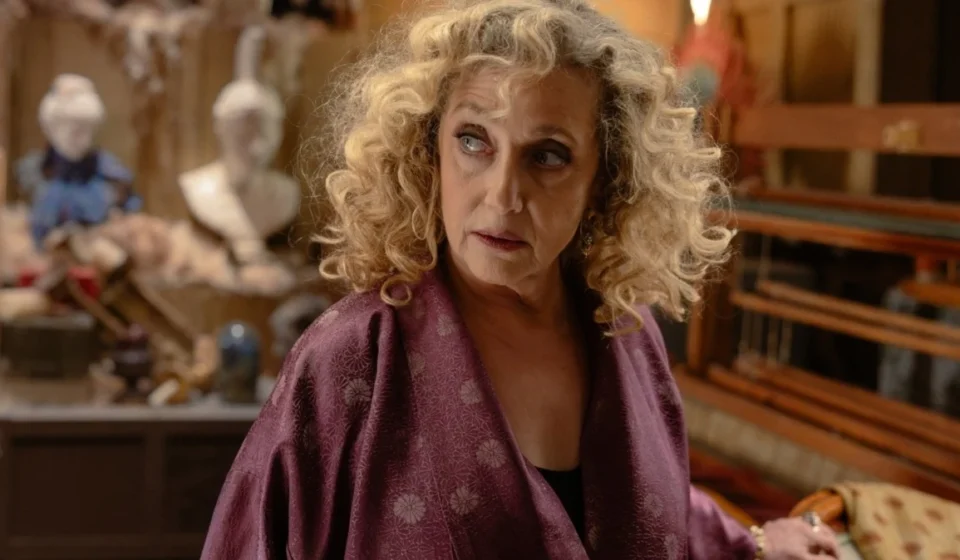
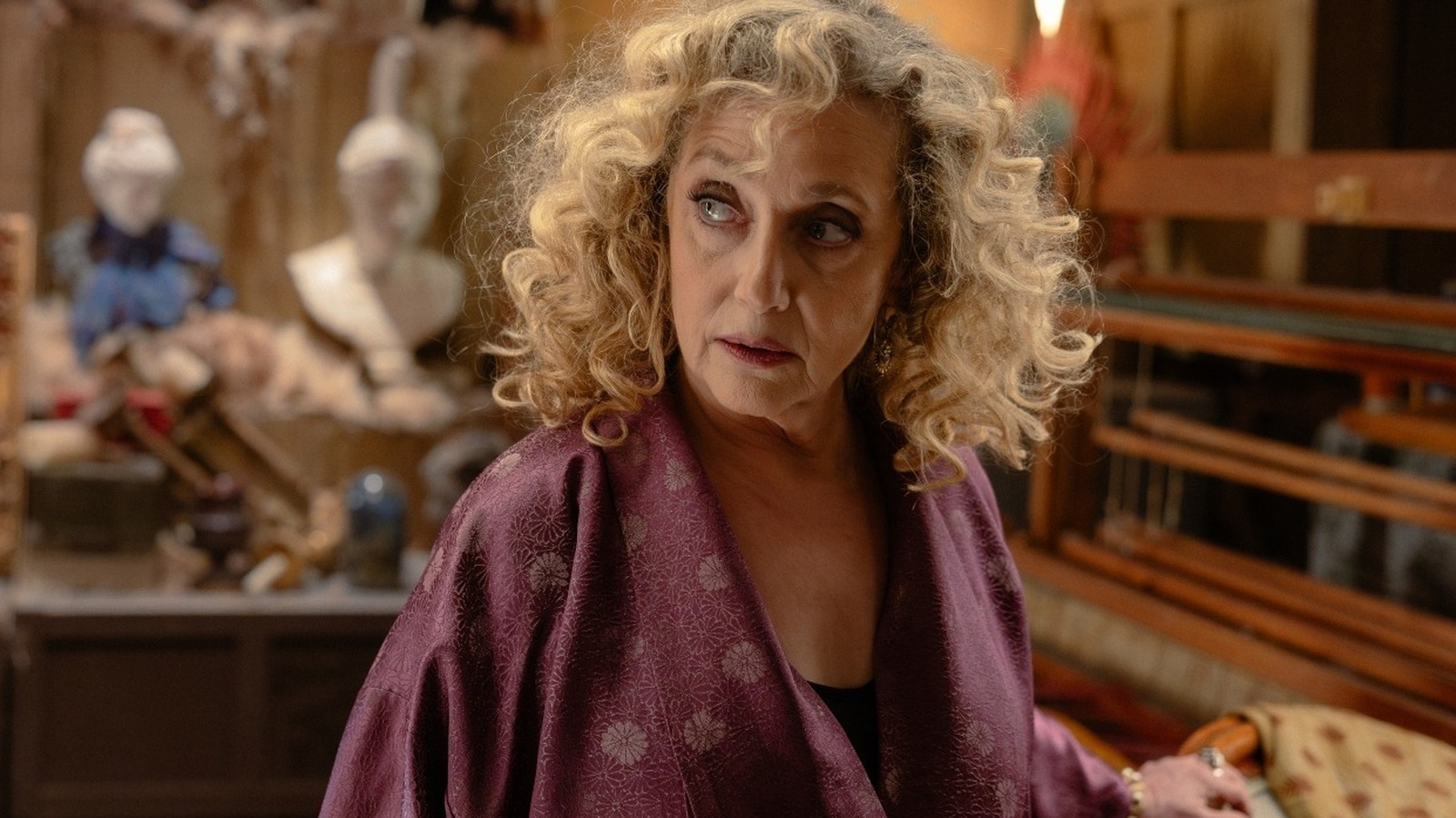
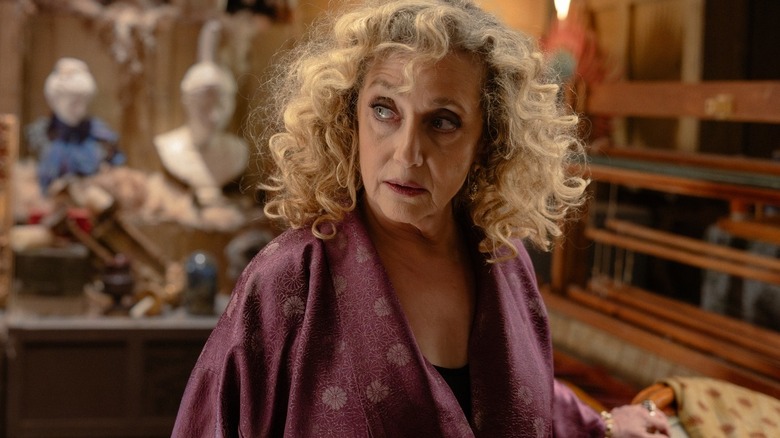
The episode’s most charming beat involves Commander Pelia (Carol Kane), the Enterprise’s Chief Engineer. Pelia, who belongs to a long-lived species known as the Lanthanites, has been established as a character who has lived through millennia of human history. When the Clarke quote is mentioned, Pelia casually interjects that she knew the author personally and even served as an uncredited consultant on the 1968 masterpiece 2001: A Space Odyssey.
This revelation serves as a quintessential Strange New Worlds moment, blending deep-cut pop culture trivia with the show’s established history. Pelia’s claim is not just a joke; it is a testament to her character’s longevity. Throughout the series, she has been linked to historical figures ranging from Pythagoras to Cary Grant, and she has even claimed a past tenure as a roadie for the Grateful Dead. This latest nod to the collaboration between Clarke and director Stanley Kubrick adds a layer of "secret history" to the Star Trek timeline, suggesting that the most iconic moments in human science fiction were, in fact, informed by a Lanthanite’s direct experience.
Supporting Data: The Science of the "2001" Collaboration
To understand the humor in Pelia’s claim, one must look at the real-world creation of 2001: A Space Odyssey. Arthur C. Clarke and Stanley Kubrick co-wrote the screenplay while simultaneously developing the novel. The project was unique because the novel was not a standard "novelization," but rather a fully realized narrative written concurrently with the film’s production.
Pelia’s "consultation" provides a humorous answer to how the film achieved such startling scientific accuracy. While 1960s Earth was on the cusp of the Space Age, the film’s depiction of orbital mechanics, artificial gravity, and artificial intelligence remains the gold standard of hard sci-fi. By suggesting that an alien being provided the technical blueprints for the film, the show offers a clever, in-universe explanation for the "realism" that fascinated audiences for decades.
Implications for Future Storytelling
The utilization of Arthur C. Clarke’s laws serves a larger purpose than mere fan service. It establishes the philosophical framework for the rest of the season. By framing the "magic" of the Elysian Kingdom as "advanced technology," the writers are signaling to the audience that no mystery is beyond the grasp of the Enterprise crew.
Furthermore, this approach allows Strange New Worlds to continue its tradition of genre-blending. Star Trek has historically struggled when it veers too far into the occult (such as in the original series episode "Catspaw"). By utilizing Clarke’s framework, the show can explore "magical" aesthetics—wizards, curses, and mythical creatures—without violating the core principles of a universe built on physics and exploration. It provides a logical bridge that allows the writers to tell high-fantasy stories within a science-fiction container.
Official Responses and Fan Reception
The inclusion of such specific literary references has been met with widespread acclaim from both the Star Trek fandom and the broader science-fiction community. Critics have pointed out that the show’s willingness to lean into the "meta" aspects of the genre is what separates it from other iterations of the franchise. By acknowledging the influence of real-world authors like Clarke, the show creates a sense of continuity between the "real" world and the "Trek" world.
While Paramount+ has not released specific viewer metrics regarding this specific scene, social media engagement suggests that the "Pelia/Clarke" connection has become one of the most discussed "easter eggs" of the season. It rewards long-time viewers who understand the significance of 2001: A Space Odyssey while providing enough context for new viewers to understand that Pelia is a character of immense, if often frustrating, wisdom.
Conclusion: The Infinite Frontier
As Strange New Worlds continues to push the boundaries of what a Star Trek show can be, its reliance on the foundational texts of the genre—like the works of Arthur C. Clarke—is a promising indicator of its longevity. The episode "Once La’an a Time" proves that the show is not just interested in repeating the tropes of the past, but in deconstructing them, laughing with them, and ultimately honoring them.
In a universe where humanity eventually meets the stars, it is fitting that the writers acknowledge the people who dreamed of those stars first. Whether Pelia actually sat in a room with Kubrick and Clarke is, of course, a mystery only a 5,000-year-old Lanthanite could verify. But for the audience, the implication remains: the dream of the future is a collaborative effort, spanning both fiction and the hard, cold facts of the cosmos. As we venture further into the fourth season, it is clear that Strange New Worlds will continue to treat the "impossible" not as a wall, but as a door waiting to be unlocked.