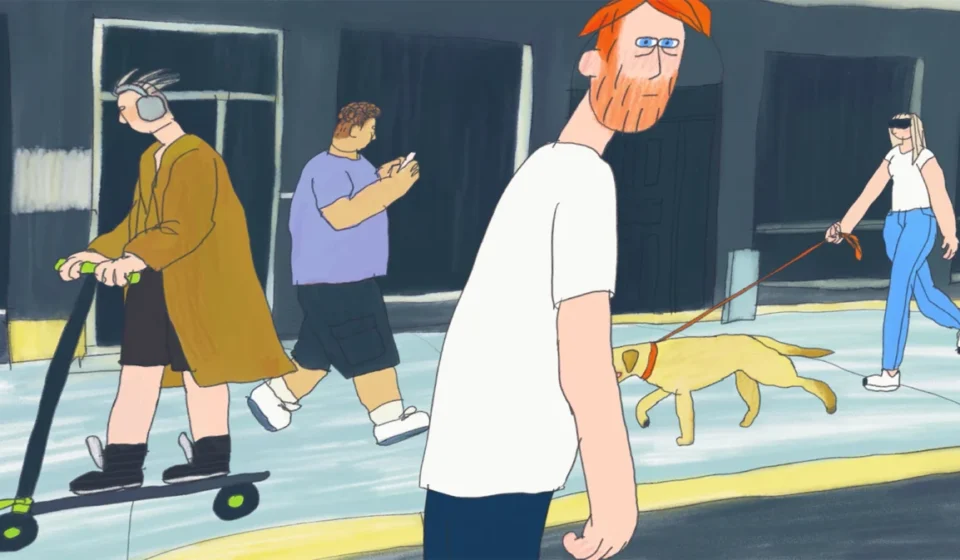

In an era defined by the relentless pursuit of productivity, where "multitasking" is often touted as the ultimate skill, Ukrainian animator Nata Metlukh offers a poignant, hand-drawn counter-narrative. Her latest project, Off-Time, is not merely a short film; it is a ten-minute meditative descent into the psyche of a man obsessed with efficiency. Released to widespread acclaim, the film captures the visceral, claustrophobic reality of modern burnout with such precision that it has become an instant landmark in the independent animation circuit.
The Core Narrative: A Data Engineer’s Descent
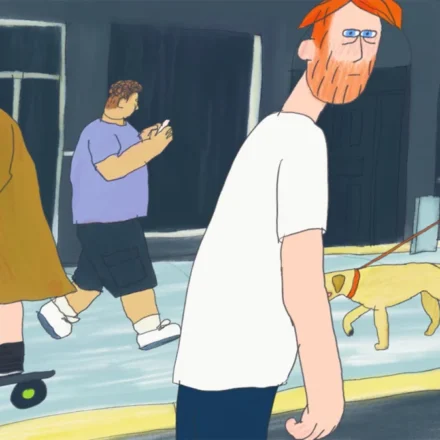
At the center of Off-Time is a data engineer whose life is governed by a singular, flawed philosophy: that time is a resource to be managed, compressed, and conquered. As he rushes through his morning routine, his apartment becomes a battlefield of half-finished tasks and charred breakfasts. Metlukh masterfully illustrates the irony of his existence—the more he attempts to control his environment through rigid scheduling and frantic multitasking, the more chaotic his reality becomes.
The brilliance of the film lies in its shift in perspective. The protagonist’s salvation arrives not through better time management, but through the literal and metaphorical "breaking apart" of time itself. When the rigid structures of his life fracture, he is finally permitted to experience the quiet, unhurried joy of existence. Metlukh’s animation style—meticulous, hand-drawn, and teeming with detail—serves as the perfect vehicle for this transformation, turning the mundane into something surreal and profoundly human.
A Chronology of Creation: From Hiroshima to Global Acclaim
The journey of Off-Time is as deliberate and layered as the frames within the film itself. Nata Metlukh, a California-based Ukrainian animator, began conceptualizing the project in the early 2020s.
- 2022 (The Foundation): The project gained significant momentum when Metlukh was selected for the prestigious Hiroshima Artist-in-Residence program. This residency provided the creative breathing room necessary to translate her complex sketches into a coherent narrative structure.
- 2023–2024 (The Labor of Love): The production process was an exhaustive, self-produced endeavor. Metlukh opted for a hand-drawn approach, ensuring that every frame—every stray movement of the protagonist, every flickering light in his apartment—was imbued with a tactile, human quality that digital animation often lacks.
- 2025 (The Festival Circuit): As the film reached completion, it began to make waves in the global animation community. It secured the Grand Prix at the Golden Kuker Animation Film Festival in Bulgaria and earned the Satoshi Kon Award for Excellence in Animation at the Fantasia International Film Festival.
- September 2026 (Public Debut): After a successful festival run, the film was released online, allowing a broader audience to engage with its critique of modern hustle culture.
Supporting Data: The Craft Behind the Chaos
To understand the gravity of Off-Time, one must look at the technical rigor involved in its production. Metlukh’s work is characterized by a "density of detail." In animation, such complexity is often avoided in favor of more streamlined digital assets, but Metlukh embraces the labor-intensive nature of traditional animation.

The film features original sound design and music composed by Maksym Andrukh. The score acts as a secondary character, mimicking the protagonist’s internal rhythm—starting with a frantic, staccato tempo that gradually dissolves into a more fluid, organic soundscape as the narrative progresses.
The behind-the-scenes footage provided by Metlukh highlights the "frame-by-frame" dedication required to achieve the film’s unique aesthetic. The shift in visual language—from the sharp, rigid lines of the engineer’s workspace to the soft, fluid, and often dreamlike imagery of his "off-time"—requires a mastery of timing that mirrors the very subject matter the film seeks to dismantle.
Official Responses and Critical Reception
Critics and peers alike have lauded Off-Time for its bravery in tackling the subject of "burnout culture." The consensus among animation experts, including the curators at Catsuka, is that Metlukh has created a definitive work of the decade.
"The film isn’t just about a man who can’t manage his time," says one industry observer. "It’s about the systemic failure of our current work-life paradigm. It feels like a mirror held up to every person who has ever felt their life slipping away while staring at a screen."
Metlukh herself has been vocal about the inspiration behind the work, noting that the project was born out of her own observations of the "hustle culture" prevalent in tech-heavy environments like California. Her official platform provides not only the film but also a transparent look at the production process, reinforcing the idea that high-quality, independent art requires institutional support (like the Hiroshima residency) combined with immense individual sacrifice.

Implications: Why "Off-Time" Resonates Now
The cultural impact of Off-Time extends beyond the aesthetic appeal of its hand-drawn frames. It serves as a diagnostic tool for the collective anxiety of the mid-2020s.
The Illusion of Control
The protagonist’s failure is rooted in the "illusion of control." In a digital age where data engineers, creatives, and even casual smartphone users are pushed to optimize every waking second, Metlukh’s film suggests that our obsession with "efficiency" is the primary barrier to genuine productivity. By prioritizing speed over presence, the protagonist loses the very thing he is trying to save: his life.
The Return to Human-Centric Art
In an era where AI-generated content is becoming increasingly prevalent, Off-Time stands as a defiant monument to human imperfection and artistry. The "hand-made" nature of the film is not just a stylistic choice; it is a political one. By choosing a method that requires hundreds of hours of manual labor, Metlukh is directly opposing the "quick and easy" ethos of the tech industry that her film critiques.
Burnout as a Global Phenomenon
The film’s success in international festivals—from Bulgaria to Canada—indicates that the feelings of exhaustion and temporal fragmentation are not localized to any single culture. Whether in a high-pressure office in Silicon Valley or a remote studio in Eastern Europe, the struggle to reconcile human nature with the mechanical demands of the 21st century is universal.
Conclusion: Watching the Unraveling
Off-Time is, at its heart, an invitation. It invites the viewer to stop the frantic scrolling, to put down the devices that promise to make us "faster," and to witness the beauty of a life that is allowed to unfold at its own pace.

As we look toward the future of animation, works like Nata Metlukh’s serve as a reminder that the most compelling stories are often those that explore our most quiet, internal struggles. By documenting the failure of a man who thought he could master time, Metlukh has succeeded in capturing a moment of profound clarity for the rest of us.
For those who have not yet experienced this masterwork, it is highly recommended to view the short film in its entirety. It is a rare piece of art that does not just entertain; it demands that you re-evaluate the way you spend your own precious, fleeting hours. As the protagonist eventually discovers, there is no greater liberation than allowing the clock to stop, even if only for a moment.
For those interested in exploring the process behind the work, the full behind-the-scenes documentary is available via Nata Metlukh’s official YouTube channel. To follow her ongoing projects, you can visit her official website at notofagus.com or connect with her on Instagram at @notofagus.