
By Editorial Staff | September 14, 2026
In the landscape of modern genre cinema, few sub-genres have captured the zeitgeist quite like body horror. Following the visceral success of recent hits like Coralie Fargeat’s The Substance, a new contender has emerged from the French independent circuit that promises to turn the trauma of the modern workplace into something truly grotesque. Titled Sanguine in its native France—and currently marketed as Mutation (or Species) in South Korea—director Marion Le Coroller’s latest feature is poised to become the definitive "burnout horror" film of the year.
The release of the film’s first Korean teaser trailer has ignited significant buzz among horror enthusiasts, offering a brief, disturbing glimpse into a world where extreme professional pressure manifests as physical degradation.
The Core Narrative: Stress Made Flesh
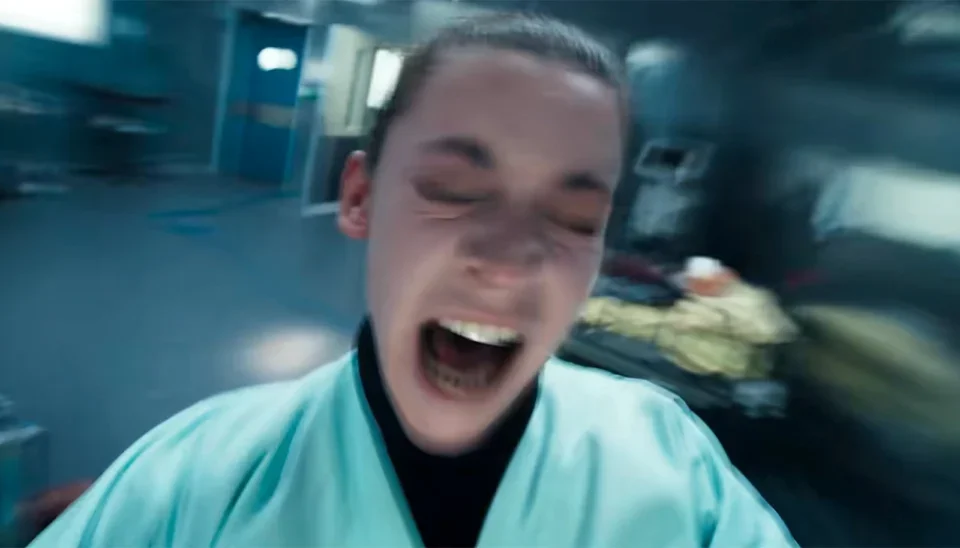
At the center of Mutation is Margot, played with haunting intensity by Mara Taquin. Margot is a young intern navigating the high-pressure, unforgiving environment of a top-tier hospital emergency room. As she struggles to maintain her composure amidst the crushing expectations of the medical field, she encounters a series of patients her own age presenting with medically inexplicable and deeply unsettling symptoms.
The premise functions as a dark mirror to the reality of the "Burnout Generation." As Margot attempts to solve the medical mystery behind these patients, she finds that she is not merely an observer; her own body begins to undergo radical, disturbing changes. The film serves as an allegory for the psychological and physiological toll of modern labor, asking a terrifying question: What happens when the human body, pushed beyond its breaking point by societal demands, simply decides to mutate?

Director Marion Le Coroller, previously known for her work on Built 2 Kill and several acclaimed shorts, has crafted a narrative that leans heavily into the claustrophobia of the hospital setting. The screenplay, co-written with Thomas Pujol, avoids the trappings of typical medical thrillers, opting instead for a surreal, visceral exploration of anxiety.
A Chronology of a Festival Sensation
The path to the screen for Mutation has been a journey through the world’s most prestigious genre festivals.
- May 2026: The film makes its world premiere at the Cannes Film Festival, screening in the highly selective Midnight section. This served as the project’s launchpad, garnering significant attention from international distributors.
- Summer 2026: Following the Cannes premiere, Mutation continued its festival run at London’s FrightFest and the prestigious Fantasy Filmfest, further solidifying its reputation as a "must-see" for horror purists.
- September 2026: The film arrives at the Bucheon International Fantastic Film Festival (BIFAN) in South Korea. The release of the official teaser trailer coincides with this screening, marking the beginning of the film’s commercial rollout in the Asian market.
- November 2026: Mutation is scheduled for a wide theatrical release in South Korea, marking its first major commercial debut.
While the film has garnered significant interest, its reception remains a subject of debate. Critics at Cannes were divided, with some praising its uncompromising vision and others questioning the pacing of its third act. However, the film has found a dedicated niche among fans of extreme cinema who are eager for a successor to the aesthetic and thematic intensity of The Substance.
Supporting Data and Production Context
The production of Mutation represents a significant investment in European independent horror. Produced by Carole Lambert, the film boasts a strong ensemble cast including Karin Viard, Kim Higelin, and Sami Outalbali, all of whom play pivotal roles in the escalating tension of the hospital ward.
Technical Specifications
- Director: Marion Le Coroller
- Screenplay: Marion Le Coroller, Thomas Pujol
- Producer: Carole Lambert
- Lead Cast: Mara Taquin, Karin Viard, Kim Higelin, Sami Outalbali
- Genre: Body Horror / Thriller
- Production Origin: France
The decision to market the film under different titles—Sanguine, Mutation, and Species—reflects the complex nature of international distribution for independent horror. Sanguine, which carries the ironic definition of having a "positive attitude," serves as a grimly humorous contrast to the film’s actual content, while Mutation and Species lean into the sci-fi/horror elements that attract the target demographic.

Official Responses and Critical Reception
The industry response to Mutation has been characterized by high anticipation. While critical reviews have been mixed, the consensus among genre analysts is that Le Coroller has tapped into a "sub-genre goldmine."
"The film is a bold attempt to visualize the invisible," notes one industry critic who attended the Cannes screening. "By taking the stress of the ER—a place where life and death are constant—and layering in a biological horror element, Le Coroller is doing something that feels fresh, even if it is deeply uncomfortable to watch."
The marketing campaign in South Korea, spearheaded by Noori, has leaned into the tagline: "Face a new horror at the end of extreme overwork." This approach signals a shift toward marketing horror films not just as escapism, but as a reflection of societal anxieties. By framing the horror as a byproduct of modern professional life, the production team is hoping to tap into the same audience demographic that made The Substance a surprise hit in 2024.
The Implications of "Burnout Horror"
The emergence of Mutation highlights a growing trend in global cinema: the "Horror of the Workplace." As younger generations grapple with unprecedented levels of professional stress, burnout, and economic insecurity, filmmakers are increasingly using horror as a vessel for these frustrations.
The Rise of Biological Allegory
Historically, body horror—popularized by the likes of David Cronenberg—was used to explore fears of technology, disease, and sexuality. Today, the focus has shifted to the systemic. The physical mutations in Mutation are not caused by a virus or an alien entity, but by the relentless, grinding pressure of the medical industry. This implies that the workplace itself has become a pathogen.

Future Distribution Challenges
Despite the buzz, Mutation currently lacks a confirmed U.S. or European theatrical release date beyond the festival circuit. This is a common hurdle for independent French horror, which often relies on successful festival runs to secure domestic distribution deals. Fans in the West will likely have to wait until early 2027 to see if a major streaming platform or boutique distributor picks up the rights.
The Potential for Cult Status
Given the director’s previous work and the film’s provocative thematic core, Mutation is well-positioned to achieve cult status. Films that tackle modern societal issues through the lens of body horror often develop long-lasting legacies because they remain relevant as long as the underlying societal pressures persist. If the film can successfully bridge the gap between "arthouse horror" and "mainstream shock," it may well define the next wave of French genre filmmaking.
Final Thoughts: Should You Be Excited?
For those who enjoy horror that lingers in the mind long after the credits roll, Mutation is an essential addition to the watch list. While it may not be for the faint of heart, its premise offers a chillingly relatable hook.
As we await further news regarding a wider release, the Korean teaser trailer serves as a perfect appetizer for the madness to come. If you are a fan of psychological thrillers, medical dramas with a dark twist, or simply enjoy the craft of high-concept horror, Mutation is a project that demands your attention.
Stay tuned to our coverage as we track the film’s international release progress and further developments from the production team. In an era of polished, CGI-heavy blockbusters, Le Coroller’s visceral, grounded, and terrifying vision stands out as a stark reminder of what the horror genre can achieve when it dares to look directly at our modern nightmares.