Wayne Wang’s Modern Retelling of ‘Diary of a Mad Old Man’: A Study in Aging, Obsession, and the Softening of a Literary Classic

Main Facts: The Return of Wayne Wang and the Reimagining of Tanizaki
The landscape of contemporary world cinema is witnessing the return of a veteran voice. Director Wayne Wang, known for his seminal works such as The Joy Luck Club and Chan Is Missing, has returned to the director’s chair for his first feature film since 2019. His latest project is an ambitious, modern-day adaptation of Jun’ichirō Tanizaki’s 1961 literary masterpiece, Diary of a Mad Old Man.
The film, which recently premiered on the festival circuit, stars the versatile Lily Franky as Utsugi, a retired intellectual grappling with the physical decay of a post-stroke existence, and international superstar Fan Bingbing as Satsuko, his enigmatic daughter-in-law. The premise remains as provocative today as it was in the early 1960s: a man on the brink of death finds his final spark of vitality not in spiritual reflection or familial legacy, but in a fetishistic, obsessive desire for his son’s wife.
However, where Tanizaki’s novel was celebrated for its "cold-hearted" egoism and unapologetic perversity, Wang’s adaptation—penned by first-time screenwriter Kelvin Wyles—seeks to transplant these themes into a modern context. The film navigates the delicate balance between the "uncomfortably horny" nature of its protagonist and a more sentimental, perhaps even clinical, exploration of late-life dementia. Despite its high production values and the "coup" of its casting, the film has sparked significant debate regarding whether its "thoughtful textual tweaks" have inadvertently drained the source material of its visceral, dark-comic energy.
Chronology: From the 1961 Page to the 2024 Screen
The journey of Diary of a Mad Old Man from a classic of Japanese aestheticism to a modern digital feature involves a series of deliberate creative shifts.
The Literary Foundation (1961)
Jun’ichirō Tanizaki wrote the novel at the end of his life, infusing it with a brutal honesty about the indignities of aging. The original Utsugi is a man who knows exactly who he is: a "perverse and cold-hearted" individual who uses his wealth and his proximity to death to manipulate those around him. The novel is structured as a series of diary entries, providing an intimate, often disturbing look into the mind of a man who trades jewelry for the right to touch his daughter-in-law’s feet.
The Production Phase (2023-2024)
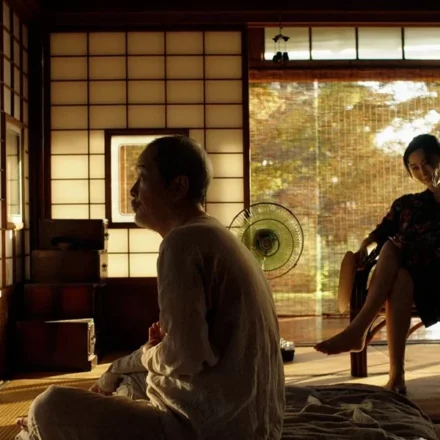
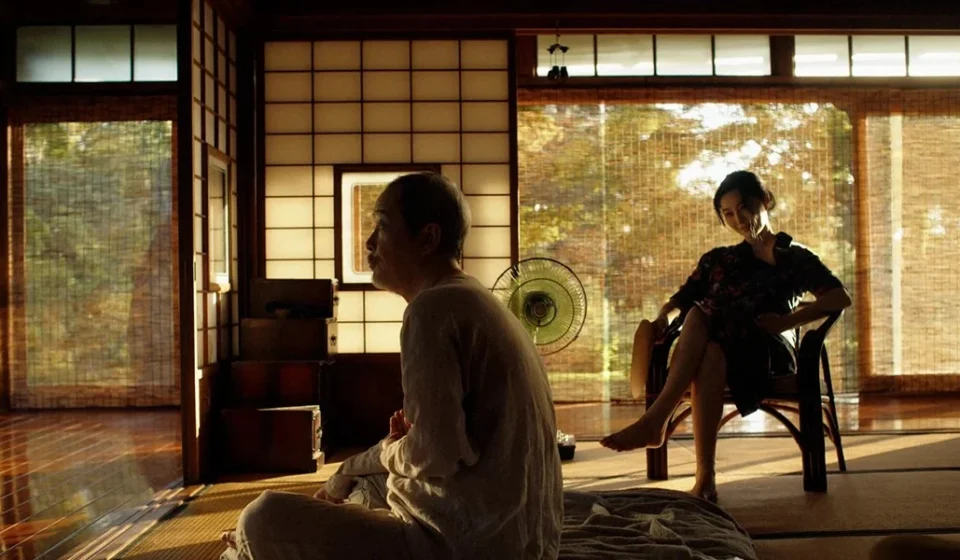
Wayne Wang’s production moved the setting to contemporary Tokyo, specifically the high-end Ginza district. Filming took place primarily in interior sets—a house, a garden, and an upscale bar—creating a sense of domestic claustrophobia that mirrors the protagonist’s physical confinement.
The film’s opening sequence serves as a bridge between the old and the new. It begins with Utsugi in classical Japanese dress, a nod to the novel’s origins, before slowly introducing modern elements. It takes nearly eight minutes for the audience to see a character in contemporary clothing, a stylistic choice by Wang to emphasize the "out of time" nature of the elderly protagonist.
The Screenplay Evolution
Kelvin Wyles’ script makes several departures from the source text. Most notably, it rewrites the first-person narration to soften Utsugi’s character. Where the novel’s Utsugi was a lucid egoist, the film’s version is depicted with "softened" edges, including a newly invented subplot involving a crow he nursed back to health. This shift in chronology and character arc moves the film away from Tanizaki’s black comedy and toward a more traditional drama about cognitive decline.
Supporting Data: Casting, Setting, and Stylistic Choices
The film’s impact relies heavily on the technical execution and the pedigree of its lead actors.
The Lead Performances
- Lily Franky (Utsugi): At age 62, Franky is significantly younger than the character as written in the novel. However, critics have noted his ability to convincingly portray a man suffering from left-side paralysis without resorting to "physical caricature." Franky brings a sense of weary desperation to the role, though the script limits his ability to portray the "malignant" intelligence of the original character.
- Fan Bingbing (Satsuko): Casting Fan Bingbing is a significant move for a production of this scale. Her portrayal of Satsuko shifts the character from a "gleefully exploitative" fashionista to a more "rounded" figure with a traumatic backstory. This change is intended to add depth but, according to early reviews, may have diluted the sharp power dynamics that made the original story so compelling.
Production Design and Atmosphere
The film’s visual language is defined by its "Ozu-lite" contemplations. Working within a limited number of sets, Wang maximizes production value through:
- Lighting: The upscale bar scenes are cut off from all daylight, emphasizing the nocturnal, hidden nature of Utsugi’s desires.
- Location: The choice of the Ginza district places the characters in a world of immense wealth and surface-level perfection, which contrasts with the "scraps of paper" and physical decay inside the home.
- Pacing: The film utilizes long-take cinematography, a hallmark of East Asian art cinema, to evoke a sense of mourning and stasis.
Official Responses: Critical Reception and Director’s Intent
While the film has been praised for its technical polish, the critical response highlights a tension between the director’s intent and the resulting "turgid" narrative.
The Director’s Vision
Wayne Wang appears to have intended the film to be a conversation with contemporary issues of elder care and dementia. By framing Utsugi’s behavior through the lens of late-stage cognitive decline, Wang moves the story from a niche study of "morbid personality" to a more universal exploration of the "graying population" and the complexities of caring for the elderly.
The Critical Critique
Journalistic reviews from the festival circuit have been mixed. The primary criticism is that by "sentimentalizing" the characters, the film loses the "force" of Tanizaki’s prose. The review in Variety notes that the film’s updates, such as Utsugi bonding with Satsuko over a vape, are "thoughtful" but ultimately lead to a product that is "counterintuitively dull."
The critique suggests that in trying to make the characters more "pitiable" and "rounded," the filmmakers removed the very things—cruelty, selfishness, and sharp wit—that made the original "mad old man" a memorable literary figure. The replacement of black comedy with "long-take crying" has been described by some as a missed opportunity to explore the darker side of the human psyche.
Implications: Cinema in the Age of Global Aging
The release of Wayne Wang’s Diary of a Mad Old Man carries implications that extend beyond its merit as a standalone film. It reflects broader trends in both the film industry and global society.
The "Dementia Cinema" Trend
Wang’s film joins a growing subgenre of cinema focusing on the intersection of aging and sexuality. It sits alongside recent works like Yoshida Daihachi’s Teki Cometh, Sarah Friedland’s Familiar Touch, and Lance Hammer’s Queen at Sea. As the global population ages, particularly in countries like Japan and China, cinema is increasingly being used as a tool to process the uncomfortable realities of elder care, including the persistence of sexual desire in the face of cognitive decline.
The Ethics of Adaptation
The film serves as a case study in the risks of adapting "transgressive" literature for a modern audience. In an era where "contemporary mores" often demand more sympathetic protagonists, the "softening" of Utsugi raises questions about whether modern adaptations are becoming too afraid of portraying "malignant" or "unredeemable" characters. The transformation of Satsuko from an exploiter to a victim of a "traumatic backstory" suggests a shift toward moralizing narratives rather than observing them.
Cross-Cultural Allegory
The casting of Fan Bingbing (a Chinese icon) in a Japanese story directed by a Chinese-American filmmaker adds a layer of "subtextual frisson." The film touches on the exploitation of characters from impoverished backgrounds, which some analysts suggest could be read as a political or national allegory regarding the relationship between China and Japan. However, the film stops short of fully exploring these "allegorical political/national possibilities," leaving them as "new wrinkles" that do not necessarily enrich the core text.
Conclusion: A Muted Return
Ultimately, Wayne Wang’s Diary of a Mad Old Man is a meticulously crafted, well-acted, but perhaps overly cautious adaptation. While it succeeds in updating the setting and addressing the very real concerns of a graying society, it loses the "perverse qualities" that made Tanizaki’s novel a classic. It stands as a reminder that in the transition from page to screen, "thoughtful tweaks" can sometimes act as a silencer to the original’s roar. For audiences looking for a meditative look at death and dementia, the film offers much to admire; for those seeking the "madness" promised in the title, the experience may be more "Ozu-lite" than they bargained for.