The Resurrection of a Downtown Legend: How No Picnic Captured the Soul of a Vanishing New York

In the pantheon of New York independent cinema, certain films serve as time capsules—vivid, celluloid records of a city that no longer exists. Yet, few have experienced a trajectory as improbable, or as triumphant, as Phil Hartman’s No Picnic (1986). A noir-inflected, shaggy-dog punk comedy, the film was largely relegated to the shadows for nearly four decades. Today, however, it has emerged as a bona fide cultural phenomenon, a "priceless artifact" that has managed to bridge the generational divide between the gritty, pre-gentrification East Village of the 1980s and the modern-day urban experience.
The Genesis of an Urban Myth
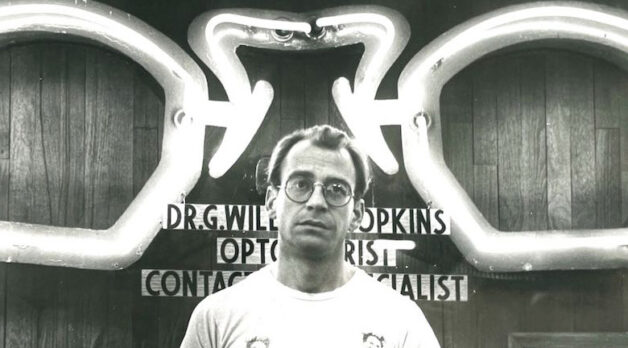
In 1985, Phil Hartman was a downtown polymath. As a co-founder of the Great Jones Cafe, a beloved NoHo haunt, he was deeply embedded in the creative ecosystem of Lower Manhattan. Using the proceeds from his bar, Hartman set out to direct his first feature film. He enlisted the legendary experimental filmmaker Peter Hutton to handle the cinematography, resulting in a work shot on lustrous, high-contrast 16mm black-and-white film that captured the tactile, crumbling beauty of the neighborhood.
The film is an episodic, ethnographic ramble through the Lower East Side—a landscape defined by rent strikes, fire escapes, and a palpable sense of instability. It tells the story of Mac, played by David Brisbin with a mixture of weary charm and profound self-awareness. Mac is a 30-something former musician navigating a precarious existence, stocking jukeboxes to make rent while becoming entangled in the lives of a Canadian neighbor pursuing a green-card marriage and a mysterious woman he spots on the street.
Hartman described the production as a desperate, artistic race against time. "We were scrambling to capture Adam Purple’s garden, Bleecker Bob’s Records, the Atlas Barber Shop, and all these places we knew wouldn’t be around forever," he recalls. "We were documenting a tribe under siege."
A Chronology of Neglect and Rebirth
No Picnic initially showed promise, premiering at the 1987 Sundance Film Festival and winning the cinematography award. However, the path to distribution was fraught with misfortune. Gray City Films, the production company led by Wim Wenders, had intended to purchase and re-open the crumbling St. Mark’s Cinema as a home for the film, but the company folded before the dream could materialize.
The film finally found a temporary home in 1990 at the Anthology Film Archives, thanks to the intervention of Jonas Mekas. Bolstered by a rave review from The Village Voice critic Manohla Dargis—who hailed it as "a valentine to a neighborhood under siege"—it enjoyed a successful six-week run. Then, for the next 35 years, it vanished. Consumed by the growth of his Two Boots Pizza empire, Hartman kept the film largely off-limits, available only as a rare VHS or DVD item in the back of his now-defunct Two Boots Video Store.
The turning point arrived in 2025. Through a serendipitous web of connections—involving archivist Mary Engel (daughter of The Little Fugitive creators Morris Engel and Ruth Orkin) and programmer Jake Perlin of The Film Desk—the film was unearthed. Perlin, a former student of Hutton, oversaw a meticulous restoration that premiered at the Museum of Modern Art’s "To Save and Project" series. The response was electric, eventually leading to a theatrical run at Film Forum that defied all industry expectations.
Supporting Data: By the Numbers
The commercial success of the No Picnic restoration is nothing short of a statistical anomaly in the world of repertory cinema.
- The Opening: On April 17, 2025, the film opened at Film Forum with a modest two screenings per day, sharing the marquee with high-profile releases.
- The Momentum: By the end of its first week, it was the theater’s top-grossing film, pulling in over $28,000. It maintained that top spot in its second week, adding $16,000.
- The Final Tally: After a 12-week run, the film grossed a staggering $123,000. To put this in perspective, it outperformed legendary classics like Federico Fellini’s 8½ ($120,000) and Akira Kurosawa’s The Seven Samurai ($103,000) during their respective repertory runs.
Official Responses and Artistic Reflections
The critical and public reception has been unified by a sense of discovery. Curator Joshua Siegel of MoMA praised the film as an essential historical document, while industry veterans like producer Christine Vachon have noted the film’s uncanny ability to "fold back onto this time."
"It has this mix of being relevant to today because it’s about being able to afford a place, but it also is a world that’s sort of past," Vachon observed. For a new generation, the film serves as a crucial primer on the evolution of the city. Meg Aubry, a young filmmaker residing in Ridgewood—a neighborhood often cited as the spiritual successor to the 80s Lower East Side—noted, "We don’t really know the history of the ground we’re stomping on. It felt like an education in New York culture."
Phil Hartman himself views the film’s success with a mixture of bemusement and pride. "It had time to ferment," he jokes. "It’s marketing genius to create something and keep it a secret for 40 years."
Implications: Why Now?
The resurgence of No Picnic suggests that the current audience for cinema is hungry for "terroir"—a sense of place that feels grounded in real, physical history. As Mac muses in the film, "The more things change, the more they change."
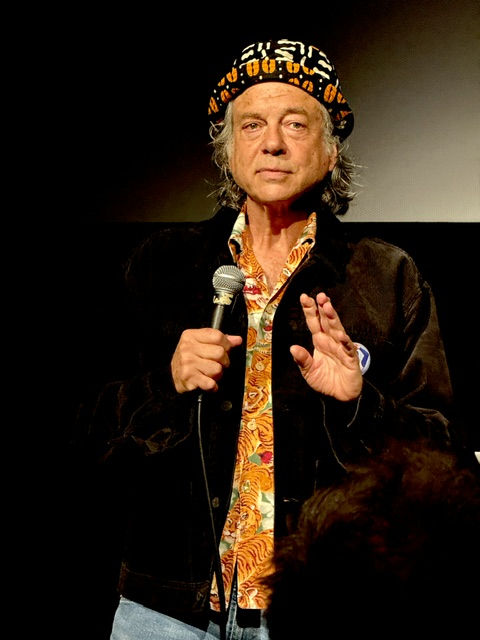
The film’s endurance lies in its refusal to be purely nostalgic or purely dystopian. It captures the struggle for artistic survival, a theme that remains depressingly evergreen. Whether it is the struggle to pay rent, the desire to carve out a creative life in an expensive city, or the feeling of being a "relic" in one’s own neighborhood, No Picnic speaks to the universal experience of urban displacement.
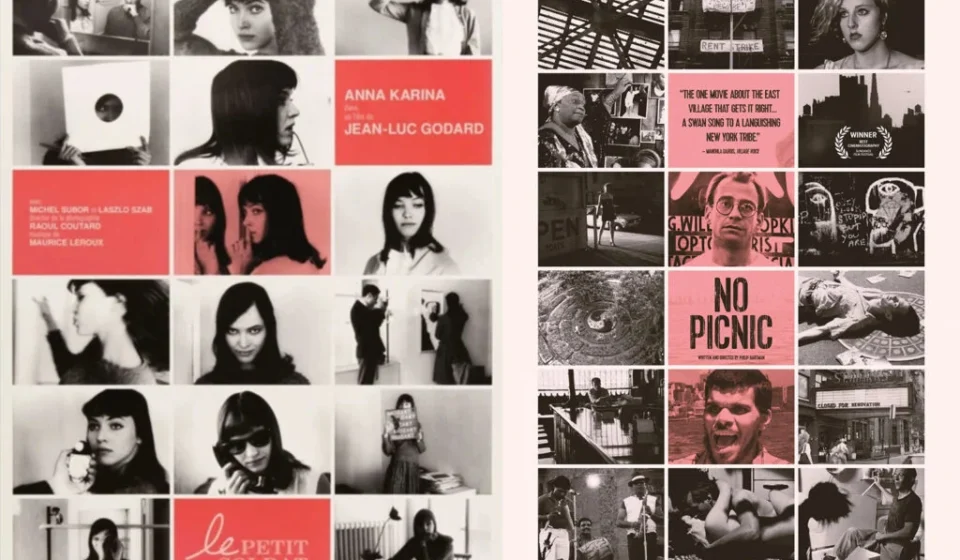
Furthermore, the film’s success proves that there is a vast, untapped audience for "neglected" cinema. By utilizing dynamic marketing—such as The Film Desk’s trailer and the Godard-inspired poster art—and leaning into the charisma of a director willing to hand out free pizza to his audience, the No Picnic team created a "must-see" event that transcended the boundaries of a standard revival screening.
In the end, No Picnic serves as a reminder that the history of New York City is not just written in the glass-and-steel towers that dominate the skyline today. It is written in the rubble, the fire escapes, and the quiet, desperate, and often hilarious struggles of those who lived in the cracks of the city. As David Brisbin summarized in correspondence regarding the film’s revival: "Young people in the East Village now have a sense they missed something and want to know what that time was like. Old folks like me like to remember their youth."
The film has moved from the obscurity of a video store shelf to the bright lights of the repertory circuit, proving that while neighborhoods may disappear, the stories we tell about them—if captured with enough heart and grit—can survive almost anything.