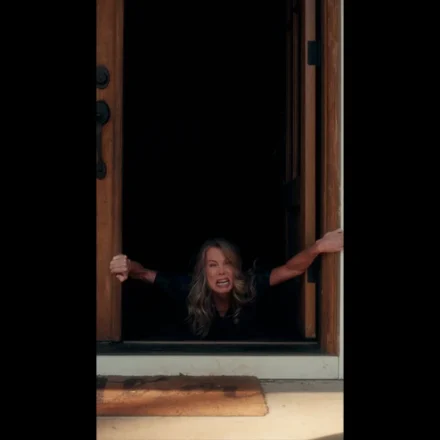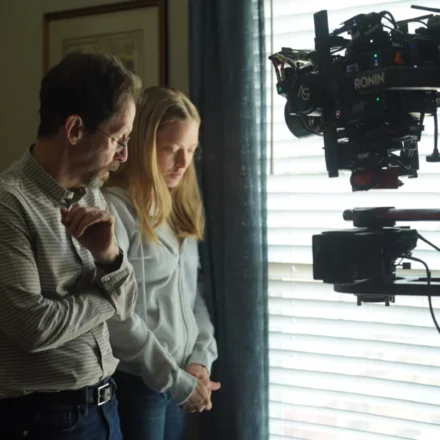
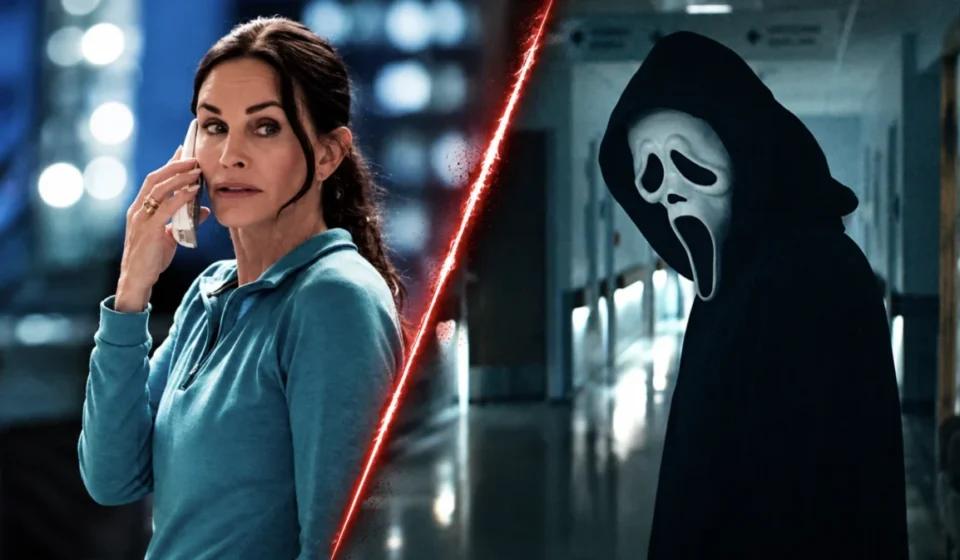

The Scream franchise has long been defined by its meta-commentary, its razor-sharp wit, and its ability to reinvent itself for every new generation of horror fans. Now, as the series stands at a crossroads following the conclusion of the most recent chapter, one of its most iconic figures is stepping into the spotlight—not as a target, but as a potential commander. Courteney Cox, who has portrayed the tenacious investigative journalist Gale Weathers since the franchise’s inception in 1996, has officially thrown her hat in the ring to direct Scream 8.
The revelation came during an appearance at the Deadline Studio during the 2026 Toronto International Film Festival (TIFF). When prompted about the possibility of transitioning from in front of the camera to behind it for the next installment of the storied slasher series, Cox didn’t shy away from the ambition. Her response was not merely a polite acknowledgement of a hypothetical, but a confident assertion of her unique qualifications.
The Case for Gale Weathers: Cox’s Pitch
"I think I should, honestly. Nobody knows more about that movie than I do," Cox told Deadline, capturing the attention of horror enthusiasts worldwide.
Her argument is rooted in three decades of immersion in the Scream universe. Having survived countless encounters with various iterations of Ghostface, Cox has witnessed the evolution of the franchise under multiple directors and writers. She noted that while the expertise of the original creators and the legacy of the late Wes Craven are foundational, her intimate familiarity with the tone, the pacing, and the specific "rules" of the Scream universe provides her with a perspective that few others could claim.
"I mean, and the creator, and Wes Craven, and the writers, and everybody who’s been in it," she added, acknowledging the collaborative history of the series. "But I think it’d be great and fun and a good publicity thing. Get on it."
A Chronological Look at the ‘Scream’ Directorial Legacy
To understand why Cox’s interest is so significant, one must look at the directorial lineage of the franchise, which has served as a masterclass in horror evolution.
The Craven Era (1996–2011)
The franchise began with the legendary Wes Craven, whose ability to balance visceral slasher violence with biting satire established the template for the series. Craven directed the original Scream (1996), Scream 2 (1997), Scream 3 (2000), and Scream 4 (2011). His passing in 2015 left a massive void in the genre, and for years, fans wondered if the franchise could—or should—continue without his guiding hand.
The Radio Silence Revival (2022–2023)
After an eleven-year hiatus, the series saw a massive resurgence under the direction of Matt Bettinelli-Olpin and Tyler Gillett (the filmmaking collective known as Radio Silence). Their approach to Scream (2022) and Scream VI (2023) successfully introduced a new cast of characters while honoring the legacy of the original trio. Their success paved the way for a new generation of fans, though the duo eventually stepped away to pursue other projects, including the horror-thriller Abigail and a high-profile reboot of The Mummy.
The Williamson Interlude and the Current Vacuum
Kevin Williamson, the mastermind who penned the original scripts and defined the voice of Ghostface, stepped into the director’s chair for Scream 7. His tenure was viewed by many as a "return to form." However, as reported by Dread Central, Williamson has confirmed he will not be returning to direct the eighth installment. This leaves the director’s chair vacant at a time when the studio is reportedly in the early stages of recalibrating the franchise’s future.
The Landscape of the Franchise: Why Now?
The timing of Cox’s suggestion is, perhaps, the most interesting aspect of this development. The Scream franchise has historically functioned as a commentary on the state of the film industry itself. If Scream 8 were to be directed by a "Legacy Character," it would fit perfectly within the series’ meta-thematic DNA.
The current state of the industry is obsessed with legacy sequels ("requels") and the passing of the torch. Having an actress who has been with the series for thirty years take the helm is the ultimate meta-statement. It mirrors the transition from actress to director that many Hollywood veterans have successfully navigated, such as Greta Gerwig, Olivia Wilde, or Elizabeth Banks.

Furthermore, the production team is currently in a phase of meetings and strategic planning. By publicly stating her interest, Cox has effectively forced the conversation. She has created a "publicity thing," as she put it, that the studio can no longer ignore. Fans have already taken to social media, launching informal petitions and expressing overwhelming support for the idea.
Official Responses and Studio Dynamics
While no official deal has been signed—and, to be clear, Cox’s comments were an expression of interest rather than a formal attachment—the industry impact is already being felt. Studios are often risk-averse, but in the horror genre, the "brand" of Scream is so strong that the identity of the director acts as both a creative choice and a marketing hook.
If the studio were to bring Cox on, they would be betting on her intimate knowledge of the character arcs to provide a sense of continuity that might be missing in a reboot or a complete directorial refresh. However, there are logistical hurdles. Directing a major slasher franchise is an exhaustive process that requires deep involvement in post-production, marketing, and the grueling physical demands of horror set-pieces.
Implications: The Future of Ghostface
What would a "Courteney Cox-directed Scream" look like?
Given her background as a producer on various television projects and her decades of watching the master, Wes Craven, at work, one could expect a film that prioritizes character-driven tension over mere spectacle. She knows exactly how Gale Weathers is perceived by the audience, and she knows the tropes that Ghostface uses to exploit that perception.
If she were to direct, we might see a Scream that is more psychological, leaning into the trauma of the survivors. After thirty years of being hunted, Gale Weathers is not just a journalist—she is a hardened veteran of a serial killer’s game. A film directed by the woman who lived through that experience could offer a raw, authentic exploration of the psychological toll of horror that a younger director might overlook.
Furthermore, her involvement would almost certainly guarantee the return of other legacy cast members, creating a sense of finality or evolution that the franchise has been building toward.
Conclusion: A Bold New Direction?
Courteney Cox has survived the Woodsboro murders, the Windsor College killings, the Hollywood murders, and the various copycat attacks that have plagued her life for three decades. If anyone has earned the right to step behind the camera and dictate the next rules of the game, it is her.
As the production team for Scream 8 navigates the complexities of the current horror landscape, they have a unique opportunity. They can choose to hire a traditional director to follow the established path, or they can lean into the meta-narrative that made Scream a cultural phenomenon in the first place.
By hiring Courteney Cox, the studio would not just be hiring a director; they would be hiring a piece of the franchise’s soul. For now, the world waits to see if the studio will "get on it," but one thing is certain: Gale Weathers is ready to call the shots. Whether Ghostface is ready for that, however, remains to be seen.