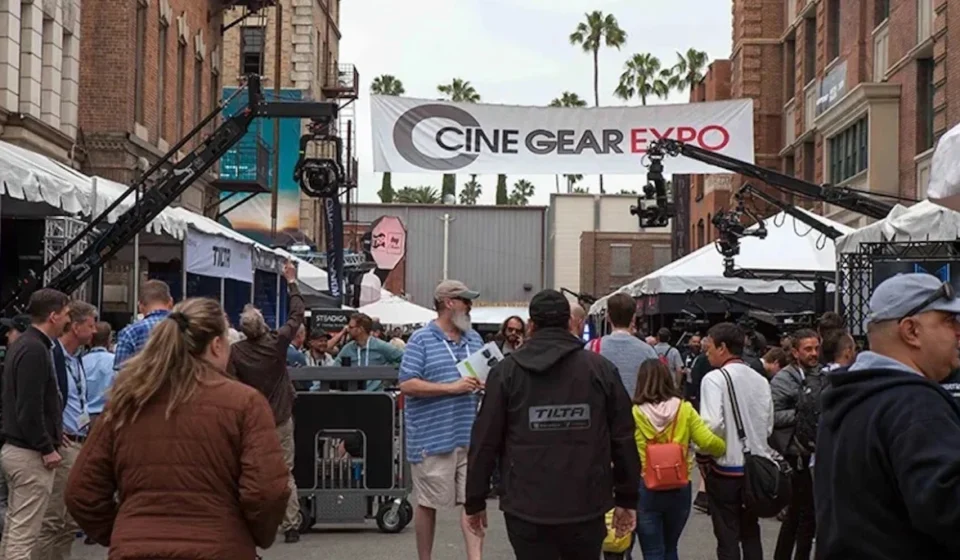

While the annual NAB Show in Las Vegas often triggers a sense of existential dread—a forced reckoning with cinema’s diminishing market share in a world increasingly dominated by ephemeral, algorithm-driven video content—Cine Gear Expo offers a necessary corrective. Held annually on the storied backlots of Los Angeles, the event serves as a two-day sanctuary for the industry’s true believers: cinematographers, gaffers, lighting technicians, and lens artisans.
If NAB is the cold, calculated boardroom of the industry, Cine Gear is the sun-drenched, dust-caked workshop. It is a gathering where, amidst the latest technological marvels, the conversation inevitably drifts toward the craft, the history, and the camaraderie that keeps the soul of Hollywood breathing.
The Ethnographic Lens: A New Generation at the Lot
As I navigated the Universal Studios Lot this year, the shift in demographics was palpable. I had arranged to meet Alec Moeller, a filmmaker and member of the Filmmaker Magazine "New Faces" class of 2022. Moeller, a self-avowed traditionalist who favors film stock and natural light over the aggressive pursuit of "the latest and greatest," was there in an ethnographic capacity.
"As an independent filmmaker who is mostly disinterested in the latest lighting or stabilization tech, I’m here to observe," Moeller noted via voice memo as I made my way through the studio gates. "But look around—the energy is different."
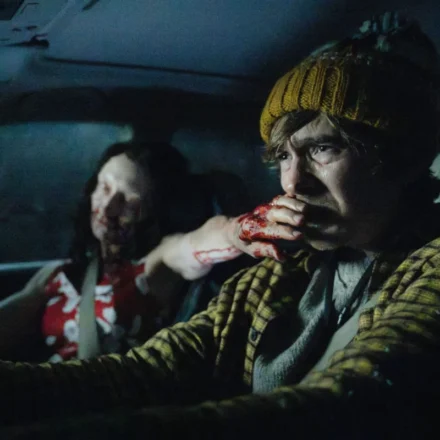
He pointed out a young attendee sporting an Obsession t-shirt. The success of viral horror hits like Obsession and Backrooms has clearly trickled down into the aesthetic consciousness of the next generation. The Friday crowd skewed heavily toward film school undergraduates—the quintessential "forever-unemployed" freelance demographic of Los Angeles. While Saturday promised a more professional, union-card-carrying cohort, the Friday energy was undeniably electric, fueled by the indie-horror resurgence and a collective desire to demystify the tools of the trade.
Chronology of a Backlot Pilgrimage
Cine Gear 2026 was a logistical departure from its previous residence on the Warner Bros. lot. The Universal layout, while grand, presented a challenge for the focused attendee. The seminar stages were separated from the main vendor tents by a full shuttle ride, creating a fragmented experience. Queuing for buzzy panels—such as the high-profile ASC session—often meant standing in direct, unforgiving California sunlight.
Despite the logistical friction, the spirit of the event remained intact. Much like a film festival—somewhere between the rustic charm of Telluride and the commercial intensity of Sundance—the atmosphere was thick with industry gossip, the clatter of gear cases, and the frantic collection of free swag. The ubiquitous, comically oversized yellow Insta360 totes became the unofficial uniform of the event, serving as vessels for smaller, more specialized giveaways.
The ASC Panel: A Century of Vision
The second day commenced with the annual American Society of Cinematographers (ASC) panel, a heavyweight assembly of 15 members, including legends like Jeff Cronenweth (The Girl with the Dragon Tattoo), Rachel Morrison (Black Panther), and Natasha Braier (I Love Boosters).
The session opened with a montage spanning over a century of cinematography. A brief, flickering shot of John Toll’s work on The Thin Red Line (1998) served as a poignant reminder of the medium’s artistic ceiling. With so many panelists, the discussion lacked the depth of a deep-dive masterclass, but the sound bites were profound.
"I believe in body consciousness," Steven Fierberg remarked. "When you’re standing on the set, where does your body want to go with that camera? Often you don’t know why." Braier, reflecting on her background as the daughter of psychoanalysts, noted that her work is fundamentally shaped by her childhood under a military dictatorship in Argentina, where visual subtext was a matter of survival. It was a reminder that cinematography is not merely about optics—it is about the unconscious translation of human experience.
The Technical Frontier: LEDs and the "Canary Yellow" Approach
Following the ASC panel, I shadowed Local 728 gaffers Drew Moe and Jeffrey Taylor, founders of the boutique rental house Canary Yellow. Their mission at the Expo was surgical: scouting for the next generation of lighting to add to their fleet.
"We’re here to talk to the vendors, hear their elevator pitches, and see what we want to add to the fleet," Moe explained. The pace of LED advancement has rendered the old timeline of tungsten and HMI dominance obsolete. "Most of Hollywood’s history has just been tungsten, then HMIs, then fluorescent," Moe noted. "That was a slow timeline. Now, every year, we see new chipsets and attachments. It’s an exciting, if rapid, time."
The duo was particularly impressed by the evolution of the Blackout Lighting Console. As Ian Peterson walked us through the "V3" update, it became clear that the software is bridging the gap between numerical data and intuitive, visual control. By allowing DPs and gaffers to manipulate light through an iPad interface with fluid, visual feedback, the software feels like a genuine shift in how the floor is managed.
The Return of the Analog: The Cinelux Sixteen
Perhaps the most ambitious project on display was the Cinelux Sixteen, a 16mm camera prototype from Cinelux Cinema Tools. In an era of digital dominance, this is the first new film camera developed in years, designed with a hybrid purpose: shooting film and digital simultaneously.
Chief engineer Caz Voorhees explained that the device records to an SD card at 3.2k resolution, creating proxies with film-emulation LUTs already applied. "It’s the only camera designed to shoot film and digital simultaneously," Voorhees said. The goal is simple: to assuage producer anxieties about the costs and delays of film processing, while allowing the director the tactile satisfaction of the medium.
The engineering hurdles have been massive. "The magazine is really fucking difficult," Voorhees admitted. "You have to move film from one side to the other within an inch or two of space, with zero friction." The team is aiming for a mid-2027 release, and in a radical move, they intend to make the magazine design open-source, allowing users to 3D-print parts in a pinch. It is an ethos of ownership that stands in stark contrast to the closed-loop ecosystems of major tech manufacturers.
Lens Restoration and the "Zero Optik" Philosophy
The lens sector was equally vibrant. I visited Zero Optik, the team responsible for rehousing vintage glass. Alex Baxter, the operations manager, highlighted their work with Bausch & Lomb Ultra Baltar lenses from the 1940s. These lenses, once gathering dust in basements, have found a second life in digital cinema.
The ASC itself commissioned Zero Optik to restore a set of Todd-AO 65mm primes from the 1950s, used on classics like Oklahoma! and The Sound of Music. Working with DP Greig Fraser, they managed to maintain the character of the vintage glass while ensuring the consistency required for modern digital sensors. It is a form of industrial archaeology that treats lenses not as disposable commodities, but as instruments with distinct "personalities."
Atlas Lens Co. and the Anamorphic Evolution
Dan Kanes, co-founder of Atlas Lens Co., represents a different kind of industry success story. After selling his company Paralinx to Vitec Group, Kanes chose to reinvest his earnings into his true passion: anamorphic lenses.
At Cine Gear, he unveiled the Kaizen Series, designed for the latest generation of large-sensor cameras. Kanes emphasized the evolution of anamorphic glass, specifically the move away from the "high field curvature" that plagued vintage lenses. "We’re able to hold people in focus across the frame," Kanes noted, allowing for wide shots where the focus doesn’t fall off on the edges. This evolution proves that even the most "vintage-inspired" gear is benefiting from modern precision manufacturing.
Implications: The Future of the Craft
As the event drew to a close, I attended a seminar by M. David Mullen, presented by Red Digital Cinema. Mullen’s ability to deconstruct a complex tracking shot from The Marvelous Mrs. Maisel with surgical precision served as the perfect bookend to the weekend.
The Expo concluded with the annual ASC Clubhouse barbecue. Seated under the stars, eating ribs and potato salad among peers, the "existential crisis" mentioned at the start of the week seemed to vanish.
The implications for the industry are clear: while the commercial side of Hollywood may be obsessed with "growth areas" and streaming optimization, the community at Cine Gear is obsessed with continuity. From the 3D-printed film magazines of the Cinelux Sixteen to the restored Todd-AO glass of Zero Optik, the focus is on the marriage of tradition and innovation. The tools may change, the sensors may sharpen, and the consoles may become more fluid, but the fundamental pursuit—to capture human truth through a lens—remains the industry’s north star. Cine Gear 2026 proved that as long as there is a backlot to walk on and a story to tell, the craft will not only survive; it will thrive.