The Unyielding Lens: Lav Diaz Confronts the Ghost of Colonialism and the Architecture of Faith

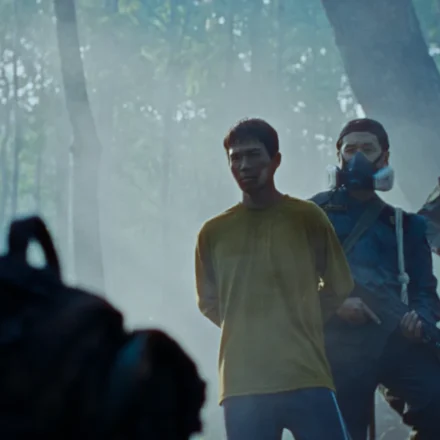
In the landscape of contemporary world cinema, few figures command the intellectual and aesthetic gravity of Filipino auteur Lav Diaz. Known for his uncompromising commitment to long-form storytelling and his searing, slow-burn examinations of the Philippine soul, Diaz has returned to the Venice Film Festival to unveil his latest masterwork, Let Us Through, Dear Ancestors (Makikiraan Po). Yet, even as he arrives on the Lido, the director is already looking toward the horizon, revealing plans for a provocative exploration of false prophets and an ambitious screen adaptation of José Rizal’s seminal novel, Noli Me Tangere.
For Diaz, cinema is not merely an entertainment medium; it is a vital tool for historical excavation. His work serves as a persistent, rhythmic heartbeat against the silence of historical amnesia. As he navigates the prestigious Venice Open section with his latest film, the director continues to position his camera as a scalpel, dissecting the trauma of the past to understand the fractures of the present.
The Venice Premiere: Let Us Through, Dear Ancestors
Let Us Through, Dear Ancestors marks a significant chapter in Diaz’s ongoing cinematic project. The film represents a homecoming of sorts to the Venice Film Festival, where the director achieved global acclaim in 2016 by winning the Golden Lion for his monumental feature, The Woman Who Left.
This new project follows on the heels of his 2025 Cannes-premiered Magellan, which featured Gael García Bernal as the eponymous Portuguese explorer. While Magellan focused on the initial contact between the European voyager and the archipelago, Let Us Through pushes deeper into the 16th and 17th centuries. It chronicles the consolidation of Spanish colonial rule under Miguel López de Legazpi, who arrived in Cebu in 1565. The narrative captures the resistance of the local chieftain, Rajah Tupas, and the eventual, brutal imposition of a colonial order that would reshape the Filipino identity for centuries to come.
Chronology of Struggle: From Encomienda to Modernity
To understand the scope of Diaz’s vision, one must trace the historical threads he pulls throughout his filmography. Diaz views his work as a "continuing study and dissection" of the Filipino struggle.
The Birth of Inequality
The director explicitly links the contemporary Filipino class structure to the encomienda system, mandated by King Philip II in 1571. Under this framework, indigenous land ownership was effectively abolished, replaced by a system of heavy tributes and forced labor for Spanish encomenderos. Diaz asserts that the modern socio-political landscape—defined by powerful political clans, wealthy landowning families, and corporate giants—finds its genesis in these colonial structures. "All the old rich families, landlords, hacienderos, political clans, big businesses, have their connection from the encomienda," Diaz explains.
The Cost of Construction
A central focus of the film is the human cost of the Philippines’ iconic colonial-era churches. These stone structures, often admired today as symbols of cultural heritage, are, to Diaz, monuments of profound violence. The Spanish polo y servicio system required able-bodied Malay men—often from adolescence—to perform 40 days of unpaid annual labor.
Diaz provides a sobering historical statistic to underscore the weight of these structures: it is estimated that roughly 30% of the male population perished under this brutal labor system. "Forgetful Filipinos must learn, must know, must understand, that these structures were built by forced labor," Diaz says. "They didn’t appear in their midst by some cosmic manifestation—it’s blood, sweat, tears, and deaths of our ancestors."
Institutional Faith and the Violence of Ideology
Perhaps the most provocative element of Diaz’s recent commentary is his critique of institutionalized religion. Drawing parallels between the historical subjugation of the Philippines and contemporary global conflicts, Diaz argues that faith, when weaponized by institutions, serves as a mechanism for control.
"Religion is one of the worst forms of violence," he reflects. "Faith can be a form of eternal subjugation, especially for the weak. Oftentimes, it blurs all of rationality; it becomes the truth of existence."
By citing historical atrocities like the Crusades and the Holocaust alongside modern-day conflicts in Gaza, Ukraine, Afghanistan, and Darfur, Diaz suggests that the "truth of existence" is frequently hijacked by ideologies that demand total submission. This theme of "false ideologies and false prophets" is set to be the primary focus of his next directorial endeavor, suggesting a thematic shift from the external colonial oppressor to the internal, psychological, and spiritual structures that continue to constrain human agency.
The Artistic Process: A Return to the Soil
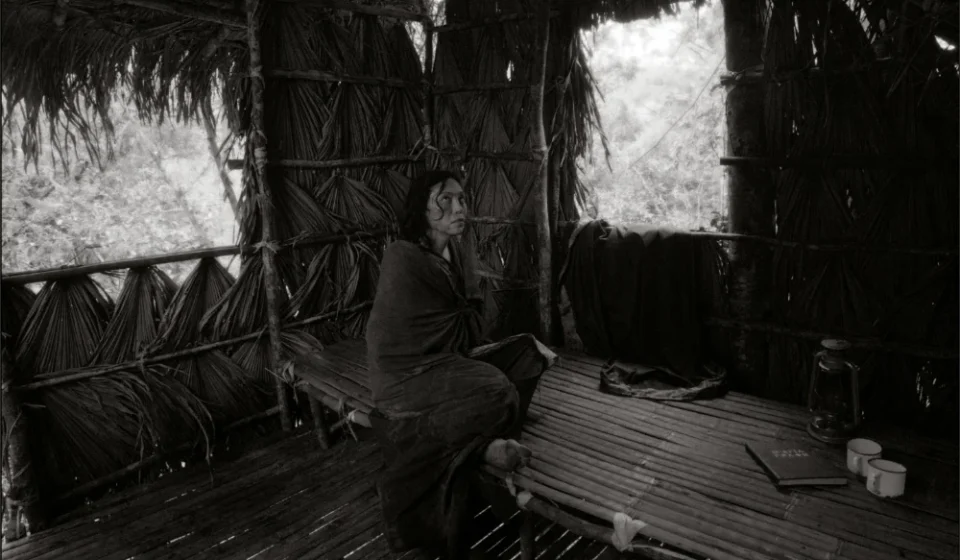
The production of Let Us Through was as much a spiritual journey as a technical one. Shot in black and white in the town of Sampaloc, Quezon Province, the film is the fourth project Diaz has filmed in the area, following Magellan, Phantosmia, and the forthcoming Kawalan.
For Diaz, the location is a character in its own right. The director credits the environment of Sampaloc with his physical recovery after enduring severe health challenges, including a burst lung and chronic obstructive pulmonary disease. "The spirit of the place provides the best attributes I needed in my films on issues of truth, vision, and transcendence," he notes.
Casting and Collaboration
The film features the filmmaker Isabel Sandoval in the role of the Babaylan, a traditional Malay healer. In the context of the film, the Babaylan serves as a bridge to the archipelago’s pre-Hispanic and pre-Islamic heritage. Sandoval’s inclusion is deliberate; as an acclaimed director in her own right, her performance brings an intellectual depth that resonates with the film’s exploration of indigenous identity. Diaz expresses deep gratitude for her contribution, noting the "majestic nuance" she brought to the character.
The Philosophy of Length
Though Let Us Through, Dear Ancestors clocks in at 151 minutes—a relatively modest runtime compared to some of his marathon-length epics—Diaz maintains that his praxis remains unchanged. He rejects the notion of a fixed aesthetic framework, arguing instead that the demands of the material dictate the form. "My principle has always been to work on the demands of the material at hand… The struggle to pursue a vision is the most important."
Future Horizons: Rizal and the Revolutionary Spirit
As Diaz moves forward, his interest in the intellectual foundations of the Philippine nation intensifies. His decision to adapt Noli Me Tangere is a significant development, given that the novel by national hero José Rizal was a catalyst for the 1896 Philippine Revolution. By revisiting the text, Diaz intends to re-examine the revolutionary spirit that defined the late 19th century.
This project, coupled with his film on "false prophets," indicates a director who is moving toward a more explicit interrogation of the philosophical and ideological origins of his country. He believes that in a world increasingly clouded by misinformation and demagoguery, the role of the filmmaker is to act as a witness to truth. "Cinema must have the responsibility to commit to the truth," Diaz concludes. "There should be no compromise on that issue given the condition of the world right now. Cinema’s soul is the truth."
Implications: A Legacy of Resistance
The work of Lav Diaz, specifically Let Us Through, Dear Ancestors, serves as a bridge between the primal, ancestral past and the fragmented, often violent reality of the present. By utilizing the Filipino phrase Makikiraan Po—a polite request to pass through a space inhabited by spirits—as the film’s title, Diaz emphasizes a relationship of respect and humility toward the history that lingers in the landscape.
As the film makes its international debut, its implications are clear: the Philippines is still reckoning with the ghost of the encomienda, the trauma of forced labor, and the lingering influence of institutionalized dogma. Through his relentless, long-form examinations of these themes, Diaz is not merely recording history; he is demanding that his audience stop, look, and listen to the echoes of the ancestors.
In an era where history is often sanitized or forgotten, Lav Diaz stands as a defiant custodian of memory. Whether he is exploring the 16th-century arrival of Spanish forces or the modern-day manipulation of faith, his work remains a powerful testament to the necessity of confronting the past to forge a path toward true sovereignty. As he continues his "continuing study," one thing is certain: Diaz will continue to hold the light to the dark corners of the human experience, ensuring that the blood, sweat, and tears of those who came before are never erased from the national consciousness.