Cinema of Resistance: Jelena Maksimović’s ‘Until the Day Ends’ Captures the Pulse of Serbian Youth Unrest

The streets of Belgrade have long served as a canvas for political upheaval, but rarely has the city’s volatile atmosphere been captured with such kinetic, raw energy as in Jelena Maksimović’s fiction debut, Until the Day Ends. Premiering to critical acclaim in the Horizons program at the Venice International Film Festival and subsequently making waves in Vienna, Hamburg, and Tokyo, the film marks a significant transition for Maksimović. Formerly known for her disciplined, evocative documentary work, the Serbian filmmaker has pivoted toward a narrative style that blends cinéma vérité grit with a high-octane, almost hallucinatory aesthetic.
Until the Day Ends is more than a simple political drama; it is a visceral exploration of a generation caught between the rigid ideologies of the past and the desperate, often disorganized hope for a different future. Set against the backdrop of real-world tragedies and fictionalized escalations, the film examines the improbable bond between two young people whose political identities should, by all accounts, make them enemies.
Main Facts: A Narrative of Friction and Flight
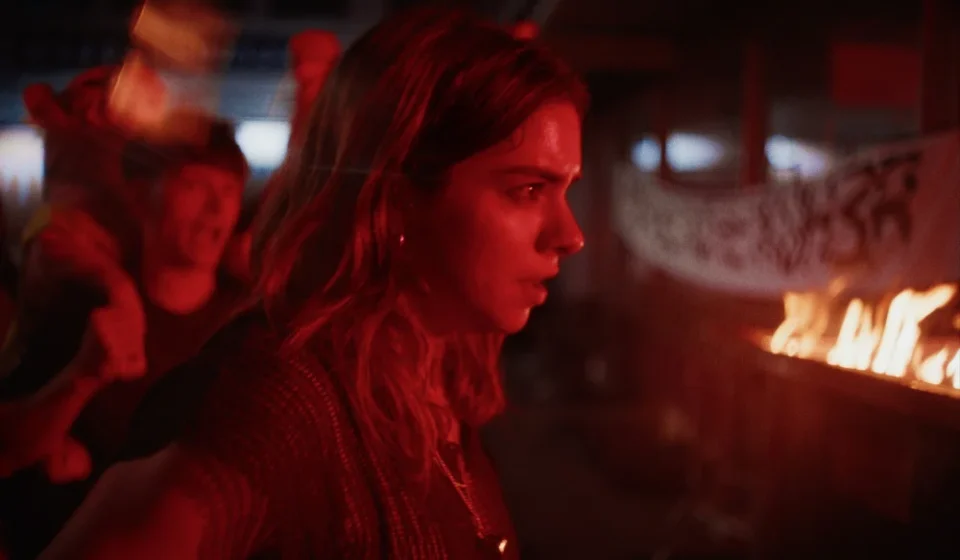
The film’s narrative engine is fueled by the ideological friction between its two protagonists: Lena (Lena Trifunović) and Stefan (Andrija Krivokapić). Lena is a firebrand student activist, a 20-year-old whose life is consumed by the fervor of the Belgrade protests. She is a creature of the university corridors—shadowy, disheveled spaces that have been transformed into makeshift campsites for the revolution. In contrast, Stefan is a 22-year-old working-class punk who drifts within a social circle of right-wing nationalists, including Lena’s own brother, Milan (Miodrag Dragicevic).
The premise suggests a familiar trope—a "Romeo and Juliet" for the polarized age—but Maksimović avoids the pitfalls of sentimentalism. The "bond" between Lena and Stefan is not forged through a sudden realization of shared values, but through a rash, violent act of rebellion. During a chaotic demonstration, the two become complicit in throwing a cobblestone at a police officer, an act that leaves the man seriously injured and forces the pair into a night of frantic flight.
The film is structured in two distinct movements. The first half is a "galloping" depiction of mass unrest, characterized by large-scale movement and collective anger. The second half shifts into a more intimate "two-hander," as Lena and Stefan retreat from the city to parse their political differences and navigate a burgeoning, albeit complicated, mutual attraction.
Chronology: From Real-World Tragedy to Cinematic Vision
To understand the weight of Until the Day Ends, one must look at the timeline of events that inspired its creation. The film is deeply rooted in the socio-political climate of contemporary Serbia, specifically a series of events that began in late 2024.
- November 2024: A tragic accident occurs in Novi Sad when a train station canopy collapses, resulting in the deaths of 16 people. The tragedy sparks immediate outrage, with many blaming government corruption and negligence for the structural failure.
- Early 2025 (Film Setting): The film is set during a fictionalized surge of anti-government demonstrations in Belgrade, directly triggered by the aftermath of the Novi Sad tragedy. This setting grounds the film in an authentic "street-level" reality that resonates with Eastern European audiences.
- Production and Style Development: Drawing from her experience with documentaries like Taurunum Boy (2019) and Homelands (2020), Maksimović and her Director of Photography, Paul Spengemann, developed a visual language that balances realism with "epic escapism."
- September 2024 – October 2024: The film begins its international festival run. Its premiere in the Venice Horizons program (Orizzonti) establishes Maksimović as a rising star in European fiction cinema.
- Late 2024: The film enters the main competition at the Tokyo International Film Festival, following successful screenings in Vienna and Hamburg, signaling its broad international appeal despite its hyper-local subject matter.
Supporting Data: Technical Virtuosity and Performance
The critical success of Until the Day Ends is largely attributed to its formal restlessness. Maksimović employs several cinematic "tricks" that elevate the film above standard political fare:
The Aesthetic of Kinetic Energy
The film opens with a virtuoso long take that roams through a university building. This shot serves as a microcosm of the entire film: it is shadowed, disheveled, and disrupted by "insurgent streaks of red." Paul Spengemann’s cinematography is noted for its use of lens flares and roving camera work, drawing comparisons to the high-drama visual style of Janusz Kaminski. This "bursting" visual energy serves to mirror the internal state of the characters—young, volatile, and perpetually in motion.
The Perspective of the Stone
In one of the film’s most discussed sequences, the camera adopts the perspective of the cobblestone thrown at the police officer. This subjective shot de-personalizes the violence while simultaneously making the viewer an active participant in the act of rebellion. It is a moment of "cinematic trickery" that underscores the irreversible nature of the characters’ actions.
Breakout Performances
The film relies heavily on its leads, both of whom have been praised for their "punchy" and "riveting" performances. Lena Trifunović, a newcomer, is described as having a "coiled-up physicality." Her portrayal of Lena is not one of a polished hero, but of a petulant, commanding, and frustrated optimist. Andrija Krivokapić provides a necessary counterweight as Stefan, portraying a character whose lack of commitment to his right-wing peers makes him a "working-class punk" searching for a cause he can actually believe in.
Official Responses and Critical Reception
The film has garnered significant attention from the international film community, with critics noting its refusal to provide easy answers. Unlike many political parables that conclude with a "why can’t we all get along" message, Until the Day Ends is described as "flintier and more complicated."
- Venice Horizons Jury: While official citations focus on the film’s formal innovation, the selection itself served as a "seal of approval" for Maksimović’s transition to fiction.
- International Critics: Reviews have highlighted the film’s "ambiguous" teachings. Rather than a come-to-Jesus moment where the right-wing Stefan adopts Lena’s leftist views, the film presents a "push-pull chemistry" where ideologies remain at odds even as human emotions intertwine.
- Serbian Cultural Context: Within Serbia, the film is seen as a vital document of the "current youth unrest." By using non-professional ensembles for the protest scenes, Maksimović has captured an authentic "docudrama spirit" that reflects the genuine anger of the post-2024 landscape.
Implications: A New Voice in Balkan Cinema
The implications of Until the Day Ends extend beyond the box office or festival awards. The film signals a shift in how Balkan cinema addresses political conflict.
The End of the "Tidy Parable"
For decades, films about Eastern European conflict often relied on clear-cut allegories. Maksimović rejects this. By making the film’s "teachings" ambiguous and "learned on the run," she reflects a modern reality where digital echo chambers and deep polarization make "getting along" an increasingly complex, perhaps impossible, goal.
Documentary Infusion in Fiction
Maksimović’s success suggests a growing trend where the boundaries between documentary and fiction are becoming increasingly porous. Her ability to bring "street-level, vérité-style grit" to a scripted narrative provides a blueprint for future filmmakers looking to tackle contemporary social issues without losing the "breathless pace" of reality.
The Voice of a Displaced Generation
The film captures a specific "angry, frustrated optimism" that is recognizable to youth movements worldwide. Lena’s character, in particular, resonates as a symbol of those who feel "alone in trying to change the world." The film suggests that while political resistance may not always lead to a clear victory, the act of joint resistance creates a "glimmer of hope" that is essential for survival.
As Until the Day Ends continues its journey through the global festival circuit, it stands as a testament to the power of cinema to capture the "messy" intersection of personal obligation and political ideal. Jelena Maksimović has not only created a compelling film; she has captured the heartbeat of a city on the edge.