Cinematic Revisionism or Relic? Elegance Bratton’s ‘By Any Means’ Ignites Critical Debate

The intersection of Civil Rights history and Hollywood’s penchant for "buddy-cop" dynamics has often yielded polarizing results. In his latest feature, By Any Means, director Elegance Bratton attempts to navigate the treacherous waters of 1960s racial politics through the lens of an unlikely partnership between a federal agent and a notorious mob enforcer. However, the film has quickly become a lightning rod for criticism, with industry analysts and critics drawing unfavorable comparisons to previous "racial reconciliation" dramas and questioning the ethics of its historical revisionism.
Starring Mark Wahlberg and Yahya Abdul-Mateen II, By Any Means attempts to blend the grit of a Scorsese-style crime thriller with the gravitas of a historical injustice drama. Yet, as the film enters the public consciousness, it faces a mounting challenge: justifying its narrative choices in an era that has largely moved past the "white savior" tropes of yesteryear.
Main Facts: The Production and Narrative Core
By Any Means is the second feature film from director Elegance Bratton, who earned widespread acclaim for his semi-autobiographical debut, The Inspection. The film is based on a script by Sascha Penn, which gained notoriety after appearing on the "Black List," an annual survey of Hollywood’s most liked unproduced screenplays.
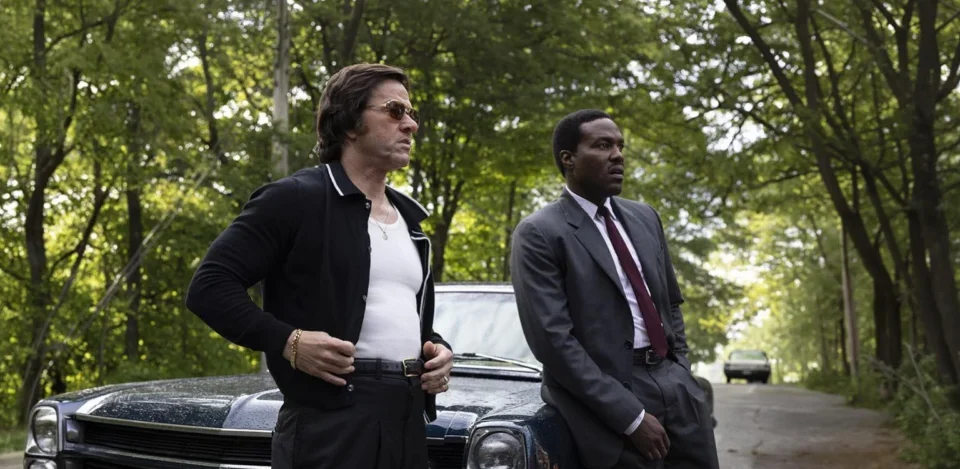
The story is set against the backdrop of 1960s Mississippi, a period defined by the violent resistance of white supremacists to the burgeoning Civil Rights Movement. The film centers on two disparate figures: Wayne Strider (Yahya Abdul-Mateen II), a disciplined and "by-the-book" Black FBI agent, and Greg Scarpa (Mark Wahlberg), a brutal enforcer for the Colombo crime family.
The central conceit involves the FBI "enlisting" Scarpa to use his specific brand of extralegal violence to extract information from the Ku Klux Klan. While the film claims to be based on a true story, the narrative takes significant liberties, most notably the creation of the Wayne Strider character and the nature of the partnership between the mob and the federal government.
Chronology: From Freedom Summer to the Dahmer Investigation
The film’s timeline is rooted in the high-tension atmosphere of the mid-1960s, specifically focusing on the aftermath of the "Freedom Summer."
The Historical Prologue
The film opens with an archival montage that grounds the audience in the reality of 1964 Mississippi. It references the disappearance of three civil rights workers—two Jewish men and one Black man—who were murdered while attempting to register Black voters. These opening moments establish a somber, documentary-like tone, highlighting the systemic failure of local law enforcement to protect activists.
The Introduction of Greg Scarpa
The narrative shifts abruptly from historical footage to a dingy basement where Mark Wahlberg’s Greg Scarpa is introduced in his "natural habitat." This scene serves as the audience’s introduction to the film’s version of justice: Scarpa is shown brutally beating a victim with a baseball bat, demanding to know the location of bodies. This sequence establishes the "ruthless violence" that Scarpa brings to the table—a contrast to the legalistic approach of the FBI.
The Catalyst: The Murder of Vernon Dahmer
The plot is set in motion by the real-life murder of Vernon Dahmer, played by Giancarlo Esposito. Dahmer, a prominent NAACP chapter president, was killed when the KKK firebombed his home. This tragedy brings Agent Wayne Strider back to his home state of Mississippi. Strider is tasked with solving the case, but his superiors at the FBI—recognizing the limitations of the law in a state controlled by the Klan—clandestinely bring in Scarpa to "assist."
The Partnership and Conflict
The middle act of the film follows the mismatched duo as they traverse the dangerous landscape of Mississippi. The chronology follows their investigation through various interrogations and confrontations. While Strider attempts to build a case through evidence and procedure, Scarpa relies on intimidation and physical assault. The film culminates in a debate over the efficacy of their respective methods, leading to a climax where the lines between law and lawlessness are intentionally blurred.
Supporting Data: Historical Accuracy and Creative Liberties
To understand the controversy surrounding By Any Means, one must look at the data regarding the real-life figures involved and the script’s development.
The Real Greg Scarpa
Greg "The Grim Reaper" Scarpa was indeed a real person—a high-ranking member of the Colombo crime family and a prolific FBI informant for decades. Rumors have long persisted that the FBI used Scarpa to "deal" with the KKK in Mississippi during the 1960s, specifically to find the bodies of the missing civil rights workers. However, historical evidence suggests Scarpa’s involvement was far more transactional and less "heroic" than the film portrays.
The Fiction of Wayne Strider
Unlike Scarpa, Wayne Strider is a fictional creation. While there were Black FBI agents during this era, the "buddy" dynamic between a Black agent and a white mobster is a narrative invention. Critics argue that this invention serves a specific trope: the "white man edifying his starchy Black associate." In this case, the lesson being taught isn’t cultural (as seen in Green Book), but rather a lesson in the "necessity" of violence.
Visual Artistry vs. Script Limitations
Data from early reviews suggests a sharp divide between the film’s technical execution and its writing. Cinematographer Ante Cheng is credited with giving the film a "gorgeous" aesthetic. Reviewers note the use of light and shadow, particularly in scenes depicting the Mississippi landscape at dawn and the "sinister horizontal shadows" used to frame the antagonists. Despite these visual triumphs, the script—originally a Black List darling—is being criticized for its "reductive" take on the debate between non-violence and militant resistance.
Official Responses and Critical Reception
The reception of By Any Means has been complicated, particularly given Elegance Bratton’s status as a rising star in independent cinema.
The "Green Book" Comparison
Multiple critics have pointed to Peter Farrelly’s Green Book (2018) as a precursor to By Any Means. However, where Green Book was criticized for its "white savior" narrative in a comedic/dramatic context, By Any Means is being panned for applying that same logic to extreme violence. Critics argue that the film feels like a "relic," utilizing a dated vision of racial healing that relies on a white character "freeing" a Black character from his moral constraints.
Industry Perspective on the Black List
The film’s origin as a Black List script has also sparked discussion within the industry. The Black List is intended to highlight "most liked" scripts, but By Any Means has led some to question whether Hollywood’s appetite for "gripping action thrillers" often comes at the expense of historical nuance. The consensus among several high-profile reviewers is that the problems with the film were "baked in" to the script long before Bratton signed on to direct.
Performance Appraisals
While the film’s themes are under fire, the performances have received a mixed but generally respectful response. Yahya Abdul-Mateen II is praised for bringing depth to a "prim" and "buttoned-up" character, while Nicole Beharie is noted for making the most of a limited role as Strider’s wife. Mark Wahlberg’s performance is described as "intense," though some critics find the character’s "moderately offensive eye-rollers" and stereotypical "tough guy" dialogue difficult to stomach.
Implications: The Future of Historical Dramas
The release of By Any Means carries significant implications for how Hollywood approaches sensitive historical periods and racial dynamics.
The Ethics of "By Any Means Necessary"
One of the most significant points of contention is the film’s appropriation of the phrase "by any means necessary." Originally popularized by Malcolm X to describe the struggle for Black liberation, the film applies this philosophy to a white mobster’s violent tactics. This "implicit transfer" is seen by many as a crude rewriting of history that decontextualizes a radical Black political philosophy to serve a conventional action-movie plot.
The Trajectory of Elegance Bratton
For Elegance Bratton, By Any Means represents a challenging "sophomore slump" in terms of critical reception, if not in technical skill. The film suggests a tension between a director’s unique visual voice and the pressures of helming a star-driven, mid-budget studio project. The implication is that Bratton’s "ingenuity" may have been stifled by a script that had already "chosen a side" before production began.
The Persistence of the "Mismatched Buddy" Trope
Finally, the film proves that the "mismatched buddy" trope remains a staple of Hollywood storytelling, even when applied to the most somber of subjects. By framing the Civil Rights Movement through the lens of a "tough guy" teaching a "straight man" how to "grow some balls," the film risks trivializing the actual strategic and philosophical debates of the era.
In conclusion, By Any Means stands as a visually stunning but narratively troubled attempt to reconcile the "mob thriller" with the "civil rights drama." While its technical merits are undeniable, its reliance on regressive tropes and historical revisionism has left many wondering if this brand of "movie magic" is better left in the past. As the film moves through its theatrical and streaming cycles, it will likely continue to serve as a case study in the complexities of portraying racial history on the silver screen.