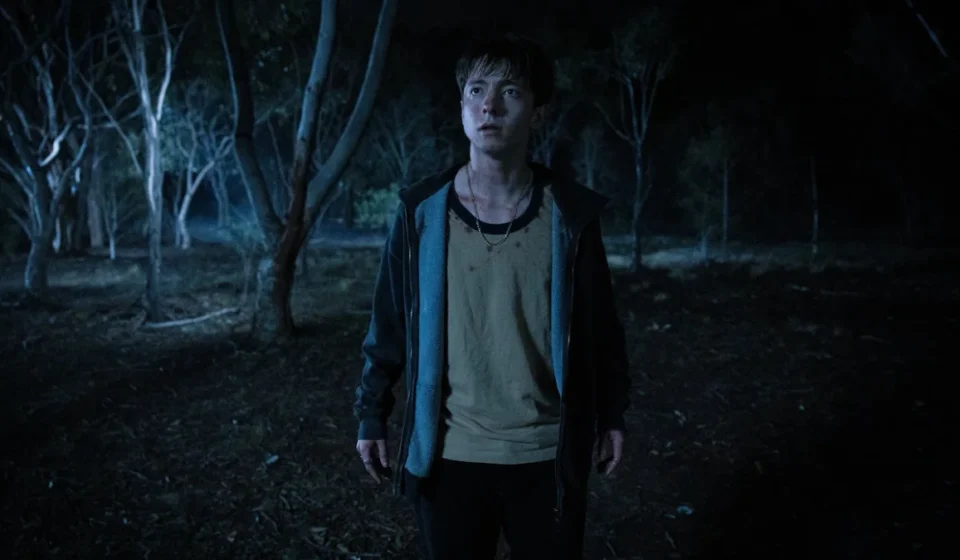
The Monster in the Mirror: Adrian Chiarella’s Leviticus and the Resurrection of Queer Horror

In the landscape of modern independent cinema, few genres possess the visceral, transformative power of horror to articulate the anxieties of the marginalized. With his debut feature, Leviticus (2026), Australian filmmaker Adrian Chiarella has crafted a work that functions as both a chilling supernatural thriller and a searing indictment of the structures that stifle queer identity. By literalizing the adage that "desire is a death sentence," Leviticus transcends its genre tropes to become a definitive parable for an era marked by a resurgence of institutional bigotry.
The Premise: A "Little Death" That Begets Tragedy
Leviticus opens with a sequence that serves as a thesis statement for the film’s grim thematic architecture. A lesbian lifeguard, seeking a moment of illicit respite in a poolside shower, is stalked and murdered by an entity that manifests as the object of her deepest desire. This is no standard slasher villain; it is a manifestation of a hex cast upon queer youth by a local church—a horrific, supernatural extension of the "conversion therapy" rhetoric that continues to haunt vulnerable communities.
The film operates on a chilling, foundational premise: the pious decree that one’s natural inclinations are inherently lethal. By casting this internal struggle as a physical predator that can mimic the faces of loved ones, Chiarella forces his protagonists—and his audience—to confront the terror of not knowing whether the person standing before them is an ally or an echo of their own suppression.
A Chronology of Suppression and Survival
The narrative follows Naim (Joe Bird), a shy newcomer to an industrial, isolated town in the Australian outback. His life is defined by the suffocating gravity of a cult-like religious community. His world shifts when he encounters Ryan (Stacey Clausen), a brash, charismatic classmate whose boldness serves as both a lure and a catalyst for Naim’s awakening.
The chronology of their burgeoning romance is punctuated by moments of intense, volatile intimacy. In a standout sequence, Ryan pins Naim to the floor of an abandoned industrial site—a space that mirrors the decaying state of their social environment—and seals their connection with a kiss. Yet, even in this moment of liberation, the horror intervenes. Upon catching his reflection in a window, Naim is struck by a visceral revulsion, a self-loathing instilled by years of religious conditioning.
The plot spirals into tragedy when Hunter (Jeremy Blewitt), the closeted son of the town’s preacher, enters their orbit. A violent, confused tryst between Hunter and Ryan leads Naim to commit a desperate, performative act of betrayal: he reports the affair, hoping to appease the powers-that-be and secure a reprieve from their judgment. Instead, he finds himself in a cycle of atonement, learning the hard lesson that in the world of Leviticus, the "transgression" of being oneself never yields a lesser punishment.
Supporting Data: The Genre as a Mirror
Chiarella’s directorial vision is rooted in a deep, scholarly appreciation of horror’s historical relationship with the queer experience. "I started thinking about what would be personal for me," Chiarella reflects. "Horror movies were something that I turned to as a young queer teenager. The genre has been important to the community for a very, very long time."
He cites canonical works such as Wes Craven’s A Nightmare on Elm Street 2: Freddy’s Revenge (1985) and John Carpenter’s The Thing (1982). These films are not merely aesthetic influences; they are blueprints for articulating the "tension between the self and the other." The Thing, in particular, provides the structural backbone for Leviticus: the paranoia of not being able to trust the person sitting across from you.
The production design—dripping with a sense of dreary, vacant hostility—complements this narrative focus. By juxtaposing industrial decay with the vast, uncaring landscape of the Australian boondocks, Chiarella crafts a "modern biblical parable." The settings are intentionally anonymous, reflecting the universality of the fear that permeates the characters’ lives.
Official Responses and Creative Intent
In interviews surrounding the film’s release, Chiarella has been clear about his motivations. Leviticus was born from a reaction to the modern "backward slide" in progress toward queer safety. The film serves as a "brute-force appeal for empathy in a callous age."
The visual language of the film—often seen through filters of glass, mirrors, and surveillance—further emphasizes the theme of perception. Characters who are not burdened by the curse are unable to see the monster, a deliberate metaphor for the willful ignorance of adults who dismiss queer identity as a "phase" or a social contagion.
Even the casting, featuring the acclaimed Mia Wasikowska as Naim’s mother, serves to heighten the sense of systemic betrayal. When Wasikowska’s character delivers the chilling line, "We need fear," she blurs the line between maternal protection and the crushing weight of institutional oppression. Chiarella notes, "I wanted to create a world where you weren’t sure you could trust even the real people around you anymore."
The Implications of the "Final Girl" and the Persistent Monster
Perhaps the most compelling aspect of Leviticus is its refusal to offer the comfort of a clean resolution. In traditional horror, the death of the monster signals the end of the terror. In Leviticus, the ending is ambiguously, hauntingly open.
"We took that idea of how, in the final frame of a lot of horror movies, the monster comes crawling back," Chiarella explains. "I thought about what that would mean in this film—that whatever trauma these boys have been through may not go away for a very long time. It may never go away."
This conclusion has significant implications for contemporary queer cinema. While much of recent media has shifted toward stories of triumph, victory, and the celebration of identity, Leviticus acts as a vital, necessary counter-narrative. It insists that for many, the "monster" of homophobia and the internal trauma it breeds is not a ghost that can be exorcised in ninety minutes. It is a lingering presence, an echo in the mirror that requires constant vigilance.
A Legacy of Horror and Hope
Leviticus is a film that demands to be reckoned with. It is not an easy watch, nor is it intended to be. By fusing the visceral tremors of the horror genre with the intimacy of a coming-of-age drama, Chiarella has created a work that is as intellectually stimulating as it is emotionally devastating.
As the film makes its rounds through the festival circuit, its impact is already being felt. It serves as a reminder that horror, at its most effective, is never just about the supernatural; it is about the very real, very human fears that define our existence. By unearthing the "terrible and intimate" truths of growing up queer in a hostile environment, Leviticus positions itself as a landmark entry in the canon of queer cinema.
Ultimately, the film asks a question that resonates long after the credits roll: If the monster is a reflection of our own survival, how do we continue to live once the threat is no longer outside, but woven into the very fabric of who we are? Chiarella does not provide an easy answer, and in doing so, he provides the most honest one possible: we keep looking, we keep fighting, and we acknowledge that the struggle, like the horror, is a testament to the fact that we are still here.