The Portal and the Path: Shatara Michelle Ford’s Dreams in Nightmares Redefines the American Road Movie

Editor’s note: This review was originally published on August 1, 2024, following the film’s debut at the 2024 BlackStar Film Festival. The film is scheduled to open in New York City on Friday, August 21, and in Los Angeles on Friday, August 28, with a nationwide theatrical expansion slated for September.
A Visionary Sophomore Feature
In the landscape of contemporary independent cinema, few voices have emerged with the singular, piercing clarity of Shatara Michelle Ford. Following the critical acclaim of their 2021 debut Test Pattern—a film that dissected the institutional failures of the medical and legal systems through a deeply personal lens—Ford returns with Dreams in Nightmares. If Test Pattern was a scalpel, Dreams in Nightmares is a sprawling, atmospheric, and profoundly ambitious tapestry.
The film is, at its core, a road movie, yet it refuses the tropes of the genre. Instead of a straightforward journey toward self-discovery, Ford crafts a surreal, haunting meditation on the existential weight carried by queer women of color in a world that is, by design, not built for them. Clocking in at 127 minutes, the film is a daring, unclassifiable work that blends the visceral anxiety of a psychological thriller with the intimate, messy warmth of a long-overdue reunion.
The Recurring Void: Z’s Unsettling Premonition
The film opens on an image that serves as its thematic anchor: Z (Denée Benton) is trapped in a dream. She stands in a suffocating void, only to find a sliver of light—a portal to a wheat-colored landscape, a place of promise and respite. Just as she is about to cross the threshold, the dream shatters, and she wakes.

"I think my ancestors are trying to tell me something," Z muses, a line that haunts the remainder of the narrative. This is not mere dream-logic; it is the central question of the film. Z, struggling with the dual pressures of a layoff from her adjunct teaching position and the shifting sands of her personal relationships, begins to view her reality through the lens of this recurring vision.
The brilliance of the film lies in how it frames Z’s life. With cinematographer Ludovica Isidori, Ford employs wide, unsettling shots that mirror the feeling of being watched. There is a "lurking" quality to the cinematography, a sense that the very frame of the film is an invasive entity, mirroring the systemic racism and sexism that permeate Z’s daily life.
A Journey into the Unknown
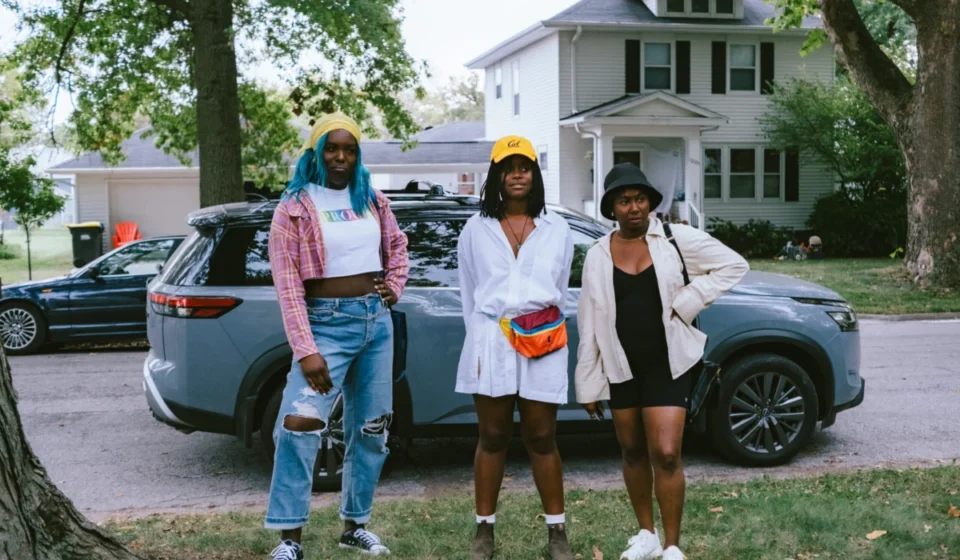
The narrative expands as we meet the other members of Z’s inner circle: Tasha (Sasha Compère), an MBA-wielding professional recently displaced by corporate downsizing; Lauren (Dezi Bing), whose vibrant, scrappy energy provides the film’s kinetic heartbeat; and the conspicuously absent Kel (Mars Rucker).
The catalyst for the film’s road-trip structure is as somber as it is urgent: Kel has gone silent. For months, the once-tight quartet has been fractured, and the trio’s journey from Pittsburgh to Iowa City and eventually Kansas City is a desperate quest to find their friend. This isn’t a whimsical vacation; it is a search for missing history.

As the trio traverses the heartland, the film pivots between the comedic absurdity of their interactions and the crushing weight of their circumstances. A stop in Pittsburgh offers a vibrant interlude of drag and poetry—a moment of communal catharsis—while a later encounter in Iowa City with Kel’s ex-girlfriend, Sabrina (Jasmin Savoy Brown), serves as a masterclass in tension. Sabrina’s defensive, performative life as a student of the Iowa Writers’ Workshop creates an impenetrable barrier, forcing the audience to ask: Why are we so afraid to ask the hard questions?
The Weight of Silence: Implications and Social Commentary
Ford’s film is deeply concerned with the "nightmare of late-stage capitalism." The layoffs, the precarious living situations, and the constant navigation of spaces that were never intended for them are not subplots; they are the environment. By focusing on Black queer femmes, Ford highlights a specific kind of invisibility.
The film’s brilliance lies in its refusal to offer easy answers. When the characters finally confront the parents of their missing friend (played by the legendary Regina Taylor and Robert Wisdom) in Kansas City, the lack of communication becomes almost tactile. The question, "Where is Kel?" hangs over the narrative like a shroud.
The film functions as a rallying cry. It suggests that the path to liberation—or at least to clarity—requires tearing down the social scripts that force marginalized people to perform "wellness" while they are actively grieving. The "portal" in Z’s dream becomes an allegory for the necessity of radical change, suggesting that if the current world is a nightmare, the only solution is to build a new one.

Technical Mastery and Creative Continuity
A significant portion of the film’s success must be attributed to the continuity of Ford’s creative team. Composer Lia Ouyang Rusli returns to craft a score that feels both ethereal and grounded, perfectly complementing the dreamlike sequences. Isidori’s camera work, as noted, is transformative, turning mundane urban spaces into sites of both terror and beauty.
The performances are equally vital. Denée Benton is a revelation as Z, carrying the weight of the character’s internal conflict with a quiet, devastating intensity. Dezi Bing’s turn as Lauren is a breakout performance, providing the film with much-needed levity and grit. Together, the cast embodies a decade-long friendship that feels lived-in, flawed, and utterly authentic.
A Radical Conclusion
As the road trip reaches its terminus, Dreams in Nightmares avoids the trap of the ambiguous, arthouse ending. Instead, Ford offers a resolution that is both intellectually satisfying and emotionally resonant. The final act of the film shifts the tone from a melancholic search to a radical assertion of presence.
The answer to Z’s dream is not found in the wheat-colored fields of her imagination, but in the connections she cements with the people who remain. The portal, it turns out, is not a place you go to; it is a space you create with others.

Critical Reception and Industry Impact
Since its premiere at the BlackStar Film Festival, Dreams in Nightmares has been hailed by critics as a landmark achievement in modern indie film. It stands as a testament to the power of the "sophomore surge," where a filmmaker, emboldened by the success of a debut, chooses to widen their scope rather than play it safe.
As the film prepares for its wider release, it poses a challenge to the industry: how do we support, sustain, and champion the voices that are actively trying to redefine the visual language of the American experience? Dreams in Nightmares is not just a film to be watched; it is a film to be interrogated. It is a work of immense ambition, profound empathy, and rare, uncompromising vision.
Grade: A-
Summary of Key Themes
- Generational Trauma: The film suggests that the "nightmare" is not just the present moment, but a historical inheritance.
- Queer Femmeness as Resistance: The protagonists’ identities are not treated as secondary traits but as the primary lens through which they interpret their reality.
- The Myth of the American Dream: Through the characters’ economic instability, Ford deconstructs the promise of mobility and success.
- The Language of Silence: A central motif regarding the inability to communicate, even among those who love each other most.
Dreams in Nightmares is a challenging, necessary, and vibrant addition to the canon of contemporary American cinema. It demands that we look at the voids in our own lives and, like Z, find the courage to step through the light.