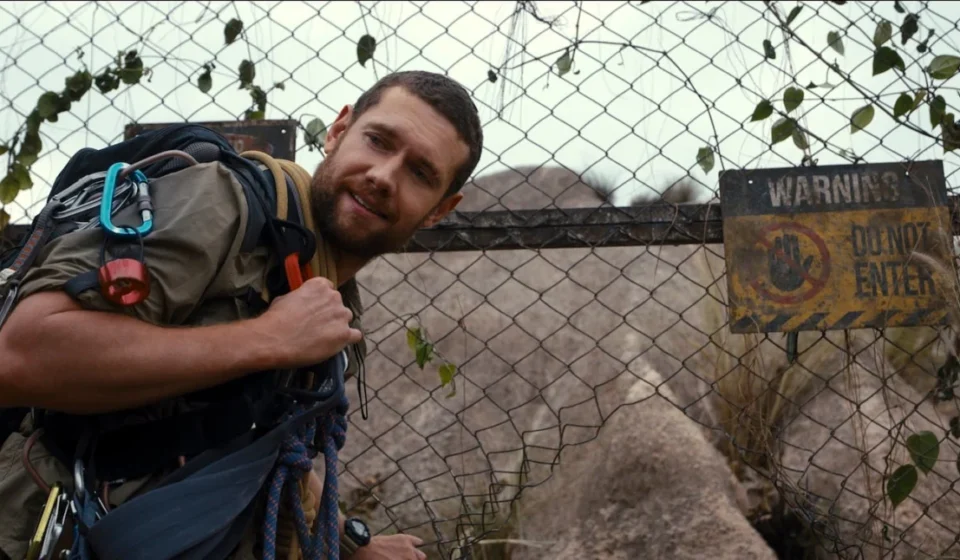

The survival thriller genre has long relied on the primal fear of heights to keep audiences pinned to their seats. In 2022, the original Fall managed to turn a simple premise—two women trapped on a remote, decaying television tower—into a box-office success that left viewers breathless. Now, as of today, Lionsgate has officially unleashed the long-awaited sequel, Fall 2: Deadpoint, into theaters.
To mark the occasion, the studio has released a collection of high-stakes promotional materials, including a chilling new clip that showcases the sheer vertigo-inducing scale of the production. While the marketing push aims to recapture the visceral intensity of its predecessor, the road to release has been paved with both anticipation and, following early critical reception, a fair amount of skepticism.
Main Facts: The Premise and the Players
Fall 2: Deadpoint shifts the action from a man-made structure to the brutal, unforgiving environment of Thailand’s Mount Kwan. The narrative centers on two climbers, Jax (played by Harriet Slater) and Luce (played by Arsema Thomas), whose expedition takes a catastrophic turn.

The film is directed by the visionary sibling duo Peter and Michael Spierig, known for their work on Jigsaw and Predestination. Their involvement brings a stylistic shift to the franchise, aiming to translate the claustrophobic dread of the first film into a wider, yet equally suffocating, natural landscape. Joining the lead duo is Tom Brittney, rounding out a cast tasked with carrying the weight of a film that relies almost entirely on the chemistry and physical performance of its stars. The script, penned by the original film’s writers, Jonathan Frank and Scott Mann, attempts to expand the mythology of the "survival at any cost" trope.
Chronology: From Concept to Theatrical Release
The journey of Fall 2: Deadpoint began in the wake of the original film’s surprise success. After the 2022 release became a sleeper hit, Lionsgate quickly moved to greenlight a follow-up, aiming to turn a self-contained thriller into a viable franchise.
- Initial Development: Following the strong VOD and theatrical performance of Fall, production was fast-tracked with the goal of maintaining the brand’s momentum.
- Production Phase: Filming commenced with a focus on practical effects and high-altitude cinematography. The Spierig brothers were brought on board to lend their distinct genre sensibilities to the project.
- Marketing Kick-off: Throughout the summer of 2026, teasers began to circulate, focusing on the "Mount Kwan" setting.
- The "Deadpoint" Reveal: In early September 2026, the studio intensified its campaign, culminating in the release of the "plank walk" clip, designed to showcase the terrifying practical stakes of the film.
- Theatrical Bow: As of today, the film is now available for public viewing, marking the end of a long wait for fans of the first installment.
The "Plank Walk" Clip: A Study in Vertigo
The recently released clip from the film is perhaps the most effective marketing tool deployed by Lionsgate to date. It features Jax and Luce attempting to navigate a series of iron pegs driven into the vertical face of Mount Kwan.

The sequence is a masterclass in tension, highlighting the auditory experience of the climb: the metallic clink of gear against rock, the strained breathing of the characters, and the whistle of the wind thousands of feet above the ground. The clip serves as a microcosm of the film’s central conflict. By forcing the characters to rely on a "deadpoint"—a climbing term where a climber reaches for a hold at the apex of their movement—the film emphasizes the lack of margin for error.
Lionsgate has strategically cut the clip at the most pivotal moment: the instant someone loses their footing. This "cliffhanger" approach is designed to entice audiences to the theater to see the immediate aftermath of the fall, leveraging the audience’s morbid curiosity.
Supporting Data: The Challenge of the Sequel
When analyzing the reception of Fall 2: Deadpoint, one must look at the statistical and critical weight of the original film. Fall (2022) was celebrated for its simplicity. It did not rely on complex lore or sprawling casts; it relied on the physics of terror.

Early feedback from critics suggests that Fall 2 faces the "sequel trap." While the cinematography and the sheer scale of the set pieces—as evidenced by the new high-resolution production stills—are objectively impressive, the emotional resonance seems to be a point of contention. Critics are noting that while the technical aspects of the filming (using state-of-the-art camera rigs and location-based practical work) are top-tier, the narrative stakes struggle to replicate the "unexpectedly effective" nature of the original.
Furthermore, the shift from a man-made structure to a natural rock formation changes the audience’s psychological connection to the danger. A tower is a mechanical failure waiting to happen; a mountain is an indifferent, ancient force. Whether this transition translates to a better viewing experience is currently the subject of intense debate among genre enthusiasts.
Official Responses and Creative Vision
The Spierig brothers have been vocal about their desire to push the boundaries of what the Fall franchise represents. In previous statements, the directors emphasized that their approach was to treat the mountain itself as a character.

"We didn’t want to just repeat the tower," one representative for the production noted. "We wanted to explore the idea of ‘deadpoint’—that singular moment of human failure where the mind and the body disconnect."
Lionsgate’s marketing team has focused heavily on the "immersive" aspect of the film. By releasing images that highlight the isolation of the characters—Jax and Luce hanging in the vast, empty void of the Thai wilderness—the studio is betting that the visual spectacle will be enough to draw audiences. The emphasis on the practical nature of the stunts, rather than over-relying on CGI, has been a cornerstone of their promotional rhetoric, aiming to build trust with a core audience that values "authentic" thrills.
Implications: Where Does the Franchise Go from Here?
The release of Fall 2: Deadpoint carries significant implications for the future of mid-budget survival horror. If the film performs well at the box office despite lukewarm critical reception, it cements the idea that "gimmick-based" horror—thrillers defined by a specific, high-concept setting—is a permanent fixture in modern cinema.

However, if the film fails to find a rhythm with the audience, it may signal a "diminishing returns" phase for the franchise. The industry is currently watching to see if the "survival" sub-genre can sustain itself beyond the initial novelty of the first film.
Furthermore, the reception of Fall 2 will likely influence how studios approach similar projects in the future. Will they double down on the intensity, or will they seek to integrate more character-driven drama? The current critical consensus—that the sequel fails to capture the "nightmare" quality of the original—suggests that audiences may be becoming more discerning, demanding that high-concept thrills be matched by equally compelling emotional arcs.
Conclusion
As Fall 2: Deadpoint hits theaters, it arrives at a crossroads. It is a film that clearly understands its aesthetic—the, stark, terrifying beauty of the abyss—but it must now prove that it has the narrative strength to keep that audience from looking away.

For those who crave the adrenaline rush of a well-executed survival thriller, the film offers a spectacle that is arguably best experienced on the largest screen possible. Despite the mixed early reviews, the sheer technical ambition displayed in the released clips and promotional stills makes it a significant entry in the 2026 film calendar. Whether or not it will be remembered as a worthy successor to the original remains to be seen, but one thing is certain: it is a high-stakes gamble that is, at the very least, committed to the fall.