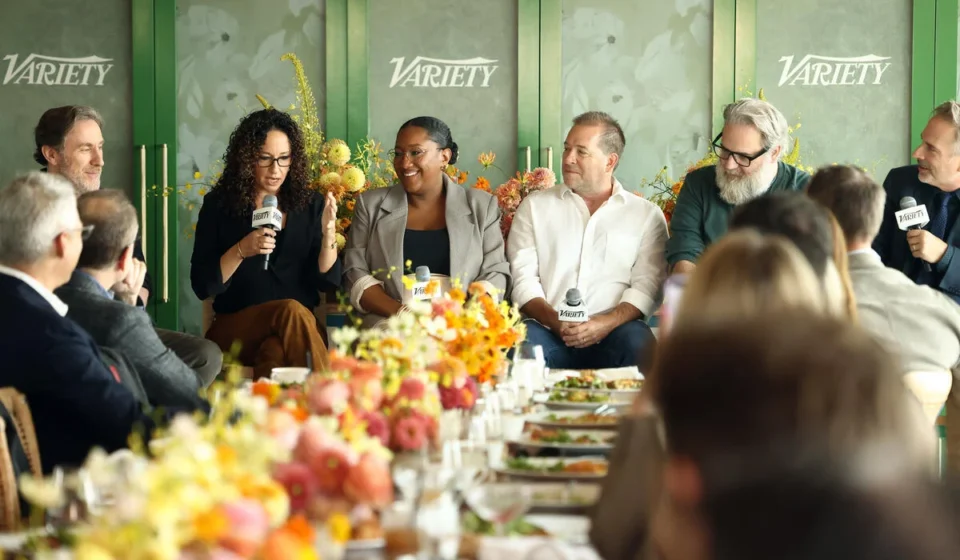

On August 14, the tranquil, sun-drenched atmosphere of Oleander at The Sun Rose Hotel in West Hollywood served as the backdrop for one of the most significant intellectual gatherings in the television industry. Variety’s annual Showrunner Breakfast, a prestigious event that draws the architects of today’s most influential series, acted as a crucible for discussing the shifting tectonic plates of modern storytelling.
Honoring the luminaries featured in Variety’s 2026 Showrunners Impact Report, the event brought together the creative leads behind powerhouses like Apple TV+’s Your Friends & Neighbors, Netflix’s The Diplomat, Apple TV+’s Shrinking, FX’s Welcome to Wrexham, and Adult Swim’s Rick and Morty. Under the guidance of Variety executive TV editor Michael Schneider, the assembled group of showrunners moved beyond the pleasantries of morning coffee to tackle the existential and operational challenges facing television today.
Navigating the Creative Minefield: Network Notes and Artistic Vision
The relationship between the network executive and the showrunner is perhaps the most delicate dance in Hollywood. During the panel, the conversation shifted toward the art of interpreting feedback—a skill that can either elevate a series to Emmy-winning status or dilute its creative potency.
Jonathan Tropper, the visionary behind Your Friends & Neighbors, emphasized that the utility of a note is often dictated by its framing. For Tropper, the most productive notes are those that act as a mirror, reflecting the viewer’s experience back to the creator without dictating the mechanics of the scene.

"I always divide notes into two categories," Tropper explained. "Are they trying to write or direct the show, or are they just trying to help me write the show?" He noted that the most helpful critiques address intention: "I don’t know if that emotion is landing the way you think it is," or questioning the specific motivation of a character. By soliciting reactions from those outside the core creative "brain trust," showrunners can identify where the narrative friction might be confusing the audience, rather than simply frustrating them.
The Weight of Expectation: Sustaining Quality in Long-Running Hits
Maintaining creative momentum across multiple seasons is a daunting task, particularly when a show reaches critical acclaim. Ashley Nicole Black, executive producer of the smash hit Shrinking, spoke candidly about the pressure of following up a season that garnered 10 Emmy nominations.
"It’s pretty daunting at first, but I find that once you make one decision, it sort of begets a bunch of other decisions," Black remarked. For Season 4, the creative team has turned toward the real-world expertise of therapist Dr. Andrea Barthwell to ground the character of Gabby’s new professional trajectory. By integrating authentic, specialized knowledge into the writers’ room, the team is able to spin organic, compelling narratives that feel earned rather than forced.
Similarly, The Diplomat showrunner Debora Cahn shared a poignant realization after four seasons at the helm of her political thriller. "I’m starting to get that the panic doesn’t go away because we’re still trying to do something we haven’t done," Cahn admitted. Her perspective serves as a reminder that comfort is often the enemy of high-stakes television. In her view, the "panic" is not a symptom of mismanagement, but a natural byproduct of pushing boundaries and striving for narrative growth.

The Multi-Generational Room: Honoring Canon and Innovation
The dynamic between veteran creators and junior writers remains a cornerstone of the industry’s health. Dan Harmon, co-creator of the genre-bending Rick and Morty, highlighted the necessity of empowering younger voices in the room, particularly when it comes to maintaining the sprawling, complex canon of a long-running series.
"The kids, they go, ‘Well, I think Evil Morty should come back!’ And I say, ‘Says you, have fun writing that crap!’" Harmon quipped. However, he was quick to emphasize that he relies on the diligence of his staff—specifically the writers’ assistants who hold the "institutional memory" of the show. "Thank God we tend to promote our writers’ assistants so that they have everything on file," he added, underscoring that the preservation of a show’s legacy is a collaborative effort between the seasoned visionary and the meticulous archivist.
The AI Paradox: Efficiency vs. The Human Soul
As the discussion turned to the role of Artificial Intelligence in the writers’ room, the room grew contemplative. The anxiety surrounding AI is not merely about job security; it is about the preservation of the unique, human-centric perspective that defines great art.
Ashley Nicole Black pointed to the growing trend of "temporary" work in the industry. As the gig economy encroaches on the traditional stability of showrunning, the prospect of AI-driven script assistance threatens to further commoditize the creative process. "It does start to feel like work is getting more and more temporary," Black noted, pointing out that the industry’s current economic model makes it difficult for writers to build the sustained careers necessary for professional growth.

Jonathan Tropper expressed a cautious, evolving outlook. "However fast we think it’s going to change things, it’s going to be faster," he warned. While he acknowledged the temptation to use technology to expedite production, he remains a staunch defender of the human element. "I cling to the hope that art will still have to be created by the vision of humans, and whether they’re using AI to realize that or not is going to fracture a lot of things."
Honoring the Architect: Ryan Murphy Receives the Norman Lear Award
The breakfast concluded with a celebration of career-defining achievement. Ryan Murphy, the prolific creator of genre-defining series such as American Horror Story, Nip/Tuck, and Glee, was presented with the prestigious Norman Lear Award by industry titan Greg Berlanti.
The award ceremony served as a moment of reflection for the entire room, highlighting the lineage of television history. Murphy’s acceptance speech was a tribute to the power of the medium to act as a catalyst for social progress. He recounted his formative experiences watching Norman Lear’s All in the Family, noting that it was the first time he understood how television "can change hearts and minds."
"TV characters really become like friends," Murphy remarked, reflecting on the intimate relationship between the screen and the viewer. "If you do it right, you can reach hearts." Murphy shared a touching anecdote about his relationship with Lear, describing a conversation in which he thanked the legend for his courage in tackling controversial, vital topics. "The amazing thing is when I told him that, he burst into tears like nobody had ever said a nice word to him in his life. But that was Norman."

Implications: The Road Ahead
The consensus emerging from the 2026 Showrunner Breakfast is that television is at an inflection point. While technology and shifting corporate structures are rapidly altering the production landscape, the core principles of the craft remain anchored in human experience.
The primary challenge for the next generation of showrunners will be navigating a world where content is produced with increasing speed, yet the demand for meaningful, authentic connection has never been higher. As these creators continue to balance the pressures of network expectations, the integration of new technologies, and the need to mentor the next wave of talent, the industry’s success will likely depend on their ability to stay true to the lessons established by pioneers like Norman Lear: that television, at its best, is a human medium capable of profound empathy.
As the industry looks toward the remainder of 2026 and beyond, the insights shared by these creative leaders suggest a resilient, if evolving, ecosystem. Whether through the careful curation of narrative canon, the honest confrontation of production "panic," or the steadfast refusal to let technology overshadow human vision, the architects of today’s television are ensuring that, even in an era of disruption, the story remains paramount.