

Fragments of a Fractured Land: Lana Daher’s Do You Love Me and the Archive of Memory

In the landscape of contemporary documentary filmmaking, few works manage to capture the elusive, haunting nature of collective trauma as viscerally as Lana Daher’s debut feature, Do You Love Me (2026). A kaleidoscopic, 76-minute assemblage of seven decades of Lebanese history, the film is far more than a historical retrospective; it is a profound, non-linear meditation on what it means to remember in a country where the state provides no official record. Currently enjoying its run at New York’s Metrograph following a critically acclaimed premiere at Venice Days, the film serves as a vital, breathing repository for a nation defined by its cycles of destruction and resilience.
Daher, a Beirut-based multidisciplinary artist, has constructed a cinematic tapestry that defies traditional storytelling. By stitching together over 100 films, newsreels, personal home movies, and radio broadcasts, she forces the past and present to collide, creating a dialogue between the archival ghost and the living witness.
The Genesis of an Unofficial Archive
The project’s origins date back to 2018, initially conceived as a research endeavor into the intersection of war and music. Daher sought to understand how melodies act as vessels for memory, carrying the emotional weight of conflict across generations. The title itself is an homage to the Bendaly Family, a beloved Lebanese musical troupe whose songs act as a recurring motif throughout the film.
"It began with a specific focus on the Bendaly Family," Daher explains. "It was always intended to be an archive-based doc, but little by little, I realized that what mattered to me was much more personal: my own relationship with Beirut, my own childhood, my own traumas; our relationship to memory and history as a society."

As the project evolved, it shed its academic skin to become a deeply personal love letter to a city in permanent crisis. For Daher, the film is a remedy for a specific kind of Lebanese erasure—the lack of a national archive. In a nation where history books are often contested or suppressed, Daher’s "hunt" for footage became an act of reclamation.
Chronology of a Disoriented Journey
Daher’s editorial philosophy is built upon a single, guiding principle: "disorientation is part of the journey." Unlike traditional documentaries that rely on voiceover narration to guide the viewer through a chronological progression of events, Do You Love Me rejects linearity. It reflects the erratic, fragmented nature of trauma.
The Construction of the "Hunt"
The sheer scale of the archival labor involved is staggering. To piece together the film, Daher and her team had to navigate a landscape with no central repository.
- Source Material: Over 106 fiction and documentary features were mined for content.
- Data Volume: The research phase yielded more than 20,000 audiovisual fragments.
- Legal Hurdles: The production team successfully cleared nearly 400 rights contracts, a testament to the immense logistical challenge of independent archival cinema.
- Historical Depth: The footage spans from 1928—the oldest home video—to the present day, covering a vast spectrum of Lebanese life.
By collaborating with Paris-based Syrian editor Qutaiba Barhamji—known for his acclaimed work on Four Daughters (2023)—Daher ensured that the film would not be bogged down by the subjective biases of a local lens. The duo established strict parameters: no full scenes from existing works, no appearances by Lebanese politicians, and an emphasis on emotional rather than political rhythm.

Supporting Data: The Female Perspective
A defining feature of Do You Love Me is its commitment to centering the female gaze. In a region where history is frequently documented by those in power, Daher highlights that the preservation of memory has often fallen to women.
"So much of what survives as ‘the record’—home videos, family photographs, personal collections—was shot, kept, and passed down by women, even when they weren’t the ones holding the camera," Daher notes. By elevating these perspectives, the film acts as an homage to pioneers like the late filmmaker and journalist Jocelyne Saab. Through excerpts from Saab’s work, such as Lebanon in Turmoil (1975), the film draws a direct line between the struggles of the past and the wreckage of the present.
The influence of these women is not just thematic; it is structural. The film honors the women who were "witnesses to time," preserving the humanity of a population that is often reduced to statistics in international news cycles.
Official and Societal Responses
The reception of Do You Love Me has been as complex as the film itself. Screening the documentary in Beirut during an active conflict provided a harrowing backdrop that transcended the screen. During one specific screening, the sound of an Israeli drone circling overhead synchronized with the film’s sound design, effectively collapsing the boundary between the "archive" and the "reality" of the audience.
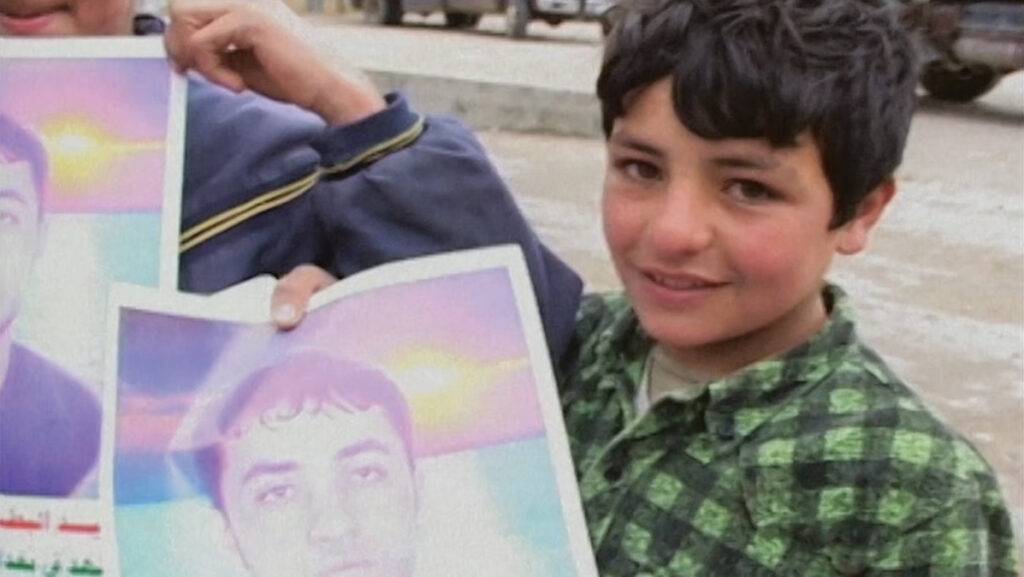
The Challenge of Narrative
When questioned on the current crossfire between Israel and Hezbollah, Daher is quick to challenge the simplistic framing of the conflict. She rejects the idea that Lebanon is merely "caught" between two powers, pointing instead to a 50-year history of invasion and occupation that predates the existence of Hezbollah.
"I stopped trying to explain the country in a conventional way and learned instead to accept it in its full and unresolved complexity," Daher states. This refusal to simplify is what resonates with audiences. For some, the film provides a sense of lightness, a reminder of the Lebanese spirit that desires to live, laugh, and celebrate birthdays despite the encroaching darkness. For others, the film is a devastating confrontation with the reality of inherited trauma.
Implications: A New National Repository
The implications of Do You Love Me for the future of Lebanese cinema are significant. By functioning as a surrogate national archive, the film demonstrates that memory does not require a government mandate to exist. It is a bottom-up construction, built from the "inside."
Why This Matters for Global Audiences
For international viewers, the film serves as an essential corrective to the dehumanizing lens of mainstream news. It moves away from the "war-torn" trope to reveal a society defined by:

- Humanity: The mundane, beautiful, and heartbreaking details of civilian life—weddings, birthdays, and intellectual debates.
- Continuity: The realization that the current crisis is not an anomaly but part of a long, often ignored, historical cycle.
- Resilience: The power of art to "hold space" for emotions that have no other outlet in a fractured state.
As the film continues its run at the Metrograph, its legacy seems already secured. It is a work that acknowledges the impossibility of total clarity in a land of shifting borders and broken histories. By layering her own vision over the fragments of the past, Lana Daher has achieved something remarkable: she has created a record that is not merely "official" or "complete," but one that is fundamentally, hauntingly alive.
In a world where images are consumed and discarded in seconds, Do You Love Me demands that we stop, look, and listen to the ghosts of the past. It suggests that even in the face of erasure, there is a profound, radical power in saying, "I remember, therefore we are."