The Absurdity of the Micro in the Shadow of the Macro: A Review of How to Divorce During the War

In the volatile landscape of the post-COVID era, the human experience has become defined by a profound, often nauseating cognitive dissonance. We live in an age where the macro—the existential threats of geopolitical instability, systemic corruption, and the grim specter of regional conflict—collides daily with the trivialities of the micro. For millions, the news cycle is a background hum of catastrophe, a series of notifications flickering on screens while they attempt to navigate the mundane architecture of their own lives: corporate career ladders, shifting health realities, and the crumbling foundations of domestic partnerships.
It is this specific, uncomfortable disorientation that Lithuanian director Andrius Blaževičius captures with surgical precision in his third feature film, How to Divorce During the War. As the title suggests, the film is a candid, often dryly humorous examination of a marriage reaching its expiration date at the exact moment history begins to accelerate.
The Collision of Personal and Global Crises
The "war" in question is the Russian invasion of Ukraine, a conflict that, for a Baltic state like Lithuania, is far from a distant abstraction. It is a pervasive, suffocating anxiety, a reminder that the firestorm raging in a neighboring territory could, at any moment, breach the border and engulf one’s own reality.
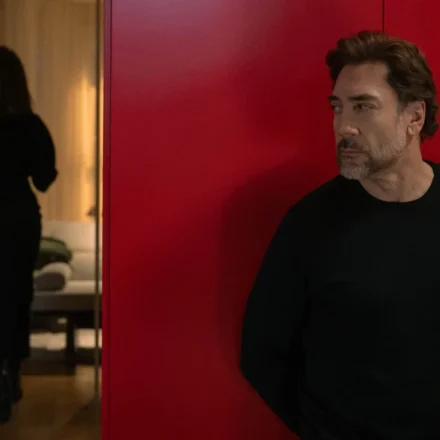
However, for the film’s central couple—Marija (Žygimantė Elena Jakštaitė) and Vytas (Marius Repšys)—the war serves a dual purpose. It is a source of genuine, palpable dread, but it is also a convenient distraction. It provides a convenient shroud under which they can avoid the grueling work of unpacking the rot within their own union. By anchoring their separation in the backdrop of a global crisis, Blaževičius forces the audience to confront the uncomfortable question: How much of our suffering is authentic, and how much is a performance we maintain to avoid facing our own failures?

Chronology: The Slow Decay of a Union
The film opens with a 20-minute prologue that meticulously establishes the chasm between Marija and Vytas before the first tanks cross the Ukrainian border. We are introduced to a dynamic defined by resentment and mismatched expectations. Vytas, once a promising and well-regarded filmmaker, has succumbed to a years-long creative paralysis. He spends his days in a state of domestic stasis, managing the care of their precocious daughter, Dovile (Amelija Adomaityte), while his own career aspirations evaporate.
Conversely, Marija serves as the family’s primary breadwinner. An executive at a company churning out "short-form video slop," her professional success is shadowed by her contempt for the content she produces and, increasingly, for the man she married. The tension is compounded by Vytas’s infidelity, an affair with a colleague that acts as the final fracture in a long-deteriorating relationship.
The true intensity of their discord is laid bare in a masterfully executed scene set within the confines of their car. Shot primarily through a static windshield, the camera forces us to sit with the couple as their long-simmering resentment boils over into volcanic anger. Jakštaitė and Repšys deliver performances that are, for the most part, grounded and naturalistic, which makes their sudden explosion into vitriol all the more startling. Marija’s lament—that life was supposed to be grand and instead turned into "some kind of bullshit"—is the cry of a generation grappling with the gap between their youthful idealism and the grind of middle-class reality. Vytas’s retort, fueled by the sting of being called a "housewife," exposes a deep-seated insecurity that neither party seems capable of healing.
Supporting Data: The Performative Nature of Altruism
The morning after their most explosive confrontation, the news of the Russian invasion breaks. The narrative shift is subtle but profound; the war becomes the third character in the room. As the couple navigates their separation, they are forced to participate in the collective response to the conflict.

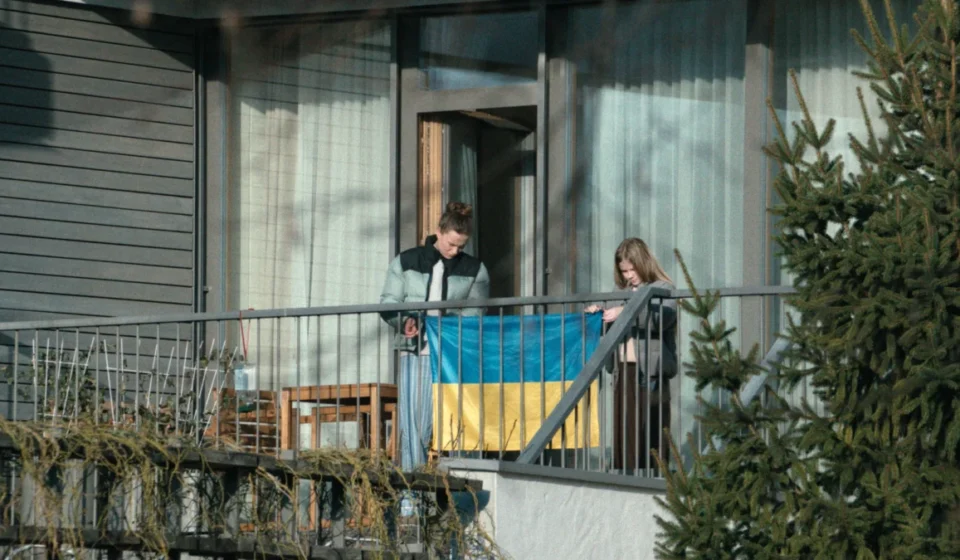
Here, Blaževičius offers a sharp critique of performative altruism. Marija, perhaps attempting to soothe her own conscience, takes in a Ukrainian refugee family, only to find the reality of their presence—the loss of privacy, the disruption of her routine—to be an inconvenience she is ill-equipped to handle. Vytas, meanwhile, finds a sense of purpose in the chaos. He volunteers to pack supplies and joins performance-art protests, using the trauma of the war to "reclaim his mojo." The irony is not lost on the viewer: the war provides him with the creative spark he lacked during his years of domestic stability.
The war also acts as a prism through which other social frictions are refracted. Marija’s employer faces public scrutiny for maintaining a Russian branch, highlighting the messy reality of global commerce. Vytas finds himself in constant, circular debates with his parents—representatives of an older generation whose consumption of pro-Putin media creates a domestic front of the ideological war. Even their daughter, Dovile, becomes a site of conflict; her child’s-eye view of the world is shattered when she attacks a classmate for trivializing the Ukrainian struggle, demonstrating how the macro-level violence inevitably trickles down to the playground.
Official Perspectives and Cinematic Style
Visually, How to Divorce During the War is characterized by an unflinching, documentary-style gaze. Cinematographer Narvydas Naujalis utilizes wide, static shots that keep the characters at a distance, suggesting that we are observers of a specimen case rather than participants in an intimate drama.
While the film is largely successful in its observational approach, it occasionally falters in its aesthetic choices. The use of an aggressively discordant piano score by Jakub Rataj feels, at times, like a heavy-handed attempt to force emotional cues onto a scene that is already brimming with subtext. The film’s blocking, however, is commendable. It is devoid of moralizing; it simply observes. News reports blaring in the background of scenes serve as a constant, auditory reminder of the world’s volatility, yet the camera remains focused on the petty, deeply human failings of its leads.

Implications: The Choice to Look Away
At a brisk 100 minutes, the film does not offer a traditional arc of growth or reconciliation. Instead, it captures the characters as they move in recursive loops. They make grand, performative leaps toward "doing good," only to retract those gestures when the reality becomes too difficult or too boring.
The film’s final act is perhaps its most damning. Vytas is home for a rare night with the family. As they huddle on the couch with their daughter, they reach for the remote and switch the channel from a harrowing report on the Ukrainian front to a generic movie. It is a moment of profound, quiet cowardice. It highlights the central thesis of the film: for all our proclamations of awareness, for all our hashtags and donations, we possess an infinite capacity to tune out the noise when it no longer serves our immediate comfort.
How to Divorce During the War is a scathing, yet deeply empathetic, portrait of modern apathy. It suggests that our personal dramas are not necessarily less important than the wars raging abroad, but that our obsession with them in the face of such catastrophe is a uniquely modern tragedy.
Film Details:
- How to Divorce During the War
- Director: Andrius Blaževičius
- Cast: Žygimantė Elena Jakštaitė, Marius Repšys, Amelija Adomaityte
- Runtime: 100 minutes
- Distributor: Zeitgeist Films
- Release Date: August 21 (New York), followed by a national rollout.
- Grade: B+