The Last Hurrah of the World’s Most Beloved Knuckleheads: An Intimate Look at the End of the Jackass Era

For over two decades, the Jackass franchise has served as the definitive, albeit chaotic, mirror of American masculinity. It is a world of self-inflicted wounds, high-speed collisions, and the kind of juvenile camaraderie that usually evaporates by the time men reach their thirties. Yet, with the 2026 release of Jackass: Best and Last, the troupe—and their primary architect, director Jeff Tremaine—are staring down the barrel of an uncertain, post-stunt future.
As the series potentially closes its final chapter, the man who has spent twenty-five years orchestrating the madness finds himself in a rare, reflective mood. Far from the chaotic, adrenaline-fueled sets that defined the early 2000s, Tremaine sits in a quiet space, processing the end of an era that defied every expectation of longevity and good taste.
The Genesis of an Unlikely Cultural Phenomenon
To understand the weight of Jackass: Best and Last, one must look back at the humble, illicit beginnings of the project. Tremaine, a fine arts graduate with a keen eye for subculture, never intended to become a titan of modern cinema. His career path was forged in the pages of Big Brother, a skateboarding magazine that prioritized attitude and absurdity over technical prowess.
"I never aspired to be a director," Tremaine admits. "When I got the job at Big Brother, that was the top for me. I was the boss, I chose what it looked like. That was the pinnacle."
The transformation from magazine editor to filmmaker was triggered by the raw, kinetic energy of Johnny Knoxville and his circle of cohorts—Steve-O, Wee Man, and Chris Pontius. When Knoxville famously shot himself with a handgun for a Big Brother segment, Tremaine realized he wasn’t just capturing stunts; he was documenting a unique, volatile chemistry that was destined for a wider audience. They were never built for the long haul, yet they somehow managed to become one of the most enduring franchises in entertainment history.
A Chronology of Chaos: From Vans to Global Spectacles
The trajectory of Jackass is a case study in unintended expansion. In the early days, the production was lean and intimate—literally. The entire crew and cast fit into a single van, driven by Tremaine himself. There were no permits, no union crews, and no corporate safety nets. The thrill lay in the spontaneity: kidnapping Brad Pitt for a bit of public mischief or turning a routine afternoon in Los Angeles into an impromptu, unpermitted performance.
As the franchise grew, so did the production scale. The leap from Jackass Number Two (2006) to Jackass 3D (2010) marked a turning point where the "small, scrappy" nature of the group began to collide with the massive, bureaucratic machinery of Hollywood.
"I’m trying to keep it small, but we keep getting bigger," Tremaine reflects. "We used to not get permits. I miss those days, because now we are a slow-moving, deliberate machine that is hard to control."
The Art of the "Dumb"
While critics have spent years debating the merits of Jackass, Tremaine remains wary of being labeled an "auteur." Despite his background in painting and fine arts, he views his work through a pragmatic lens. To him, Jackass isn’t about high-minded symbolism; it is about "magnifying stupid."
Yet, the scholarly fascination is undeniable. Following the 2010 premiere of Jackass 3D at the Museum of Modern Art, the narrative shifted. Suddenly, the sight of grown men being launched into the air by bulls or enduring elaborate, painful pranks was being analyzed as a profound exploration of friendship and the human condition.
Tremaine acknowledges this sea change with a mix of bemusement and humility. "I’ve always struggled with intellectualizing what we do," he says. "But the MoMA gala was a sea change. Sometimes they’re dead-on—they’re much more psychologically in tune than I am with what’s happening."
The Creative Friction: Directing the Indestructible
One of the most complex aspects of Tremaine’s role is his ability to curate these moments of madness. He does not script the dialogue, but he masterfully crafts the environment. He knows, for instance, that placing Chris Pontius near the center of a chaotic scene will inevitably elevate the comedic timing of a bit from a C-grade stunt to an A-grade moment of absurdity.
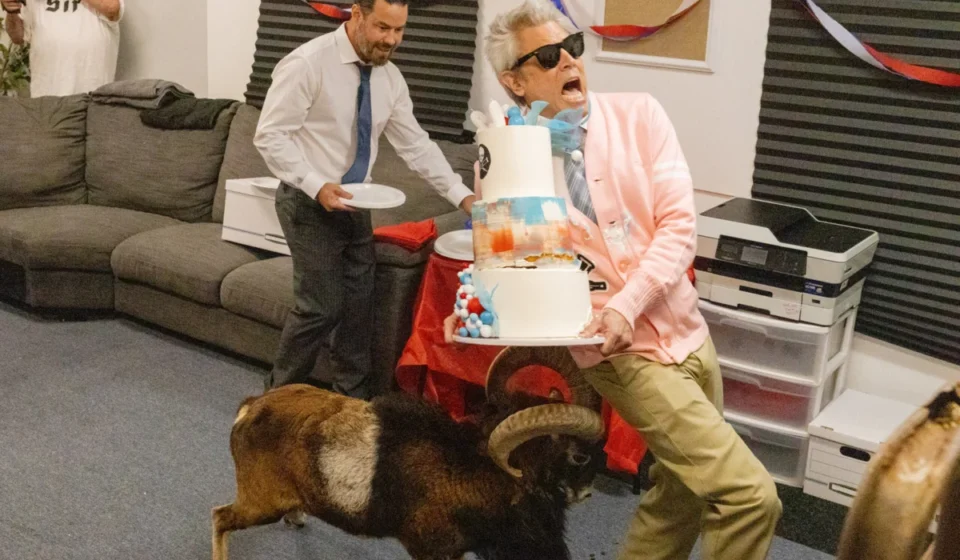
The production of Jackass Forever (2022) highlighted the extreme stakes involved in maintaining this balance. The infamous bull stunt, which resulted in significant injuries for Johnny Knoxville, served as a grim reminder that the "magic" of Jackass is often bought with genuine physical peril. Convincing Knoxville to perform a second take—despite broken ribs—was, for Tremaine, one of the most difficult moments of his career.
"It scared all of us," Tremaine notes. "But we knew we were going to do this until we got it right—and getting it right is getting it wrong."
Implications: The End of an Era?
As Jackass: Best and Last hits theaters, the implications for the franchise are clear. The group is aging, the world has changed, and the "punk rock" ethos that defined the early aughts is increasingly difficult to sustain in a modern, hyper-regulated environment.
Tremaine admits that the critical acclaim Jackass Forever received actually caused him a degree of existential anxiety. "I’m like, ‘This doesn’t feel right. Either we’ve been doing it too long and the kids we raised are now the critics, or maybe we’ve lost it. Maybe we’re mainstream.’"
Despite his success, there is a lingering, boyish impishness in Tremaine. Even as he navigates the world of high-end production—including an unexpectedly stylish safety video for American Airlines that has become one of his most-viewed pieces of work—his core motivation remains unchanged. He is still the man who loves punk rock, keeps his music loud, and, by his own admission, finds the act of drawing "dicks on things" to be eternally funny.
Looking Back, Looking Forward
The emotional toll of editing the old footage for Best and Last was perhaps the most telling moment for the director. Watching the cast members grow from "babies" into middle-aged men forced a confrontation with the passage of time that few in the industry experience.
"Seeing all these guys as babies, that hit me a little bit," Tremaine says.
For the audience, Jackass: Best and Last is a final, raucous laugh. For Jeff Tremaine, it is a closing of a circle. He has spent his life blurring the lines between art and nonsense, creating a legacy that is as touching as it is crude. Whether or not this is truly the final chapter, the impact of his work—a celebration of healthy male friendship, a condemnation of bigotry, and an unwavering commitment to the "stupid"—remains an indelible part of the cultural zeitgeist.
As he prepares for whatever comes next, Tremaine remains grounded in the same philosophy that started it all: keep it real, keep it loud, and never take yourself too seriously—even when the world tries to call you an artist. "I’m almost 60 years old," he laughs, "and I’m still waiting to grow up."