The Weight of Silence: Kiyoshi Kurosawa’s The Samurai and the Prisoner Reinvents the Jidaigeki

What happens when you cross the claustrophobic tension of a classic whodunit with the brutal, rigid code of the Edo-period jidaigeki? For legendary Japanese filmmaker Kiyoshi Kurosawa, the answer is a cinematic meditation on power, faith, and the terrifying unknown. His latest feature, The Samurai and the Prisoner, is not merely a genre exercise; it is a psychological inquiry into the nature of the state and the fragility of the human soul when faced with the barrel of a sword—or the promise of an afterlife.
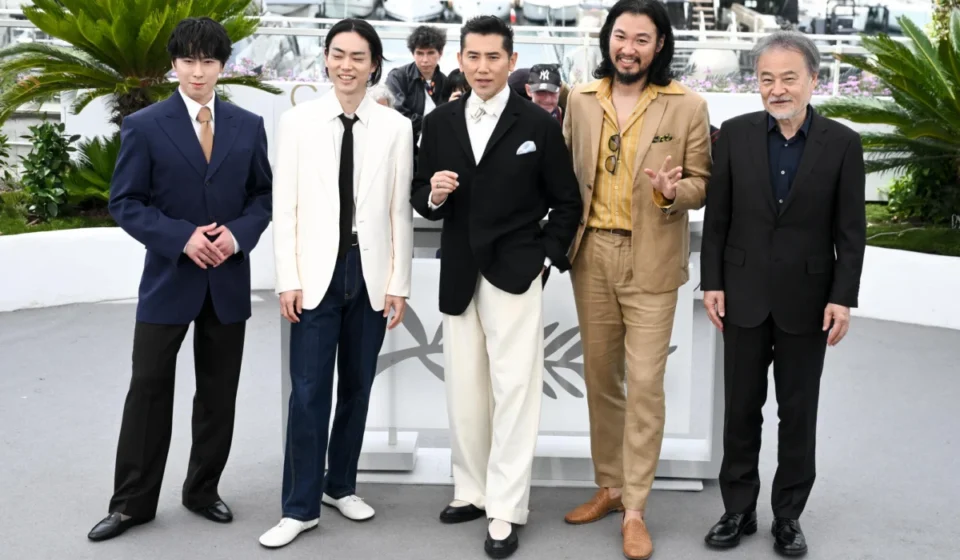
Based on Honobu Yonezawa’s novel Kokurojo: The Samurai and the Prisoner, the film centers on the historical figure of Lord Murashige Araki (played with stoic brilliance by Motoki Masahiro). A 16th-century warlord who famously betrayed his master, the ruthless Nobunaga Oda, Murashige finds himself besieged in his own castle. As the walls close in, a series of baffling, ritualistic murders begins to plague his inner court. To solve the riddle, he forms an uneasy, fragile alliance with a captive war strategist from a rival clan, Kanbei Kuroda (Suda Masaki).
A Historical Pivot: The Man Who Ran Away
To understand the film, one must first understand the man behind the myth. The real-life Murashige Araki is often relegated to the footnotes of history as a "coward" for abandoning his post. Kurosawa, however, finds the humanity in the historical infamy.
"I was always curious as to why he was compelled to first betray Oda, but then also why he decided to run away," Kurosawa remarked during a recent interview at the Cannes Film Festival. "He’s almost seen as a bad guy in history. I was really interested in this particular figure who stepped away from the social standards of the time."

In Kurosawa’s hands, this historical "cowardice" becomes a profound act of defiance. The film moves away from the typical bravado of the samurai genre, choosing instead to focus on the isolation of leadership and the internal erosion of a man who realizes that the grand narratives of war and honor are hollow.
The Mechanics of the Mystery
Adapting Yonezawa’s novel presented a unique structural challenge for the director. While the source material treats Murashige as a kind of feudal Sherlock Holmes, Kurosawa recognized that a standard mystery narrative—relying on flashbacks to explain past crimes—would drain the film of its visceral momentum.
"When you’re reading an entertaining book, you can rewind, but in film, that can be tedious," Kurosawa explained. "If the mystery is happening in the past, going back to the past can stop the propelling movement forward. I decided to not go back in time at all. Instead, the mystery-solving happens through dialogue."
This choice fundamentally shifts the tone of the film. By tethering the investigation to the verbal exchange between the captive Kuroda and the besieged Murashige, the film turns the "whodunit" into a philosophical debate. The clues aren’t just physical evidence; they are windows into the characters’ shifting worldviews.

The Tea Ceremony as a Tactical Battlefield
One of the most striking sequences in the film involves a prolonged, meditative tea ceremony. In an era of high-octane action cinema, Kurosawa’s decision to dwell on the minutiae of tea preparation—the whisking, the pouring, the stillness—is a bold subversion of expectations.
"For Sengoku-period samurai, the tea ceremony was not just about enjoying tea," Kurosawa notes. "It served as a space where they could speak candidly beyond the master-servant relationship, hold secret discussions, or persuade opponents without relying on military force."
The scene captures Motoki Masahiro at his most vulnerable. As the tea is prepared, the dialogue fades, and the audience is invited into a space of near-silence. It is here that the film’s central thesis emerges: power is not just the ability to kill, but the ability to sit still while your world burns down around you.
Faith as a Tool of State Violence
Perhaps the most harrowing element of The Samurai and the Prisoner is its examination of religion as a weapon. The film posits that when leaders want to control a population, they do not merely use threats of physical violence; they manipulate the human fear of the afterlife.

"If followers are the highest currency—an endless supply of bodies to burn through—then there’s nothing more powerful than a group ready to throw everything in this life away for the next," Kurosawa observes.
This theme is brought to life through the character of Chiyoho, whose theological debates with Murashige form the film’s emotional and intellectual backbone. Their discourse regarding the phrase "Advance to paradise, retreat to Hell" is treated with the intensity of a sword fight. As Kurosawa notes, the realization that one can "retreat" and still find happiness is a revolutionary thought for a samurai bound by a code of total, violent submission.
Cinematic Faith: The Director’s Philosophy
Kurosawa’s approach to violence is famously restrained. He avoids the blood-spattered choreography of modern blockbusters, preferring static shots that force the viewer to confront the horror of an act without the "fakeness" of cinematic spectacle.
"When I’m depicting, say, a beheading, I didn’t want to show the action clearly, but I also wanted to feel like it did actually happen," Kurosawa says. This restraint stems from a deeper, almost spiritual philosophy about the nature of the camera itself.

For Kurosawa, filmmaking is an act of faith. He speaks of the camera as an "optical machine" that cannot see everything, and the director’s job as an exercise in believing that the world exists even when the lens fails to capture it.
"Believing that something undeniably exists there, even if it is not visibly captured, is essential—not only for making a film but also for watching one," he states. "It would not be an exaggeration to call this a form of faith."
Implications: A Mirror to Contemporary Society
While The Samurai and the Prisoner is firmly rooted in the Sengoku period, its implications are startlingly contemporary. By questioning the necessity of "normalcy" and the ethics of following leaders into oblivion, Kurosawa forces the audience to look at their own lives.
The film suggests that the path to changing a system—whether that system is a feudal shogunate or a modern corporate hierarchy—does not begin with grand revolution, but with the internal decision to change oneself. As Murashige’s arc concludes, it becomes clear that his "escape" was not an act of fleeing, but an act of choosing his own humanity over the state’s demand for his destruction.

The Samurai and the Prisoner stands as a testament to Kurosawa’s enduring mastery. By stripping away the tropes of the samurai epic and replacing them with a quiet, devastating study of human belief, he has created a film that lingers long after the credits roll. It is a work that reminds us that while we may never know what lies beyond the horizon of death, the choices we make while we are still here—and the faith we place in one another—are the only truths that matter.
Janus Films releases The Samurai and the Prisoner in theaters on Friday, July 31.