The Cult of the Clueless Hero: Why ‘Big Trouble in Little China’ Defied Its Box Office Failure to Become a Cinematic Landmark

In the pantheon of 1980s cinema, few films occupy a space as bizarre, divisive, and enduringly fascinating as John Carpenter’s 1986 genre-mashup, Big Trouble in Little China. At the time of its release, the film was a textbook example of a major studio misfire. With a $25 million budget—a significant sum for the mid-80s—the film limped to a $11 million domestic box office return, effectively stalling the commercial momentum of its star, Kurt Russell, and its visionary director, John Carpenter.
Yet, nearly four decades later, the film has transcended its status as a notorious "flop" to become a cornerstone of cult classic cinema. It stands as a defiant, high-octane monument to the era’s creative recklessness, proving that a movie once deemed incomprehensible by critics can, with enough time and perspective, be recognized as a bold piece of avant-garde pop art.
The Chronology of a "Disaster"
To understand the trajectory of Big Trouble in Little China, one must look at the climate of the mid-1980s. Kurt Russell had spent the early part of the decade shedding his Disney-star skin, successfully transitioning into an action icon through his collaborations with John Carpenter. 1981’s Escape From New York gave us the gritty, nihilistic Snake Plissken, and 1982’s The Thing—now considered one of the greatest horror films of all time—solidified their partnership.
However, the mid-80s proved difficult for the duo. Following the mixed reception of The Thing, Russell endured a string of commercial underperformers. When Big Trouble arrived in 1986, it was marketed as a summer blockbuster—a high-concept adventure featuring mystical sorcerers, martial arts, and a trucking, wise-cracking hero.
Audiences were confused. The film’s marketing suggested a standard Indiana Jones-style romp, but the actual product was a chaotic, genre-defying fever dream that subverted the very archetype it appeared to be selling. Critics were particularly harsh. Roger Ebert famously skewered the film for its reliance on dated stereotypes, characterizing it as a relic of the "Charlie Chan and Fu Manchu" era. By the time the film left theaters, it was widely written off as a creative and financial failure. It would take the advent of home video and cable television for a new generation of viewers to look past the "clownish" protagonist and realize the film was, in fact, entirely in on the joke.
Anatomy of the Subversion: Jack Burton as the "Anti-Hero"
The brilliance of Big Trouble in Little China lies in its structural irony. At the center of the film is Jack Burton, played with a rugged, John Wayne-esque bravado by Russell. In any other 80s action film, Burton would be the savior, the man who kicks down the door, defeats the villain, and rescues the girl.
In Carpenter’s film, however, Burton is a walking, talking subversion of the machismo trope. He is frequently sidelined, rendered unconscious at key moments of action, and consistently corrected by his friend, Wang Chi (Dennis Dun). While Burton believes himself to be the star of his own movie, the narrative makes it abundantly clear that he is merely a bumbling sidekick trapped in a mystical conflict he neither understands nor controls.
This meta-commentary on the "Action Hero" archetype was decades ahead of its time. By forcing the audience to watch a supposed tough guy act like a "clown," Carpenter and Russell crafted a satire that was invisible to 1986 audiences but is glaringly obvious today. It is a comedic deconstruction of the Reagan-era hero, turning the "swaggering tough guy" into a reactive, often helpless participant in an epic fantasy.
The "Kitchen Sink" Aesthetic: Why the Movie Works
If one were to list the genres present in Big Trouble in Little China, the document would read like a manifesto of excess. It is simultaneously a Western, a martial arts film, a supernatural horror, a buddy comedy, and an adventure epic.
This "kitchen sink" approach was, in its time, viewed as a lack of narrative discipline. Today, however, it is recognized as a precursor to modern maximalist cinema. Films like Everything Everywhere All At Once share a similar DNA: they refuse to be pinned down by the constraints of a single genre. While Big Trouble may lack the narrative cohesion of modern Oscar-winners, it possesses a raw, kinetic energy that is rare in today’s highly polished, algorithm-driven blockbusters.
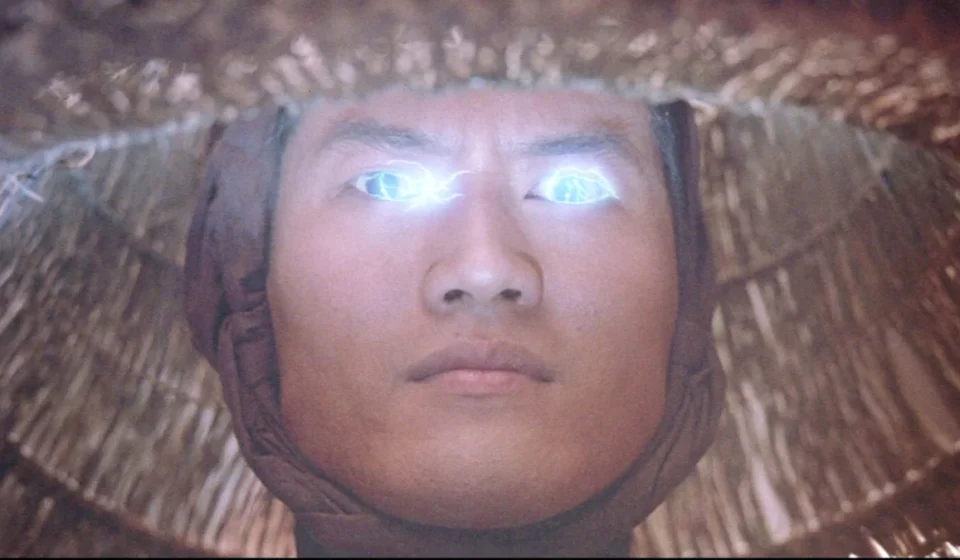
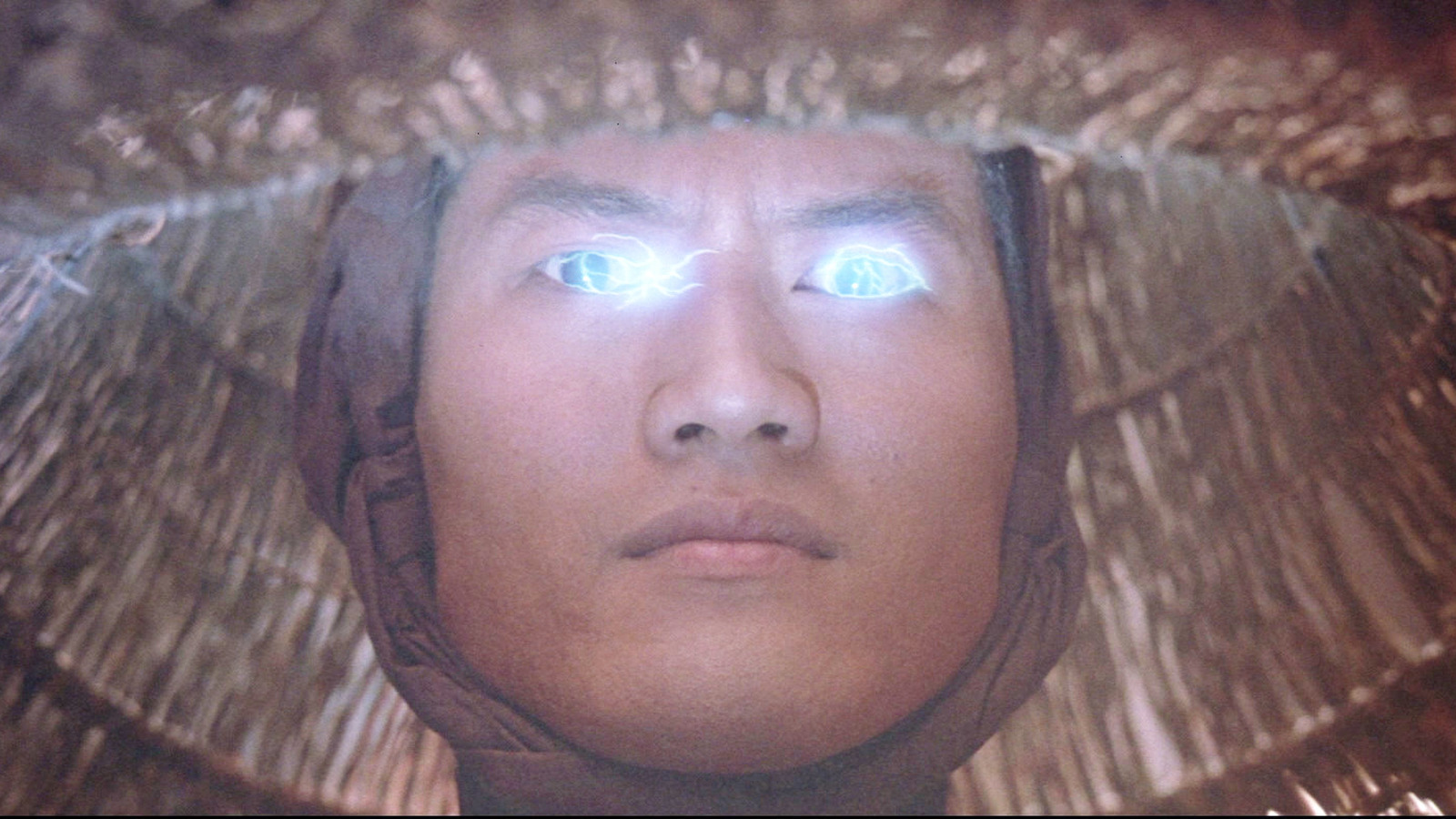
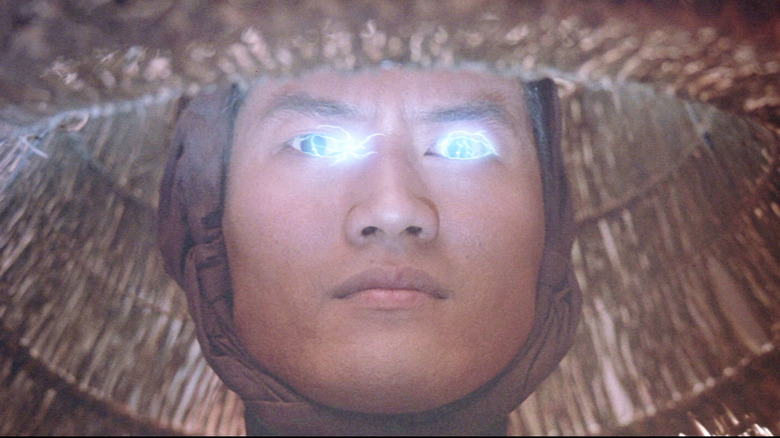
The visual language of the film—from the glowing eyes of "Lightning" to the subterranean labyrinthine lair of Lo Pan—is a masterclass in practical effects and production design. It is a film that feels tangible, tactile, and delightfully unhinged. It captures a version of Hollywood that no longer exists: a time when studios were willing to spend millions of dollars on high-concept madness that defied categorization.
Official Responses and Critical Re-evaluation
The retrospective consensus on the film has shifted dramatically. While initial reviews focused on the film’s "stereotypical" depictions—criticisms that carry weight regarding the portrayal of Asian characters—modern film scholarship often analyzes the movie through the lens of parody and cultural collision.
The film’s longevity is further supported by the continued loyalty of the fan community, which has sustained a robust market for merchandise, Blu-ray re-releases, and even comic book continuations. John Carpenter himself has often spoken of the film with a mix of bemusement and pride, acknowledging that while it failed to ignite the box office, it succeeded in creating a unique cinematic experience that has refused to die.
In interviews, Kurt Russell has often noted that Jack Burton remains one of his favorite roles. The performance allowed him to play against type, to be the buffoon rather than the brain, and to participate in a film that felt like a wild, untamed experiment.
The Implications for Modern Cinema
What does the legacy of Big Trouble in Little China teach us about the film industry? Perhaps the most important lesson is that commercial failure is not a reliable metric for artistic worth. In an era where franchises are built on safety and brand recognition, Big Trouble serves as a reminder of the power of the "big swing."
When a director and a star commit entirely to a bizarre vision, they create something that transcends the limitations of its budget or its opening weekend numbers. The film is a testament to the idea that cinema should be allowed to be weird, ugly, loud, and confusing. It stands as a beacon for filmmakers who want to break the rules, even if those rules are the ones that keep a film from becoming a blockbuster.
Ultimately, Big Trouble in Little China is more than just a cult classic; it is a document of an era. It represents the final, glorious gasp of 80s excess, where the lines between genres were blurred and the hero was only as important as the comedy he provided. It is a film that was written off, ignored, and misunderstood, only to emerge as a permanent fixture in the cultural landscape. For those who watch it today, it remains a wild ride—a reminder that sometimes, the best trouble to get into is the kind that makes no sense at all.