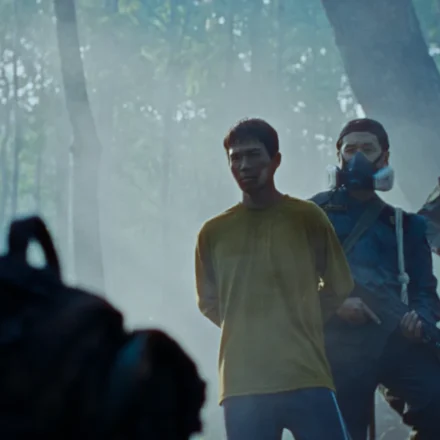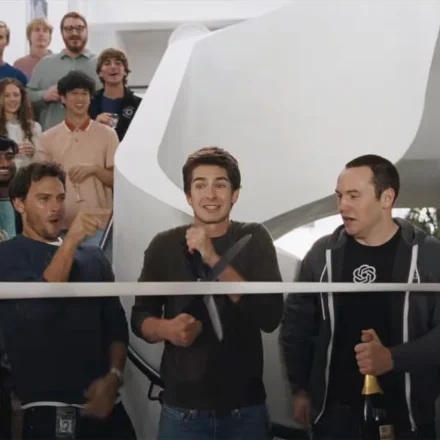

In the landscape of modern action cinema, the "silent" thriller has become a high-stakes litmus test for directors. By stripping away dialogue, a filmmaker invites the audience to focus on the visceral language of movement, composition, and kinetic energy. However, in Potsy Ponciroli’s Motor City, this stylistic choice feels less like a bold artistic statement and more like a restrictive gimmick that ultimately strangles the film’s narrative potential. While the movie is visually striking, it is ultimately a project that is significantly easier to root for than it is to enjoy.
The Premise: Grindhouse Ambition, Pulp Execution
Motor City attempts to strip the classic grindhouse revenge thriller down to its studs. It presents a world of big muscles, broad tropes, and a soundtrack of overused “bangers” that seem tasked with doing all the heavy lifting in the absence of spoken word. Directed by Potsy Ponciroli, whose 2021 western Old Henry—starring Tim Blake Nelson—found surprising, sustained success on Netflix, this new feature feels like a sharp departure in terms of execution.
While Ponciroli clearly possesses a well-meaning "throwback" sensibility, his transition to a dialogue-free format is fraught with unrefined clumsiness. The film, set in 1977 Detroit, relies on title cards to establish its geography, a necessity born from a digital aesthetic so bland it fails to capture the grit or soul of the Motor City. When a film requires a literal signpost to tell the audience where—or when—it is, the immersion is already compromised. The costumes, while aiming for period-accurate flair, veer into a territory so reminiscent of American Hustle that the setting feels less like a historical period and more like a costume party.
Chronology: A Standard Revenge Arc in Muted Tones
The film’s narrative is as straightforward as it is sparse. We follow John Miller (Alan Ritchson), a hulking, generic ex-con who is, by all accounts, a man of few words. The audience is dropped into the action mid-stride: Miller is on a rooftop, tossing a villain over the ledge and engaging in a slow-motion shootout that the director clearly hopes will imbue the scene with operatic gravitas.
The story then rewinds several weeks, revealing a "happier" time for Miller. He is gainfully employed, living a quiet life, and deeply in love with Sophia (Shailene Woodley). The pair’s life is shattered when the police, clearly on the payroll of local gangster Reynolds (Ben Foster), orchestrate a frame job that lands Miller in prison.
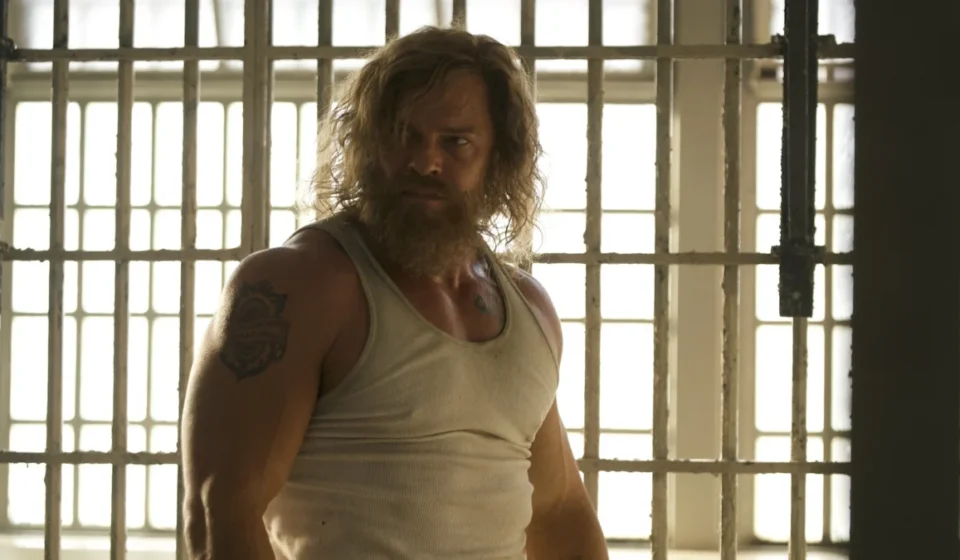
Reynolds, characterized by an excess of chest hair and cheap polyester, proceeds to reclaim Sophia, moving her into his suburban "cocaine castle." The film’s silence becomes particularly grating here: we are left to wonder if Sophia is a victim of circumstance, a prisoner, or a woman who has simply resigned herself to the lifestyle of a kept moll. Because the script by Chad St. John offers no dialogue to flesh out her internal state, she remains a cipher, trapped in a narrative that demands her suffering without ever granting her agency.

The third act, predictably, involves Miller’s inevitable escape and his quest for vengeance. While there are isolated moments—such as an elevator knife fight and a shootout amidst factory sparks—that briefly hit the right notes, they are the exception rather than the rule.
Supporting Data: The Talent vs. The Concept
The most frustrating element of Motor City is the clear mismatch between the ambition of the concept and the capability of the production. A dialogue-free action film demands a visual stylist at the height of their powers—someone who can speak through the camera lens as fluently as a writer speaks through a script.
John Woo’s Silent Night proved that even a master of the genre can be defeated by this specific constraint. Ponciroli, unfortunately, is no John Woo. He appears to be aiming for the kinetic, pulpy energy of a Robert Rodriguez picture, yet he lacks the budget and the visual inventiveness to pull it off.
Alan Ritchson, however, is the film’s saving grace. The Reacher star is perfectly cast here; he is a performer who thrives on physical presence. Ritchson does not need dialogue to convey a character with a score to settle. He is enormous, he is sweaty, and he is entirely believable as a man who can dismantle a room full of thugs with his bare hands. Yet, even his magnetic performance cannot compensate for the fact that the movie treats its central conceit as a hurdle to be jumped rather than a tool to be exploited.
The Problem of "Glass Wall" Storytelling
Ponciroli’s decision to remove dialogue leads to a repetitive, almost claustrophobic visual language. To avoid the necessity of speech, the film frequently places characters behind glass—in interrogation rooms, parole offices, and meeting halls. The camera observes from the outside, while a pop song blares to signal the intended mood.
This technique, rather than elevating the material to "absolute cinema," serves only to flatten the narrative. It creates a sense of detachment. When everything must be communicated through glances, gestures, and the loud, often poorly implemented soundtrack, the story loses its nuance. We are watching a shadow play with the lights left on. The audience is forced to observe the mechanics of the film rather than experience the heart of the story.

Implications: The Limits of Minimalism
The failure of Motor City provides an important lesson for genre filmmakers: minimalism is not a shortcut to depth. By stripping away dialogue, a filmmaker risks losing the connective tissue that allows an audience to bond with characters. When the characters eventually do speak—as they do in the film’s final, misjudged coda—the reveal is not a profound emotional payoff, but rather a realization that they have nothing meaningful to say.
The film suggests a troubling trend: the belief that "action" is a genre separate from "humanity." By treating its characters as archetypes rather than people, Motor City fails to ground its violence in anything resembling emotional stakes. It leaves the viewer wishing that the characters would simply stop the posturing and talk to each other, if only to break the monotony of the stylistic posturing.
Conclusion: A Grade of C
Motor City is a film of missed opportunities. It is a movie that thinks it is saying something profound by saying nothing at all, failing to realize that silence is only powerful when the subtext is heavy enough to fill the void. Despite a physically impressive lead performance by Alan Ritchson and a few sparks of creative choreography, the film remains a hollow shell.
It is a "throwback" that forgets that the great action films of the 70s and 80s were not defined by their silence, but by the weight of their characters’ choices—choices that were almost always articulated with grit and intention. Motor City is currently playing in theaters, but for those seeking a masterclass in visual storytelling, it is a journey that may not be worth the price of admission.
Final Grade: C