A Night of Triumph and Reflection: The 2026 Karlovy Vary International Film Festival Concludes

The curtain has fallen on the 2026 Karlovy Vary International Film Festival (KVIFF), an event that underscored the enduring power of global cinema to bridge cultural divides and illuminate the complexities of the human experience. As the festival reached its climactic conclusion on Saturday, the spotlight turned toward Myanmar, honoring the resilience of independent filmmakers working under extraordinary pressures.
The Coronation of ‘Fruit Gathering’
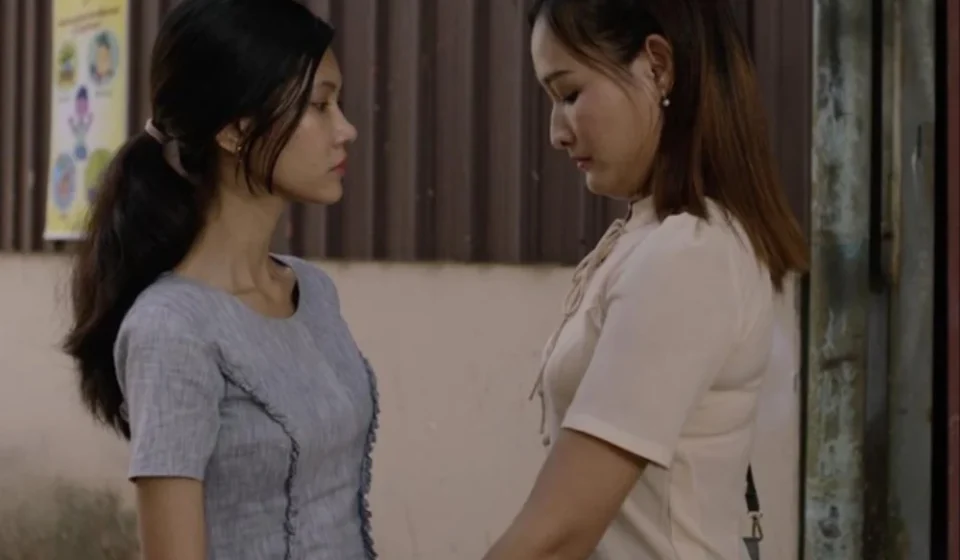
The festival’s highest honor, the Crystal Globe, was awarded to Aung Phyoe’s Fruit Gathering. The film, a poignant exploration of intimacy and labor set against the backdrop of a contemporary textile factory in Myanmar, captivated the jury with its tonal shifts and emotional depth.
Described by the jury as beginning as a "lush and meditative portrait of work and friendship" before evolving into a "harrowing drama of obsession and queer desire," the film stands as a testament to the power of restrained storytelling. For director Aung Phyoe, the win was a bittersweet validation of a grueling production process.
"My producers have gone through many difficulties to make this film—and they had to deal with me, too," Phyoe admitted during his acceptance speech. "I don’t know why they believed in me. I don’t believe in myself." He also extended a heartfelt tribute to his mother, acknowledging her years of patience in supporting a "long-suffering artist."
Crafting a National Language of Cinema
Speaking with Variety following the ceremony, Phyoe elaborated on the unique challenges of his creative process. Operating within a country where cinematic infrastructure is sparse and political expression requires immense caution, Phyoe sought to create something that felt both atmospheric and authentic to his own lived experience.
"We are trying to achieve our own national language of cinema," Phyoe explained. "We are very behind, and for most of the things, we don’t have support; it’s very difficult to make films in this country. We also have to be very careful that political things have to be very subtle. For me personally, I try to achieve the rhythm in the film, which will hopefully resonate with my own lived experience."
‘The Guest’ and the Nuances of Family Life
While Fruit Gathering claimed the Grand Prix, Mads Mengel’s The Guest, starring Trine Dyrholm, emerged as a major critical darling. The film secured the Special Jury Prize and the award for Best Director, cementing Mengel’s reputation as a filmmaker with a sharp eye for the domestic grotesque.
The jury lauded the project as a "squirmingly funny yet precisely modulated drama that subtly raises questions about motherhood, filial duty, and mental illness." Mengel’s approach to the material was driven by a desire to interrogate the shifting nature of parental authority.
"What fascinated me wasn’t telling my own story, but exploring something many people can recognize: how our understanding of our parents changes as we grow older, especially when we start our own families," Mengel noted. "I was interested in that moment when certainty begins to crack. When the people we’ve spent years judging slowly become more complicated and human."
Artistic Excellence and Global Solidarity
The festival’s commitment to world cinema was further highlighted by the presentation of the Crystal Globe for Outstanding Artistic Contribution to World Cinema to the legendary French actress Juliette Binoche.
In a moving address, Binoche shifted the focus from personal accolades to the geopolitical realities facing artists today. "I’m thinking about Palestine, Lebanon, Ukraine," she said. "We need artists to tell stories, to tell the truth. Passion is really the heart of what we do. Life goes by very quickly, so let’s give ourselves as much as possible. We need to unite."
This theme of unity was echoed by American actor Jeffrey Wright, who received the Festival President’s Award. Reflecting on his long career and his connections to icons like Miloš Forman and the late festival president Jiří Bartoška, Wright spoke passionately about the responsibility of storytellers.
"There are forces in this world, right now, that insist on disconnecting us. But our stories, our films, our history insists otherwise," Wright said. He shared a poignant anecdote about a stalled project concerning Alexander Pushkin, noting that he viewed his award as an incentive to "continue to create in an effort to bring us together. As an American, I think this is our greatest power. It’s not what we destroy—it’s what we create."
Proxima and Beyond: A New Wave of Voices
The Proxima Competition, designed to showcase emerging talent and unconventional narratives, saw Martina Buchelová’s Lover, Not a Fighter take the Grand Prix. The jury praised the film for its "extraordinary lightness" and its ability to handle "the absurdity of family" and "the delirium of young love" with "luminous sincerity."
Other notable wins in the Proxima category included Shuntaro Uchida’s Incinerator, which received the Special Jury Prize, and Efthimis Kosemund-Sanidis, who was awarded Best Director for A Whole Person Almost. The Special Mention went to 33 Steps, a film lauded for its refusal to reduce the victims of racism to symbols, opting instead to confront the "nonlinearity of trauma."
Full List of Major Award Winners
Crystal Globe Competition
- Grand Prix (Crystal Globe): Fruit Gathering (Myanmar, Czech Republic, France) – Dir. Aung Phyoe
- Special Jury Prize: The Guest (Denmark) – Dir. Mads Mengel
- Best Director: Mads Mengel (The Guest)
- Best Actress: Anna Schinz (A Happy Family)
- Best Actor: Ghassan Saad (Pipes)
- Právo Audience Award: Bára – Diary of a Rockstar (Czech Republic) – Dir. Helena Třeštíková
Proxima Competition
- Grand Prix: Lover, Not a Fighter (Slovak Republic, Czech Republic) – Dir. Martina Buchelová
- Special Jury Prize: Incinerator (Japan) – Dir. Shuntaro Uchida
- Best Director: Efthimis Kosemund-Sanidis (A Whole Person Almost)
- Special Mention: 33 Steps (Slovak Republic, Czech Republic) – Dir. Anna Domček, Šimon Domček
The Industry Perspective: Co-Production and Future Development
The festival also served as a vital marketplace for future projects, emphasizing the importance of international co-production. Awards in the "KVIFF Promises" section highlighted the necessity of financial and creative support for regional filmmakers.
Notably, the Eurimages Co-Production Development Award went to Selamlik (Sweden, Denmark), while the Ukrainian project Reminiscence (Dir. Anastasia Tykha) received the Eurimages Special Co-Production Development Award, signaling a continued commitment to supporting filmmakers from regions currently navigating conflict.
Implications for the Global Film Landscape
The 2026 Karlovy Vary Film Festival leaves behind a clear message: cinema remains one of the few arenas where the personal and the political can coexist without diluting one another. From Aung Phyoe’s delicate meditation on life in a Myanmar factory to Juliette Binoche’s clarion call for global artistic solidarity, the festival emphasized that the act of filmmaking is, at its core, an act of empathy.
As the industry faces rapid technological changes and shifting geopolitical landscapes, events like Karlovy Vary provide a necessary sanctuary for reflection. The winners of this year’s festival represent a diverse spectrum of voices, yet they share a common thread: the courage to "crack" the certainties of their worlds and find, as Mads Mengel suggested, the chance to begin again.
The festival’s focus on fostering local development—evidenced by the extensive support for the "Feature Pool" and "Creative Pool" projects—ensures that the next generation of storytellers will have the resources to continue this essential work. By elevating the voices of those working in the shadows of larger powers, the festival has once again confirmed its status as a pillar of the international film community.