Illuminating the Digital Frontier: Paul Debevec and the Evolution of Modern VFX

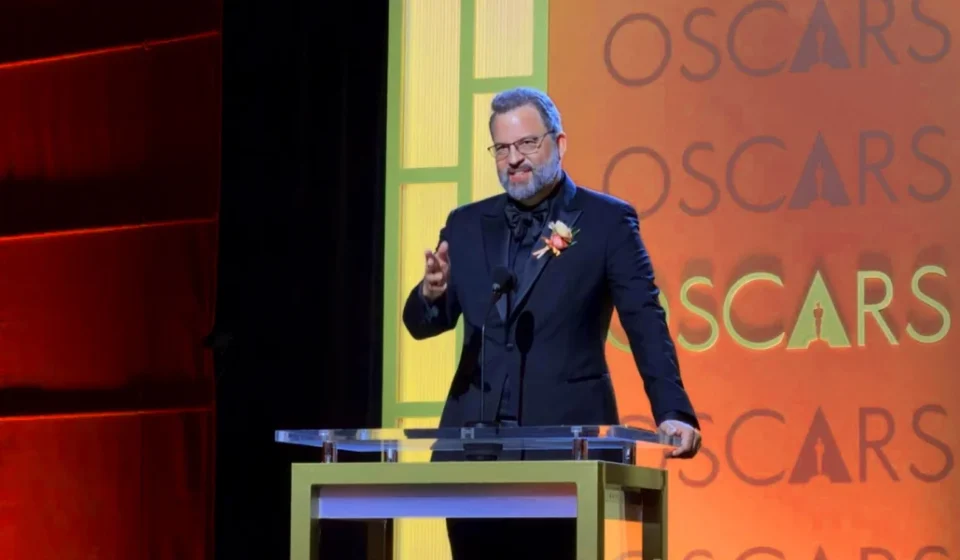
For decades, the visual effects industry has operated on a foundational principle: if you want to make a synthetic object look real, you must first master the light that surrounds it. Few individuals have done more to codify this truth than Paul Debevec. A long-time friend of the fxguide community and a titan of computer graphics research, Debevec recently received an Academy Technical Achievement Award, a long-overdue recognition of his pioneering work in High Dynamic Range (HDR) and image-based lighting (IBL) techniques.
As the Academy noted, Debevec’s research did not merely push the boundaries of what was possible; it fundamentally shifted the industry’s workflow. By demonstrating that real-world illumination could be captured and applied to virtual assets, he provided the bridge between the sterile, artificial look of early CGI and the seamless, photorealistic imagery that defines modern cinema.
The Architect of Believability: A Historical Context
To understand the current state of visual effects, one must look back to 1998, a watershed year for computer graphics. It was then that Debevec presented his landmark SIGGRAPH research, which introduced the world to HDR photography and image-based lighting. At the time, the industry struggled to integrate digital models into live-action plates; the lighting was almost always guessed, resulting in characters or objects that looked like they were "pasted" into a scene.
Debevec’s breakthrough proved that one could capture a high-resolution, high-dynamic-range map of a real-world environment—using simple tools like mirrored spheres—and use that data to illuminate a virtual object. The result was a level of integration that had never been seen before. His short film, Fiat Lux, served as the ultimate proof of concept. In it, virtual architecture and objects interacted with the light of the real world with such fidelity that the human eye could no longer distinguish between the captured and the computed.
This methodology quickly migrated from the lab to the blockbuster. By the time films like Mission: Impossible 2 and X-Men hit theaters, the techniques Debevec championed were already beginning to underpin the production pipelines of major VFX houses. What started as an academic inquiry had become the industry standard for photographic integration.
Chronology of Innovation: From Light Probes to Neural Radiance
The trajectory of Debevec’s career reflects the broader evolution of the digital arts. His early work was defined by the physical capture of light; as technology progressed, his focus shifted toward the complexities of human likeness and, eventually, the digital synthesis of reality.
1. The HDR Foundation (Late 1990s)
The introduction of image-based lighting allowed artists to capture the "incident light" of a physical set, ensuring that a digital creature would receive the same reflections, shadows, and color temperature as the actors it shared the frame with.
2. The Era of Digital Faces (2000s–2010s)
Following his foundational lighting work, Debevec turned his attention to the most difficult subject in computer graphics: the human face. His work at the University of Southern California’s Institute for Creative Technologies (ICT) led to the development of the "Light Stage." This technology, which used controlled strobe lighting to capture the fine-grained geometry and skin reflectance of a subject, enabled the creation of hyper-realistic digital doubles. From "Digital Emily" to "Digital Ira," these projects set a new bar for digital human performance, eventually being utilized for high-profile work, including the iconic 3D scanning of President Barack Obama.
3. The New Frontier: NeRFs and Gaussian Splatting (2020s–Present)
Today, Debevec’s work at Google continues to push into the territory of machine learning and volumetric capture. The conversation has moved beyond simple lighting to Neural Radiance Fields (NeRFs), 3D Gaussian Splatting, and 4D capture. These technologies allow for the reconstruction of complex, view-dependent scenes from sparse image data, effectively allowing machines to "dream" of environments with photorealistic accuracy.
The Intersection of Science and Art
One of the defining characteristics of Debevec’s career is his refusal to view science and artistry as siloed disciplines. In his recent interview with fxguide, he emphasized that the most powerful technical breakthroughs are those born from a practical desire to solve a creative bottleneck.
When asked about the current state of the industry, Debevec is notably optimistic. He views the current explosion in machine learning, real-time rendering, and virtual production not as an end to the "traditional" artist, but as a new set of tools for a new generation of storytellers. The transition from the rigid, manual workflows of the 90s to the AI-augmented workflows of today is, in his view, just another step in a continuous, decades-long journey toward perfect visual fidelity.
Implications for Future Production
The implications of Debevec’s ongoing research are profound. As the industry moves toward more efficient, automated workflows, the barrier to entry for high-end visual effects is lowering. However, the requirement for a deep, intuitive understanding of light and form remains constant.
Debevec argues that we are currently in a "golden age" of research. With the convergence of LED volumes (virtual production), real-time game engines, and generative neural networks, the ability to iterate on a scene is faster than ever before. For the modern VFX artist, the challenge is no longer just "how do we make this look real," but "how do we curate and direct the immense power of these automated systems."
Looking Back: A Legacy of Collaboration
Over the years, fxguide has documented many milestones in Debevec’s journey. These discussions serve as a historical record of a field in constant motion.
- The Digital Faces Era (2013): Our exploration of the USC ICT work highlighted how the Light Stage solved the "uncanny valley" problem for digital doubles, a breakthrough that remains central to modern performance capture.
- The Google Lab Transition (2018): When Debevec moved his research focus to Google, there was concern that his work might become proprietary and hidden. Instead, he and his team continued to publish innovative work on light fields and neural rendering, proving that his commitment to open knowledge remained intact.
- The 25th Anniversary of Fiat Lux (2024): Looking back at the quarter-century of Fiat Lux, The Parthenon, and the Obama scan, it became clear that Debevec’s influence is woven into the very DNA of modern production.
Conclusion: The Next Wave
As we look toward the future, it is clear that the methodologies pioneered by Paul Debevec are not relics of the past but the bedrock of the future. Whether it is through the refinement of machine-learning-based facial relighting or the democratization of 3D capture via mobile devices, the goal remains the same: to capture the truth of the physical world and translate it into the digital.
For those entering the industry today, Debevec’s career serves as a roadmap. It teaches that curiosity, rigorous scientific inquiry, and a deep appreciation for the aesthetic potential of technology are the keys to lasting impact. As he notes, the next wave of visual effects research—driven by AI and real-time volumetric data—may very well prove to be as transformative as the first HDR light probe was twenty-five years ago. The tools change, the rendering engines evolve, and the hardware accelerates, but the fundamental mission of the VFX artist—to bring the impossible to life with the weight and light of reality—remains unchanged.
For those interested in diving deeper into the technical evolution of the industry, we encourage readers to explore our extensive archives of podcasts and features with Paul Debevec. His insights continue to be an essential resource for anyone looking to understand the past, present, and future of visual storytelling.