A Decade of Constitutional Reckoning: Ava DuVernay’s ‘14th’ to Close the 64th New York Film Festival

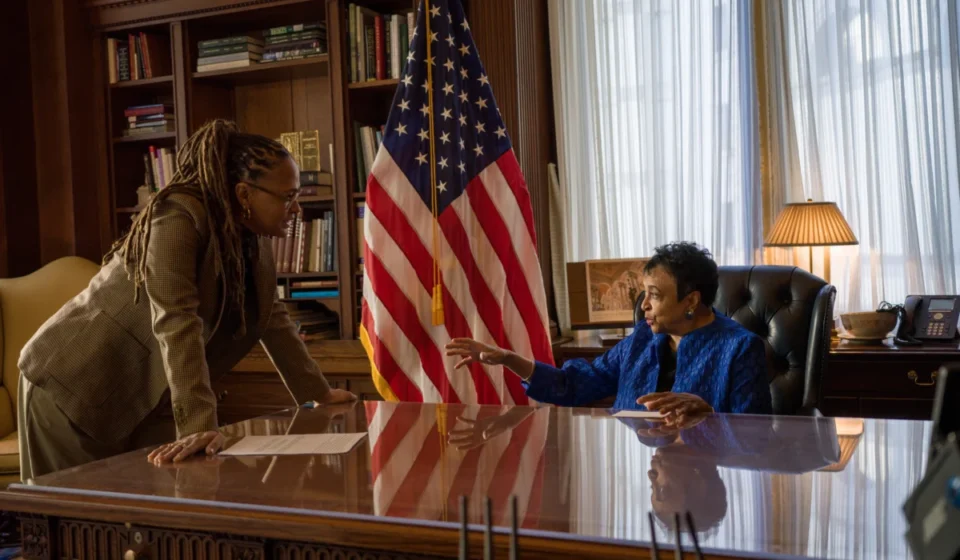
In a move described by industry insiders as both cinematically poetic and politically urgent, the New York Film Festival (NYFF) has announced that Ava DuVernay’s latest documentary, 14th, will serve as the festival’s Closing Night selection. The world premiere is scheduled for October 9 at the historic Alice Tully Hall at Lincoln Center, marking a high-profile return for the filmmaker to the institution that helped catapult her previous work into the global cultural consciousness.
14th arrives as a thematic and spiritual successor to 13th, DuVernay’s 2016 Oscar-nominated masterpiece that fundamentally altered the discourse surrounding mass incarceration and the U.S. criminal justice system. As the 64th edition of the NYFF prepares to run from September 25 through October 12, the selection of 14th signifies the festival’s commitment to hosting films that prioritize civic dialogue over passive consumption.
The Chronology of a Constitutional Saga
The narrative trajectory from 13th to 14th spans a tumultuous decade in American history. When 13th opened the New York Film Festival in 2016, it was released on the precipice of the 2016 U.S. Presidential election. The documentary provided a searing, meticulous examination of the 13th Amendment—which abolished slavery except as punishment for a crime—arguing that this specific loophole was the engine driving the systemic incarceration of Black Americans.
Ten years later, the landscape of American democracy has shifted beneath the feet of its citizens. While 13th focused on the carceral state, 14th broadens the aperture to address the foundational pillars of citizenship and equality. The 14th Amendment, ratified in 1868, promised birthright citizenship, due process, and equal protection under the law. DuVernay’s new work posits that these very tenets are currently facing a systematic, multi-front assault.
The timeline of this project mirrors the urgency of the current political climate. Following its festival run, Netflix will distribute the film to a global audience, continuing the partnership that has made DuVernay one of the most vital voices in modern documentary filmmaking.
Unpacking the 14th: A Multidisciplinary Investigation
At the heart of 14th is a complex web of interviews designed to deconstruct how American law is being tested, manipulated, and challenged. DuVernay has assembled a diverse coalition of voices, ranging from political polar opposites to legal scholars, to examine the "foundational principles" of the Amendment.
The Voices of Inquiry
The film features candid, in-depth conversations with:
- Political Strategists and Legislators: Representatives Alexandria Ocasio-Cortez (D-NY) and Anna Paulina Luna (R-FL) offer insights into the legislative battles defining the current era.
- Legal Architects: Renowned experts such as Sherrilyn Ifill and Robert Chang provide the constitutional scaffolding necessary to understand the erosion of due process.
- Social Commentators: Figures like Stacey Abrams, Donald T. Critchlow, and Hasan Piker analyze the shifting social tides that have placed the 14th Amendment at the center of modern culture wars.
DuVernay’s directorial approach seeks to move beyond partisan bickering to interrogate the "prohibition for heads of state to engage in acts of insurrection"—a clause that has transitioned from a historical footnote to a central pillar of contemporary constitutional crisis.
"If 13th asked who gets caged, then 14th asks who gets counted," DuVernay noted during the film’s initial announcement. This succinct distinction highlights the transition from the physical containment of the individual to the political erasure of the citizen.
Supporting Data and Thematic Implications
The implications of 14th are profound, touching upon the very definition of who is entitled to the full protections of the United States. While 13th successfully shifted the public’s understanding of the "Prison-Industrial Complex," 14th aims to shift the understanding of citizenship itself.
The "Counted" Crisis
The film utilizes archival footage, legal analysis, and modern interviews to illustrate how the 14th Amendment’s promise of "equal protection" is being challenged by voting rights restrictions, the reinterpretation of birthright citizenship, and the rising tide of rhetoric challenging the democratic process itself. By juxtaposing historical context with the insurrectionist events of recent years, the documentary creates a "fog of the present" that it seeks to pierce.
DuVernay’s work has never been merely observational; it is inherently interrogative. By examining the 150-year-old promise of the Amendment, the film asks audiences to consider whether the nation is moving toward a more inclusive future or regressing into a period of exclusionary governance.
Official Responses and Festival Prestige
The selection of 14th as the closing film is a testament to the high regard in which the New York Film Festival holds DuVernay. Dennis Lim, the Artistic Director of the NYFF, offered a glowing endorsement of the work, framing it as an essential piece of cultural history.
"We are honored to close this edition of the New York Film Festival with Ava DuVernay’s supremely timely follow-up to 13th," Lim stated. "This is a movie for the moment that sees through the fog of the present. The great gift of this urgent and essential work is its clarity: Ava has made a film that shows us precisely what led us here, and what is at stake right now."
DuVernay herself emphasized the importance of the venue, noting that the NYFF provides a platform for conversation that is rarely found elsewhere. "NYFF has always been a place where films invite conversation rather than simply applause," DuVernay said. "To that end, 14th attempts to interrogate a promise powerful enough to change a nation—and controversial enough to divide it for more than 150 years."
The Legacy of the Filmmaker
Ava DuVernay’s career has been characterized by a relentless pursuit of stories that challenge the status quo. From the historical intimacy of Selma to the expansive social critique of When They See Us and the recent Origin, her body of work serves as a bridge between high-art cinema and social activism.
- Selma (2014): A seminal look at the voting rights movement.
- 13th (2016): A definitive documentary on the intersection of race and justice.
- A Wrinkle in Time (2018): Demonstrating her reach into big-budget narrative storytelling.
- When They See Us (2019): A harrowing exploration of the Central Park Five case.
- Origin (2023): A profound meditation on the nature of caste systems.
With 14th, she continues this legacy, proving that the documentary format remains one of the most potent tools for national reflection.
Looking Ahead: The 64th NYFF
The 64th New York Film Festival promises to be a landmark event. While 14th will provide the final word on October 9, the festival begins with a different, though equally anticipated, tone. The opening night film, Paper Tiger, directed by James Gray and starring heavyweights Adam Driver, Scarlett Johansson, and Miles Teller, will set the stage on September 25.
The inclusion of these films suggests a programming strategy that balances high-profile star power with substantive, socially conscious documentary work. As the industry gathers in New York this autumn, the focus will inevitably turn toward the questions DuVernay raises. By inviting the audience to "debate, question, and, above all, imagine," 14th stands as not just a film, but a challenge to the American public to reclaim the promises of the 14th Amendment before they are eroded beyond repair.
In an era of deep polarization, the New York Film Festival remains a bastion for the kind of intellectual rigor that 14th demands. Whether the film succeeds in shifting the national needle remains to be seen, but as the lights dim in Alice Tully Hall on that final night in October, the conversation it sparks will likely echo long after the credits roll.