The Ghost of an Empire: Sergei Loznitsa’s ‘Imperium’ and the Rediscovery of the Soviet Mosaic

In the landscape of contemporary documentary filmmaking, few figures possess the surgical precision and archival patience of Sergei Loznitsa. Known for his ability to breathe cinematic life into the skeletal remains of history, Loznitsa has once again unearthed a forgotten treasure. His latest work, Imperium, is an expansive, nearly three-hour odyssey through the Soviet Union of the early 1970s. The film is constructed from over 60 hours of 16mm footage captured by Italian film crews who were granted unprecedented access to the USSR—a project that was intended to be a monumental television series but ended up gathering dust in the archives for decades.
By reassembling these fragments, Loznitsa provides more than just a nostalgic glimpse into a vanished superpower. He offers a profound interrogation of the "Soviet project," revealing the cracks in the monolithic facade that the West once perceived as impenetrable.
Main Facts: The Italian Lens on a Forbidden Land
The genesis of Imperium lies in a peculiar moment of Cold War detente. In the early 1970s, at the height of the Brezhnev era—often characterized by historians as the "Era of Stagnation"—Italian television crews were permitted to traverse the vast expanse of the Soviet Union. This was no small feat; Western journalists were typically confined to Moscow or carefully curated "Potemkin villages." However, Italy’s unique political climate, which boasted the largest Communist Party (PCI) in the Western world, likely facilitated this diplomatic and artistic opening.
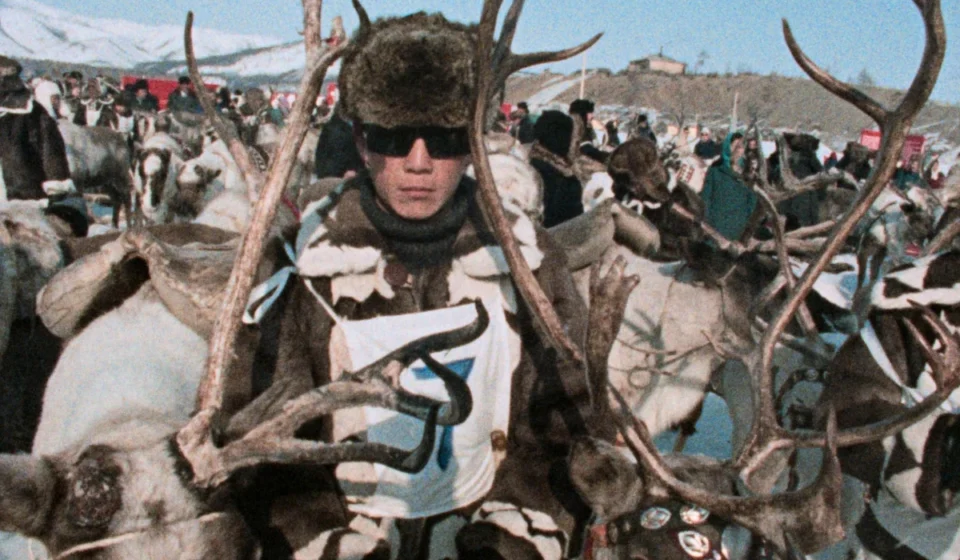
The crews aimed to capture the multicultural reality of the empire, moving beyond the gray, industrial imagery that dominated Western propaganda. They filmed everything: from the high-fashion window displays of Moscow to the reindeer herders of the Sakha Republic and the ancient mosques of Uzbekistan.
Despite the official permission, the Italian cameramen managed to maintain a degree of observational independence. While they avoided overt provocation that would have seen them deported, they captured subtle "sly critiques" of the system. They documented the dissonance between the Kremlin’s proclamations of regional autonomy and the reality of a centralized, Moscow-driven hegemony. For reasons that remain partially obscured by time—likely a mix of shifting political winds in Italy and the sheer, unwieldy scale of the project—only a handful of episodes were ever broadcast. The rest of the 16mm reels were relegated to the archives until Loznitsa, the master of the "found footage" genre, recognized their potential.
Chronology: A Geographic Journey Through Time
Loznitsa organizes Imperium not by theme, but by geography, mimicking the physical journey the crews took across the Eurasian landmass. This structure allows the viewer to feel the sheer, exhausting scale of the Soviet empire.
The Center: Moscow and the Performance of Power
The film begins in the heart of the machine: Red Square. We see the 24th Congress of the Central Committee of the Communist Party in 1971. The imagery is classic Soviet iconography—red banners, massive portraits of Lenin, and the rhythmic, hollow applause of the apparatchiks. Slogans celebrate the fulfillment of the Five-Year Plan ahead of schedule, a recurring trope of the era.
However, the camera quickly pivots to the GUM department store. Here, Loznitsa highlights a strange paradox. The footage captures luxury goods—tuxedos, beaded handbags, and patent leather shoes—that seem entirely disconnected from the lives of the average proletariat. It hints at the emergence of a "red bourgeoisie" and the lingering presence of religious tradition, as shoppers flock to buy Christmas decorations despite the state’s official stance of militant atheism.
The East: From Suzdal to the Siberian Frontier
As the journey moves east, the "modernity" of Moscow begins to flake away. In Suzdal and Vladimir, the footage reveals a world that looks remarkably unchanged since the 19th century. We see elderly women washing laundry in holes cut through the river ice and residents participating in winter carnivals with roots in pre-Revolutionary pagan traditions.
Further east, in the Sakha Republic (Yakutia) and near the Mongolian border, the colonial nature of the Soviet Union becomes palpable. Loznitsa includes a poignant scene of Russian youths in 1970s attire playing guitars and singing folk songs, while the indigenous Yakut people look on with expressions of detached weariness. It is a visual representation of "Russification"—the cultural flattening that accompanied Soviet expansion.
The South and West: The Stans and the Baltics
The film then doubles back through the Central Asian republics—the "Stans"—and the Baltic states. In Bukhara and Samarkand, the camera captures the stubborn persistence of Islam and ancient trade traditions. In the Baltics, the footage hints at a more European, "Western" aesthetic that always sat uneasily within the Soviet framework. The journey concludes in Leningrad (now St. Petersburg), the "Window to the West," coming full circle back to the urban centers of power.
Supporting Data: The Craft of Reconstruction
Loznitsa’s methodology in Imperium mirrors his previous archival masterpieces, such as The Event and State Funeral. He does not use a traditional narrator or talking-head interviews. Instead, he relies on:
- Restored 16mm Footage: The 60 hours of raw material were painstakingly restored to highlight the vibrant, if slightly grain-heavy, colors of the 1970s.
- Sound Design: As the original footage was often silent or had poor audio, Loznitsa’s team added meticulously layered Foley sound—the crunch of snow, the hum of factory machinery, the ambient chatter of a marketplace—to create an immersive "you-are-there" experience.
- Minimalist Editing: While the film is nearly three hours long, the editing is deliberate. It forces the viewer to sit with the images, moving beyond a "highlights reel" into a meditative study of a society.
The film serves as a vital historical data point. In 1977, National Geographic published Journey Across Russia: The Soviet Union Today, which was considered a groundbreaking populist look at the USSR in the United States. Imperium provides a European counterpart to that perspective, one that is perhaps more cynical and less prone to the "gee-whiz" wonder of American travelogues.
Official Responses and Contextual Analysis
While Imperium has been met with critical acclaim at film festivals, its reception is colored by the current geopolitical climate. Critics have noted that Loznitsa’s focus is internal—he is interested in how the country functioned from within, rather than how it was perceived by the Reagan-era "Evil Empire" rhetoric that would follow a decade later.
However, the film inevitably invites comparison to the modern Russian state. Observers have pointed out that Vladimir Putin’s Russia has, in many ways, successfully co-opted the very things the Soviet Union tried to suppress—specifically religion and nationalism—to create a new form of "oligarchic dictatorship." Where the Soviets used the rhetoric of the "New Soviet Man" to demand uniformity, Putin uses the Russian Orthodox Church and "traditional values" to achieve a similar end.
Loznitsa himself has often been a polarizing figure in the film world, particularly within Ukraine, due to his nuanced and sometimes critical take on national myths. In Imperium, his "official response" is his editing: by choosing to show the persistence of local traditions (mosques in Bukhara, churches in Etchmiadzin), he argues that the Soviet attempt to create a homogenized, collectivized identity was a failure.
Implications: The Death of Distance and the Rise of the Consumer
The most profound implication of Imperium is the realization of what has changed since the 1970s. The film depicts a world where distance and cultural isolation were still possible. The Soviet Union was a place where centuries-old traditions could survive simply because the reach of the "center" was limited by technology and infrastructure.
Today, Loznitsa suggests, the threat to multiculturalism is no longer the Politburo, but rather rampant capitalism and the internet. The "stubbornly multicultural populations" seen in the film, who resisted the dictates of Stalin and Brezhnev, have now been integrated into a global consumer culture. The reindeer herder and the Baku trawler are now connected to the same digital ecosystem as the Muscovite.
Furthermore, Imperium serves as a haunting companion to the 2013 documentary The Train to Moscow: A Journey to Utopia. That film showed how Italian communists were often disillusioned when they actually visited the "workers’ paradise." Imperium expands on this by showing that the "utopia" was never a single entity, but a forced marriage of dozens of different nations, languages, and histories.
In the end, Imperium stands as a monumental act of cinematic archaeology. It reminds us that all empires peddle utopias, and all empires eventually become the very archives from which future generations will try to piece together the truth. For Loznitsa, the truth of the Soviet Union was not found in the speeches at the 24th Congress, but in the silent, watchful eyes of a Yakut villager or the illicit sale of a Christmas ornament in a Moscow shop.