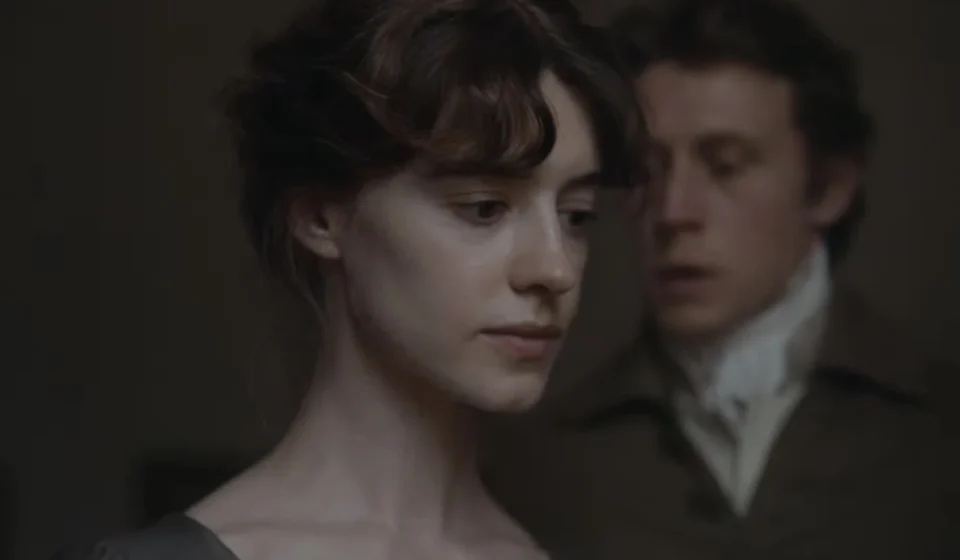
A New Perspective on the Dashwood Sisters: Georgia Oakley’s Naturalistic Reimagining of ‘Sense and Sensibility’

For over three decades, the cinematic landscape of Jane Austen adaptations has been dominated by a singular, towering achievement: Ang Lee’s 1995 masterpiece, Sense and Sensibility. With an Oscar-winning screenplay by Emma Thompson and a cast that defined a generation of period drama, Lee’s film became the "Platonic ideal"—a perfect blend of dry wit, lush aesthetics, and overwhelming emotional catharsis. To revisit this territory is to step into a shadow that has loomed large over every bonnet and ballroom since the mid-nineties.
However, director Georgia Oakley, fresh off the critical success of her BAFTA-winning debut Blue Jean, has accepted the challenge. Her new adaptation of Sense and Sensibility offers a moody, textured, and decidedly naturalistic spin on the story of the Dashwood sisters. While it trades some of the traditional Austenian wit for a grounded psychological realism, Oakley’s film establishes itself as a confident, visually arresting evolution of the genre.
Main Facts: A Bold Shift in Tone and Scale
Georgia Oakley’s Sense and Sensibility represents a significant leap in scale for the director. Transitioning from the gritty, intimate Thatcher-era queer drama of Blue Jean to a sprawling 18th-century period piece, Oakley retains her signature tactile intimacy while embracing a larger budget and a formidable ensemble cast.
The production features a screenplay by Diana Reid, which hews closely to the major plot beats of Austen’s 1811 novel while refocusing the lens on the physical and social exhaustion inherent in the era. The cast is led by Daisy Edgar-Jones (Normal People, Twisters) as the pragmatic Elinor Dashwood and Esmé Creed-Miles (Hanna) as the impulsive, romantic Marianne. They are supported by a heavyweight roster including Caitríona Balfe as their mother, George MacKay as Edward Ferrars, Frank Dillane as the rogue Willoughby, and Fiona Shaw as the boisterous Mrs. Jennings.
The film distinguishes itself through its aesthetic choices: a muted color palette, a focus on "earthy romanticism," and a rejection of the overly polished "heritage cinema" look in favor of something more lived-in and gritty.
Chronology: From Norland Park to the Streets of London
The narrative follows the familiar but evergreen trajectory of the Dashwood family’s fall from grace and their subsequent search for security and love.
The Displacement
The film begins with the death of the Dashwood patriarch, an event captured with a "lightly shaky camera" that follows a frantic Marianne through the woods, signaling the instability to come. Due to the restrictive inheritance laws of the time, the family estate, Norland Park, passes to John Dashwood (Tom Brooke), the son from a previous marriage. Under the influence of his "comically stingy" and "catty" wife Fanny (Stacy Martin), the Dashwood women—Elinor, Marianne, and their mother (Balfe)—are effectively pushed out of their home.
The Quiet Romance of Norland
Before their departure, the film establishes the burgeoning connection between Elinor and Edward Ferrars (George MacKay). In a notable departure from traditional gendered gazes, Oakley presents scenes where Elinor draws Edward’s portrait, reversing the typical roles of artist and muse. Their bond grows over "wholesome nature walks," yet the relationship is stifled by Edward’s "sensible" but ultimately spineless inability to defy social expectations.
Retreat to Devon
The family eventually relocates to a modest seaside cottage in Devon, provided by the eccentric but well-meaning Mrs. Jennings (Fiona Shaw). It is here that the film’s "pastoral exuberance" takes center stage. In Devon, Marianne meets the dashing Willoughby (Frank Dillane), and the two engage in a "rustic romance" defined by piano duets and cliffside snuggling. Simultaneously, the steady, baritone-voiced Colonel Brandon (Herbert Nordrum) begins his patient, albeit awkward, pursuit of Marianne.
The London Revelation
The final act shifts the setting to the "gilded interiors" of London. As the sisters travel to the capital, the film contrasts their "cottage-core" aesthetic—weathered gowns and tousled manes—with the rigid, tightly-wound social circles of the city. It is in London that the emotional stakes reach their zenith: Elinor discovers Edward’s secret engagement to another woman, and Marianne is devastated by Willoughby’s betrayal as he prepares to marry for money.
Supporting Data: The Artistic Vision and Technical Execution
Oakley’s adaptation is a masterclass in worldbuilding, prioritizing texture and atmosphere over traditional period-piece gloss. Several key elements contribute to this unique vision:
Earthy Romanticism and Cinematography
The film’s visual language is deeply rooted in the natural world. Oakley and her cinematographer utilize shots of "quivering cattails, dew-spotted spiders, and floating lilypads" to mirror the roiling inner lives of the sisters. This isn’t the sanitized nature of a postcard; the film emphasizes the "grit and exhaustion" of the era—the physical toll of scaling hills and the grueling reality of multi-day horse carriage journeys.
Choreography as Characterization
One of the most innovative aspects of the production is the work of choreographer Holly Blakey. Dance is used not just as a social ritual, but as a tool for psychological mapping.
- The Country: Marianne and Willoughby engage in a "riotous, rollicking folk dance," symbolizing their uninhibited passion.
- The City: Elinor and Edward share a "restrained, yet slinky, sensual waltz" at a London ball, highlighting their repressed but deep-seated mutual attraction.
Costume and Production Design
The production design favors "soft, candlelit interiors" and a sense of domestic realism—hunted game hanging on walls and a variety of "neat dogs" (pugs, mastiffs, whippets) roaming the background. The costume design reinforces the "cottage-core modernity" of the Dashwood sisters, making them feel like outsiders in the stiff, formal environments of London.
Official Responses: Critical Reception and Comparative Analysis
Early critical responses suggest that while Oakley’s version is a "solid undertaking," it faces the inevitable challenge of being measured against Ang Lee’s 1995 classic.
The "Star" Factor
Critics have noted a distinction in the "star power" of the two versions. While Daisy Edgar-Jones and George MacKay are praised as "perfectly tender lovebirds," some reviewers argue they don’t quite "breathe new life" into their characters in the way the 1995 cast did. However, Esmé Creed-Miles has been singled out for her "sharp-tongued, twinkle-eyed" portrayal of Marianne, which captures an "inexplicable magnetism," even when the script occasionally leans into clichés regarding her "passion."
The Scoundrel’s Success
The standout performance, according to many, belongs to Frank Dillane. His portrayal of Willoughby as a "slouching, smug-faced scoundrel" brings a much-needed "unstudied lightness and humor" to a film that otherwise maintains a "breath-held decorum." Dillane’s performance confirms his status as a rising star capable of bringing nuance to classic archetypes.
Tone and Wit
The most significant point of contention among critics is the film’s tone. By opting for a "quivering psychological realism," Oakley has stripped away much of the dry wit and satirical comedy that are hallmarks of Jane Austen’s writing. For some, this makes the film feel "oddly safe" and perhaps too serious, missing the "Austenesque" spark that balances the drama.
Implications: The Future of the Period Drama
Georgia Oakley’s Sense and Sensibility arrives at a time when the "period drama" is undergoing a significant transformation. Following in the footsteps of films like Greta Gerwig’s Little Women and Emerald Fennell’s stylistic ventures, Oakley’s work suggests a move toward "tactile intimacy" and a more modern, psychological approach to historical settings.
The Director’s Trajectory
For Georgia Oakley, this film cements her position as a director capable of handling large-scale productions without losing her specific, intimate voice. Her ability to translate the "stifled desire" of a Thatcher-era drama into the 18th-century context proves her versatility and her keen eye for the universalities of the female experience.
A New Standard for "Cottage-Core" Cinema
The film’s aesthetic—blending the "earthy" with the "romantic"—is likely to influence future adaptations. By focusing on the "grit" of the 1790s rather than just the "glamour," Oakley has provided a roadmap for how to make Jane Austen feel relevant to a generation that values authenticity and "natural splendor" over artifice.
The Legacy of Adaptation
Ultimately, this film proves that even the most "perfect" adaptations (like Lee’s 1995 version) do not close the book on a story. By choosing "sensibility" (feeling) over "sense" (decorum) in her directorial style, Oakley has created a version of the Dashwood story that feels uniquely grounded in the 21st-century’s obsession with psychological realism and environmental connection. While it may not replace the "Platonic ideal" for all viewers, it offers a textured, sincere, and beautiful alternative for a new era of Austen fans.