The Last Analog Outlaw: Why ‘The Only Living Pickpocket in New York’ Is a Modern Masterpiece

By [Your Name/Journalist Desk]
In an era where the “New York City” depicted on screen is increasingly a digital fabrication—shot in the tax-friendly soundstages of Ireland, Georgia, or Toronto—Noah Segan’s The Only Living Pickpocket in New York arrives as a defiant, celluloid love letter to the five boroughs. It is not merely a crime drama; it is an archeological dig into the soul of a changing metropolis, capturing the friction between the analog relics of the past and the hyper-connected, digital reality of the present.
Following its celebrated premiere at the 2026 Sundance Film Festival, the film is poised for a nationwide theatrical release on October 23 via Sony Pictures Classics. It serves as both a gritty genre piece and a poignant meditation on obsolescence in a city that rarely pauses to mourn its own history.
The Architecture of Authenticity
In recent years, the “New York movie” has become a genre defined by geographical dishonesty. Filmmakers, constrained by tightened budgets and runaway production incentives, have often settled for the "look" of New York rather than its heartbeat. Noah Segan, a protégé of Rian Johnson, rejects this trend entirely.
Shot on location across the Bronx, Queens, and Brooklyn, the film captures the tactile reality of the city—the grime on the subway tiles, the specific hum of a crowded sidewalk, and the distinct light that hits the Hudson River at dusk. The cinematography, lensed by Sam Levy, finds its most potent visual motif in a 360-degree sweep of the Manhattan skyline as seen from the murky, industrial New Jersey shoreline. It is a perspective that feels honest, avoiding the polished, postcard-perfect vistas favored by big-budget studio projects. By grounding the narrative in the physical geography of the city, Segan creates a setting that breathes, forcing the audience to acknowledge the sheer scale of the environment these characters inhabit.

A Career-Defining Turn: John Turturro’s Harry Lehman
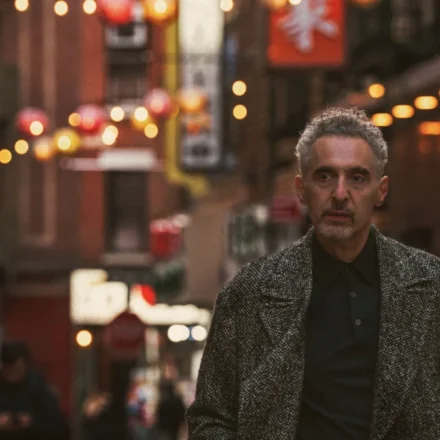
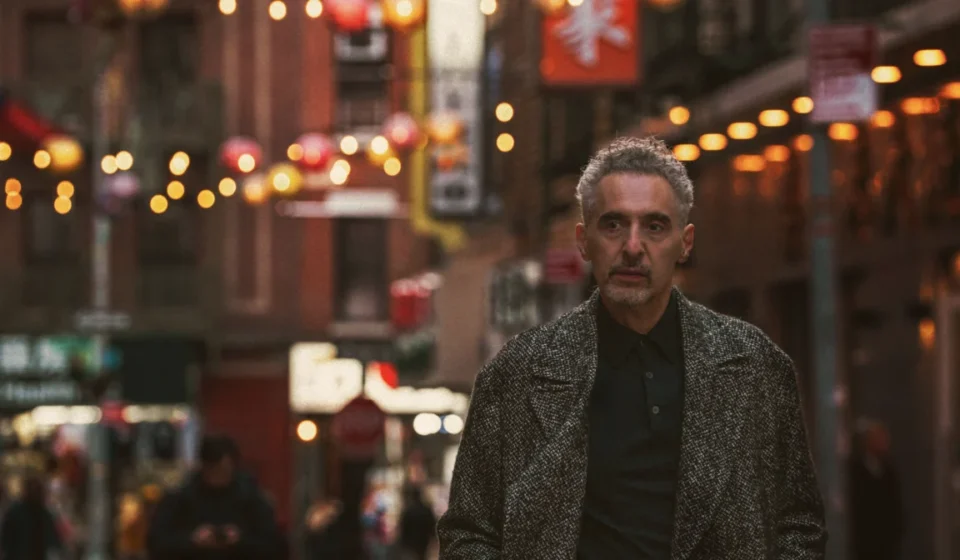
At the center of this urban tapestry is John Turturro, delivering a masterclass in physical acting. As Harry Lehman, an aging pickpocket, Turturro is a study in controlled precision. His performance is stripped of histrionics; he is a man of few words, his internal monologue expressed entirely through the subtle movements of his hands and the deliberate rhythm of his gait.
Turturro’s dedication to the role went beyond the script. Reports from the production suggest the actor spent months mastering the sleight-of-hand techniques required to make his pickpocketing appear effortless. He famously practiced on cast and crew members, refining his movements until he could lift a wallet without the "mark" even registering a tactile disruption. The result is a character who feels like a living ghost—a man who has survived decades on the streets by making himself invisible. His uniform—a gray tweed trench coat and polished brown oxfords—is not a fashion choice but a tool of the trade, designed to allow him to blend into the sea of commuters.
Chronology of a Dying Trade
The film functions as a tragicomedy of sorts, highlighting the collision between old-world criminal skills and the modern digital economy. Harry’s world is strictly analog: cash, jewelry, and physical goods that can be pawned at the shop owned by his longtime associate, Ben (played with aching, steady warmth by Steve Buscemi).
The narrative tension escalates as Harry realizes his expertise has been devalued by the rise of contactless payment. In a pivotal sequence, Harry manages to lift a wallet from a Wall Street professional, only to discover it contains nothing but platinum credit cards—useless to a man who operates in the shadow economy.
The film’s humor shines brightest during these moments of technological failure. When Harry attempts to leverage digital data as a bargaining chip, the ensuing comedy of errors involving Ben’s archaic desktop computer highlights the absurdity of the generational divide. It is a brilliant, albeit subtle, commentary on how quickly a person’s life’s work can be rendered obsolete by a software update.

Supporting Players and Emotional Depth
While the heist elements drive the plot, the film’s true weight lies in its ensemble cast. Tatiana Maslany delivers a tour-de-force performance as Harry’s estranged daughter, a character whose bitterness is tempered by a deep, unspoken longing for reconciliation.
Perhaps most striking is the portrayal of Harry’s wife, Rosie. Bedridden and unable to communicate, she is rendered with profound sensitivity. The film uses a simple, haunting device—an old answering machine tape containing her voice—to remind the audience of the vibrant life she led before her decline. The inclusion of veterans like Lori Tan Chinn, playing a sharp-tongued Chinatown grandmother, and Jamie Lee Curtis, who dominates her singular scene as a formidable mob boss, rounds out a cast that feels genuinely representative of the city’s complex, interwoven populations.
Implications: A City in Flux
Beyond the plot, The Only Living Pickpocket in New York is a profound social observation. It avoids the easy trap of romanticizing the "good old days" or condescending toward Gen-Z characters. Instead, it presents a city that is struggling to accommodate both the old-school lifers and the digital-native youth.
The film’s central question is: How does one remain in a city that is constantly erasing its own past? The characters are all fighting to maintain their foothold in a neighborhood that no longer recognizes them. By introducing a younger computer-savvy character (Victoria Moroles) who acts as an unlikely bridge between Harry’s analog world and the modern digital landscape, the film suggests a path forward. It posits that survival in New York has always been about adaptation, and that the "new" and "old" are not enemies, but rather two sides of the same struggling coin.
The Verdict: A Masterpiece of Restraint
In an industry currently obsessed with high-octane spectacle and gratuitous violence, Segan makes the bold choice to keep his hands clean. There are no shootouts, no high-speed chases, and no gratuitous gore. Violence is presented as a cold, encroaching pressure—the smashing of a shop window or the threat of a weapon in a trash bin—rather than a cinematic thrill.

This restraint is what makes the film so powerful. It serves as a reminder that the most compelling crime stories are not about the scale of the theft, but the depth of the characters involved. By focusing on the quiet, methodical lives of two aging men, Segan has crafted something rare: a crime drama that cares more about the people living in the margins than the adrenaline of the heist itself.
The Only Living Pickpocket in New York is a triumph of character-driven storytelling, a beautifully shot urban fable that captures the essence of a city that refuses to be ignored.
Grade: A