The Intimate Lens: Why Douglas Keeve’s ‘Unzipped’ Remains the Gold Standard of Fashion Documentary

For journalists and filmmakers alike, the intersection of romantic intimacy and professional documentation is a high-wire act. When the subject of your lens is also the person with whom you share a bed, the boundaries between objective observation and subjective adoration inevitably blur. However, as director and photographer Douglas Keeve proved with his 1995 landmark documentary Unzipped, this "tricky ethical line" can occasionally yield a masterpiece of vérité cinema—a film that is as much a love letter as it is a historical record.
As Unzipped returns to theaters this weekend in a pristine 4K restoration courtesy of Janus Films, audiences are once again invited into the frenetic, glittering, and deeply personal world of fashion designer Isaac Mizrahi.
The Genesis of an Icon: 1994 and the ‘Nanook’ Collection
To understand the cultural weight of Unzipped, one must look back to 1994. It was a time before the democratization of high fashion through big-box retail collaborations, and a decade before Mizrahi would become a household name through his diffusion lines at Target. At the time, Mizrahi was a rising star in the haute couture firmament, backed by the financial muscle of Chanel.
The film chronicles the mounting of Mizrahi’s Fall 1994 collection—a creative endeavor famously inspired by the 1922 documentary Nanook of the North. The resulting show, which took place during Paris Fashion Week, remains a touchstone for fashion historians. Keeve’s camera captures the designer not merely as a creative director, but as a "charmingly frenetic mind," balancing the immense pressure of his financial backers with the volatile, high-stakes whims of the runway.
For younger audiences—those currently swept up in the 1990s nostalgia trend exemplified by recent cultural fascination with the era’s public figures like Carolyn Bessette-Kennedy—Unzipped offers a visceral, unfiltered look at the decade. It is a world of Parliament cigarettes, raw ambition, and a stylistic confidence that defines the pre-digital age.
A Chronology of Collaboration and Separation
The relationship between Keeve and Mizrahi serves as the film’s heartbeat, though its ultimate trajectory is one of professional endurance over personal dissolution. The duo began filming in an atmosphere of intense romantic entanglement, yet the relationship had effectively "curdled" by the time the film premiered at the 1995 Sundance Film Festival, where it was awarded the Audience Award.

Keeve is quick to dismantle the simplistic narrative that the film itself caused the breakup. "Did the movie break us up? I’m not sure I know how to answer that because relationships are so complicated," Keeve noted in a recent interview with IndieWire. "Isaac is complicated, I’m complicated. So you have two complicateds, plus a complicated world."
He reflects on the disparity in their lifestyles during that era. While Mizrahi was a social whirlwind—attending back-to-back cocktail parties and after-hours events—Keeve was juggling his own rigorous professional responsibilities. The pressure to complete the film within a strict deadline only added to the friction. Yet, despite the breakup, the professional bond remained, culminating in the pair working together to supervise the current 4K restoration of the film.
Supporting Data: The Cast of the 90s
Unzipped acts as a time capsule, preserving the early careers of the most iconic supermodels in history. The film features Naomi Campbell, Christy Turlington, Linda Evangelista, Cindy Crawford, and Kate Moss, capturing them in various states of professional savviness.
Keeve’s perspective on these models is nuanced. He recalls a specific instance where Linda Evangelista, often cited as one of the greatest models to ever walk a runway, appeared to be having a "hissy fit" backstage. Rather than seeing this as a sign of unbridled ego, Keeve recognized the performance.
"She knows we’re making a movie," Keeve explained. "She knows that. Linda said, ‘I have to bring it,’ so she did." He describes a moment where she stares directly into the lens—a look of profound defiance and vulnerability—that remains one of the film’s most enduring sequences. It is a testament to the relationship between the filmmaker and his subjects: they weren’t just being filmed; they were collaborating on a vision of themselves.
Official Responses and the Ethics of Access
One of the most frequent criticisms leveled against "intimate" documentaries is the risk of exploitation. However, Keeve maintains that his process was one of deep respect, even when the scenes felt intrusive.

"I wouldn’t show Isaac the movie when we were editing it at all," Keeve stated. "Only when I was happy with it, I brought it to him."
The director defends the more candid moments—such as filming Mizrahi in the bathroom while the designer is on the phone with his mother, Sarah. To an outside observer, this might appear invasive. To Keeve, it was evidence of the total trust Mizrahi placed in him. "Isaac is somewhat oblivious to the camera in a way," he noted. "He just is one of those people who is in the zone all the time."
The presence of Sarah Mizrahi in the film adds a layer of humanity that elevates Unzipped above a standard fashion industry puff piece. Their relationship, characterized by Keeve as "mama’s-boy close" yet "incredibly fraught," provides a grounded, domestic contrast to the high-glamour artifice of the fashion world.
The Implications of the Restoration
The decision to restore Unzipped via the Sundance Institute and the UCLA Film & Television Archive serves as an acknowledgment of the film’s status as a cultural artifact. For Keeve, the technical process of polishing the digital image was secondary to the emotional resonance of the material.
"When I’m watching the movie, I’m not really looking at the technical part of the film about how the diamond has been polished even more," he admitted. "I’m really seeing those moments and feeling those feelings."
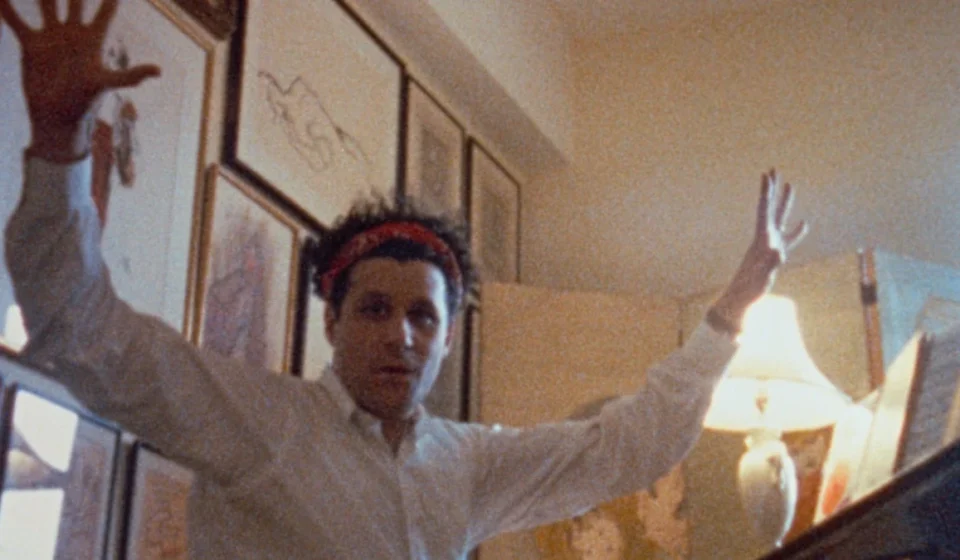
The implications of this re-release are significant. In an era where fashion documentaries have largely become corporate-sanctioned branding exercises, Unzipped stands as a reminder of what happens when the filmmaker is allowed unfettered access. It is a portrait of a man who, at the time, was trying to reconcile his "outré personality" and his "Eraserhead-like shock of hair" with the rigid expectations of the high-fashion establishment.

Conclusion: A Love Letter to the Extraordinary
As Unzipped begins its theatrical run at the Film Forum in New York, with an expansion to Los Angeles and other major markets in October, it offers more than just a trip down memory lane. It serves as a study on the nature of creative obsession.
Keeve’s admission that the film is ultimately a "love letter" to Mizrahi—despite the collapse of their personal relationship—is the key to why the film continues to resonate. It captures a specific human being at a specific, volatile point in their life. By refusing to sanitize the "benign volatility" of Mizrahi’s character, Keeve created something far more valuable than a promotional documentary: he created a human document.
In the end, Unzipped suggests that the best way to capture a subject is to love them, even when that love is complicated by the lens of the camera. It is a masterclass in balance, reminding us that behind every piece of couture and every headline-making runway show, there is a person—frenetic, brilliant, and, most importantly, profoundly real.