

In the high-stakes, hyper-competitive landscape of modern Hollywood, few names carry the weight—or the financial baggage—of James Cameron. As a director, he stands in a rarefied echelon of creators who have fundamentally reshaped the medium of film. While Steven Spielberg holds the crown for the highest-grossing career in cinema history, Cameron follows closely behind, having spent much of the last two decades meticulously crafting the Avatar franchise.
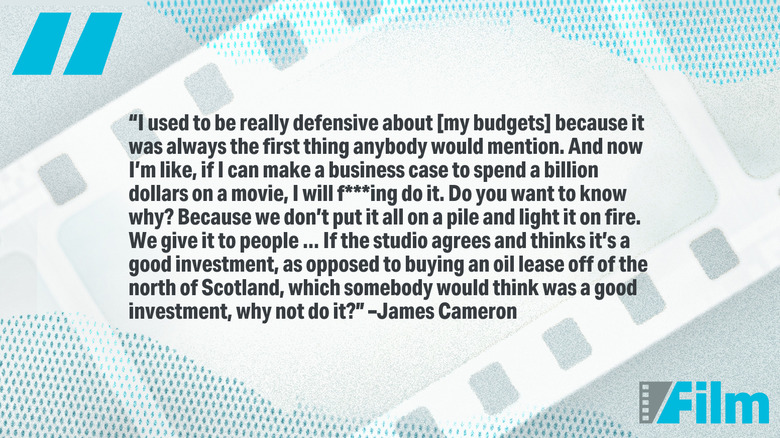
For Cameron, the narrative surrounding his work has long been dominated by two things: technological innovation and eye-watering budgets. Yet, in a candid moment of reflection, the visionary director has made it clear that he is done apologizing for the price tag of his art. His philosophy is simple, bold, and entirely uncompromising: "If I can make a business case to spend a billion dollars on a movie, I will f***ing do it."
The Architect of Modern Blockbusters: A Chronology of Ambition
To understand Cameron’s current stance, one must look at the trajectory of his career. Born in Kapuskasing, Ontario, and raised in the rugged landscapes of Canada before moving to California in his teens, Cameron’s origin story is the stuff of Hollywood legend. He famously pivoted from a career as a truck driver to the helm of some of the most expensive and successful productions in history.
His journey began with grit and mechanical ingenuity. In the 1980s, The Terminator and Aliens established his reputation as a master of tension and world-building. However, it was Terminator 2: Judgment Day that truly signaled the beginning of a paradigm shift. The film famously went millions of dollars over budget, yet it delivered a visual spectacle that redefined what audiences expected from action cinema.

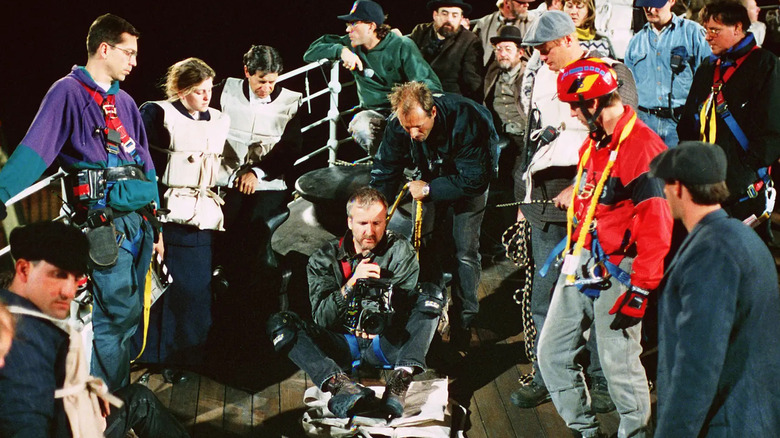
This trend continued into the 1990s. During the production of Titanic, the mood behind the scenes was one of impending doom. Cameron famously admitted to The Times that the crew labored for months under the absolute certainty that the studio would lose $100 million. Instead, the film became the highest-grossing project of its time, effectively silencing the skeptics and cementing Cameron’s status as a director who could deliver gold from what appeared to be sinking ships.
The Economics of Art: Defending the "Waste"
The public discourse surrounding film budgets often relies on the assumption that a high price tag is inherently a bad thing—a sign of excess or mismanagement. Cameron, however, has fundamentally rejected this framing. In a 2022 profile for GQ, he articulated a perspective that reframes the concept of "spending" entirely.
"I used to be really defensive about [my budgets] because it was always the first thing anybody would mention," Cameron stated. "And now I’m like, if I can make a business case to spend a billion dollars on a movie, I will f***ing do it. Do you want to know why? Because we don’t put it all on a pile and light it on fire. We give it to people."
This distinction is crucial. Cameron views his production budgets not as money disappearing into a void, but as a massive injection of capital into the labor force of the creative industry. From costume designers and makeup artists to gaffers, cinematographers, and digital effects wizards, a billion-dollar budget is essentially a payroll for the best creative minds on the planet. By his logic, if a studio agrees that a project is a viable investment—perhaps even more stable than alternative corporate ventures like oil leases—then the expenditure is not only justified but represents a significant contribution to the economy of the arts.

Data and Disruption: The Shifting Financial Landscape
The obsession with "breaking even" is a staple of Hollywood reporting, yet it is often based on nebulous, opaque accounting practices that vary from studio to studio. In an era where tech conglomerates are entering the film space, the traditional metrics of success are being rewritten.
Consider the recent strategies of companies like Apple. By investing heavily in prestige, mega-budget projects—such as Martin Scorsese’s Killers of the Flower Moon or Ridley Scott’s Napoleon—these tech giants are not necessarily looking for the immediate box-office ROI that traditional studios require. For them, the goal is to establish a foothold in the streaming wars and cultural relevance, turning the "loss" on a balance sheet into a strategic gain in market share.
Cameron’s assertion highlights the absurdity of the current obsession with production costs. If we celebrate corporations for dumping trillions into speculative AI ventures—ventures that have yet to yield tangible, life-changing profits—why do we wince when a filmmaker directs that same capital toward the creation of a tangible, lasting piece of human culture?
Implications: The Future of High-Budget Cinema
Cameron’s philosophy raises profound questions about the future of filmmaking. If the industry continues to push for smaller budgets and safer bets, we risk losing the "event" films that draw global audiences into theaters. Conversely, if studios follow Cameron’s lead, they must be willing to accept that the cost of entry for visionary, world-altering cinema is rising.
This approach is not without its critics, who argue that such astronomical costs stifle creativity by creating "too big to fail" scenarios. However, Cameron argues the opposite: it is precisely the scale of his budgets that allows him the freedom to innovate. Without the immense financial backing of studios like 20th Century, the technological leaps seen in Avatar: The Way of Water simply would not have been possible.
The Human Element in the Credits
Beyond the numbers and the box office charts lies the human reality of these films. When a project costs hundreds of millions, it represents a commitment to thousands of skilled professionals. It provides stability, fosters technological innovation in software and hardware, and pushes the boundaries of what is visually possible.
Cameron’s defense is ultimately a call to recognize the value of the labor involved. He is not asking for a blank check to satisfy an ego; he is arguing that if the business case is sound, the investment into human creativity is a moral and economic good.
Conclusion: The Pursuit of the Extraordinary
James Cameron is not merely a director; he is a force of nature who has spent a lifetime proving that "impossible" is a term used by people with small imaginations. His shift from defensive posture to bold declaration—that he would spend a billion dollars if he could—is the statement of a man who understands that the primary goal of cinema is not to satisfy an accountant, but to create something that resonates through history.
As audiences continue to flock to theaters to experience the worlds Cameron builds, his message remains clear: the art is worth the investment. Whether we are discussing the historical tragedy of Titanic or the alien ecosystems of Pandora, the value lies in the experience. For Cameron, if the studio has the capital and the vision is sound, the cost is irrelevant. After all, money is just currency, but a masterpiece is permanent.
In a world where we often count the cost of everything, James Cameron reminds us that we should be focusing more on the value of what we are creating. If his track record is any indication, he is a man who knows exactly what he is doing—and he isn’t finished yet.