The Architecture of Despair: Mohammed Hammad’s ‘Safe Exit’ and the Anatomy of Modern Cairo

Introduction: A Virtuosic Return to the Screen
In the landscape of contemporary Middle Eastern cinema, few voices resonate with the quiet, devastating authority of Mohammed Hammad. Following his critically acclaimed 2016 debut, Withered Green, Hammad has returned to the international stage with his sophomore feature, Safe Exit. Premiering in the Panorama program of the Berlinale earlier this year, the film confirms Hammad as a master of "spare" cinema—a style that, while minimalist in its aesthetic, is overflowing with empathy and psychological depth.
Safe Exit is a rigorous exploration of the "outsider" status within the claustrophobic confines of contemporary Cairo. It is a film that balances the macro-pressures of systemic failure and terrorism with the micro-struggles of two marginalized individuals searching for a way out of a life that offers no easy exits.
Main Facts: The Core of ‘Safe Exit’
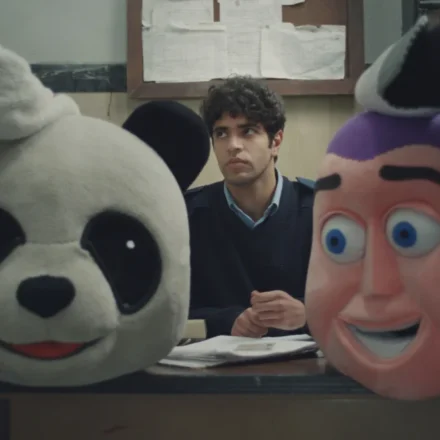
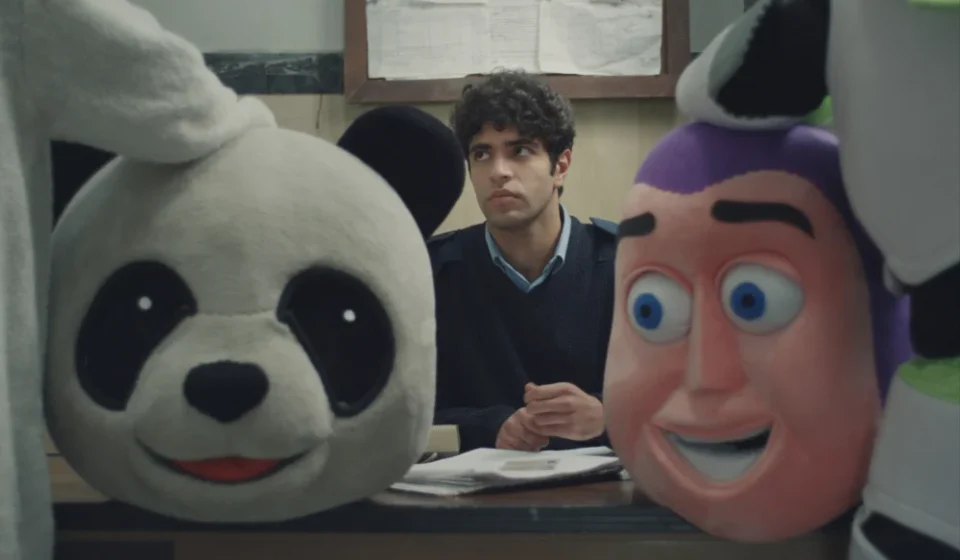
At its heart, Safe Exit is a character study wrapped in the trappings of a social thriller. The film follows Samaan (played by Marwan Waleed), a young Coptic Christian man who serves as a night-shift security guard in a Cairo apartment building. Samaan is a man haunted by a violent past; his father was murdered during a terrorist incident in Libya, an event that also saw Samaan kidnapped by ISIS.
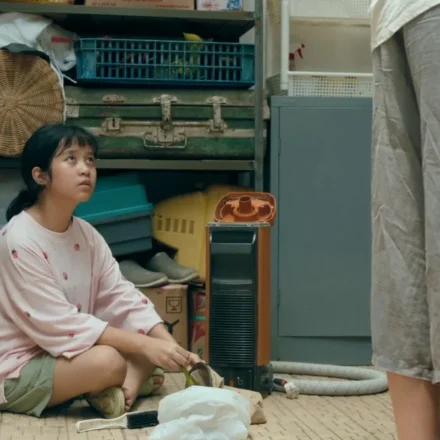
His counterpart is Fatimah (Noha Foad), an undocumented Muslim woman who is suffering from a brain tumor. Their lives intersect in the cold, transactional environment of the apartment lobby—a space that serves as a microcosm of Egyptian class disparity.
Key Details:
- Director/Writer: Mohammed Hammad
- Cinematographer: Mohammed El Sharqawy
- Lead Cast: Marwan Waleed (Samaan), Noha Foad (Fatimah)
- Genre: Social Drama / Psychological Thriller
- Premiere: Berlinale Panorama (2024)
- Themes: Trauma, religious identity, systemic healthcare failure, and the irony of "safety."
Chronology: A Narrative of Entrapment
The narrative of Safe Exit unfolds with a deliberate, slow-burn intensity, mapping the intersection of two lives that have been discarded by society.
The Ghost of Libya
The film’s backstory is revealed through Samaan’s internal monologue, recorded in a journal. Hammad avoids heavy-handed exposition, instead using voice-over to peel back the layers of Samaan’s trauma. Years prior, Samaan and his family were among the Coptic workers targeted by ISIS in Libya. While his father was killed, Samaan was eventually released—a survival that has left him burdened with paralyzing guilt and a pathological inability to assert himself.
The Microcosm of the Apartment Building
Samaan’s current life is defined by the apartment building where he works. The structure is a physical representation of Cairo’s social stratification: the lobby is cold and impersonal, the apartments are well-maintained for the wealthy, and the roof is a "rabbit-warren" of illegal constructions where Samaan lives in a small, isolated room.
The plot is set in motion by financial desperation. Samaan’s brother is in detention following a street altercation, and the family needs money for a lawyer. This leads Samaan into a dangerous moral compromise. He strikes a deal with a resident, played by Magda Mounir, who is hiding her son, Abdullah—a suspected terrorist. Samaan agrees to act as a lookout, signaling when the police arrive so Abdullah can hide in a rooftop water tank.
The Arrival of Fatimah
Into this tense environment enters Fatimah. She arrives at the building seeking medical help at an on-site doctor’s office but is turned away because she is undocumented and illiterate. Desperate for a place to stay, she initially attempts to trade her body to the daytime guard, Amm Araby, for a bed. When he discards her, Samaan reluctantly allows her to stay in his rooftop quarters.
The middle act of the film focuses on the burgeoning, hesitant relationship between these two outcasts. Fatimah, despite her illness (diagnosed as a brain tumor resulting in seizures), possesses a "flinty sense of self-protection" that contrasts with Samaan’s withdrawal.
The Final Collapse
The hope of redemption is meticulously built, only to be shattered. The "safe exit" promised by the title proves to be a mirage. The climax of the film occurs when a moment of panic—triggered by the ever-present threat of police raids and the hidden terrorist—collides with a "blind cruelty" that seals the fate of the protagonists.
Supporting Data: The Craft of Minimalism
Hammad’s directorial control is evident in every frame of the film. Safe Exit is not just a story; it is a visual experience designed to evoke the feeling of being trapped.
Cinematography and Visual Language
Mohammed El Sharqawy’s camera work is largely static, utilizing fixed shots that emphasize the rigidity of the characters’ lives.
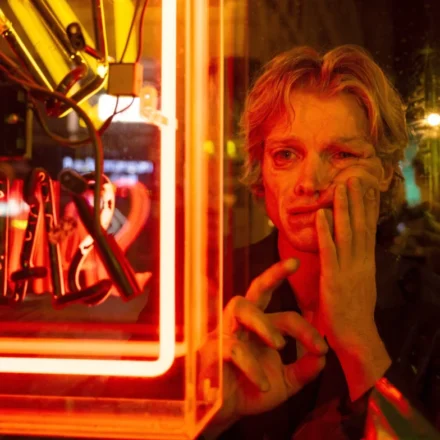
- Directional Lighting: The interiors are shot with strong directional illumination, creating sharp contrasts between the lit spaces and the surrounding darkness. This visual metaphor underscores the characters’ precarious positions—they exist in small pools of light surrounded by an encroaching void.
- The "Two-Room" Composition: Hammad frequently uses shots that capture two rooms at once through obliquely positioned walls. This creates a sense of voyeurism and fragmentation, suggesting that even in private, these characters are never truly alone or safe.
- Symbolic Color: Samaan’s rooftop apartment features unexpectedly bright colors and a flashing picture of the Virgin Mary. While Samaan admits he is no longer a believer, the icon serves as a vestige of a time when "supernatural protection" seemed possible.
Performance and Physicality
The film’s power rests heavily on the shoulders of Marwan Waleed and Noha Foad.
- Marwan Waleed: His portrayal of Samaan is one of "interior projection." His tense body movements and downcast head are the physical manifestations of the trauma of being locked in an ISIS van. He plays Samaan as a man who is trying to disappear.
- Noha Foad: Foad delivers a "fragile command" of the screen. Her character, Fatimah, uses her physicality as a tool for survival. A standout scene involves a close-up of Fatimah berating a medallion of the Virgin Mary—a Muslim woman seeking hope from a Christian divine mother—highlighting the shared desperation that transcends religious boundaries.
Official Responses and Censorship
The reception of Safe Exit has been a tale of two worlds: international acclaim versus domestic restriction.
International Reception
At the Berlinale, critics praised Hammad for his "virtuosic control" and his ability to address the fear of terrorism without falling into the traps of didacticism or sensationalism. The film was noted for its "rigorous form" and its refusal to reduce its characters to mere victims.
The Egyptian Censors
Domestically, the film has faced significant hurdles. To date, Egyptian censors have restricted its viewing, only allowing it to be screened at the El Gouna Film Festival. The reasons for this sensitivity are likely manifold:
- Healthcare Critique: The film highlights the plight of the undocumented in Egypt, specifically the inability of a citizen (Fatimah) to access state-sponsored healthcare for a life-threatening tumor because of bureaucratic and literacy barriers.
- Sectarian Nuance: By showing a Coptic Christian protagonist who is not a "perfect believer" and a Muslim woman seeking solace in Christian icons, Hammad navigates complex religious territory that the state often prefers to keep simplified.
- The Terrorism Narrative: The film’s depiction of a terrorist hiding in a middle-class apartment building—and a security guard being forced to help him due to economic pressure—offers a more complicated view of national security than the official narrative.
Implications: The Reality of No Exit
The title Safe Exit is, ultimately, a bitter misnomer. The film suggests that for the marginalized in modern Cairo—the traumatized, the undocumented, the poor—there is no such thing as a safe way out of the system.
The Economy of Desperation
The film illustrates a world where every interaction is transactional. Samaan trades his integrity (by hiding a terrorist) for his brother’s legal fees. Fatimah attempts to trade her body for a place to sleep. This "economy of desperation" strips individuals of their agency, leaving them vulnerable to the "blind cruelty" of fate and the state.
The Evolution of Mohammed Hammad
With Safe Exit, Mohammed Hammad cements his status as one of the most important directors in contemporary Egyptian cinema. While Withered Green dealt with the quiet stifling of women in patriarchal structures, Safe Exit broadens its scope to include the crushing weight of history, religion, and the state.
Conclusion
Safe Exit is a haunting masterpiece that proves minimalism can be the most powerful tool for emotional resonance. By focusing on the "spare" details of two broken lives, Hammad has created a profound indictment of a society that offers no refuge for its most vulnerable. The film stands as a testament to the resilience of the human spirit, even as it acknowledges the darkness that often extinguishes it. As the credits roll, the viewer is left with the haunting realization that for Samaan and Fatimah, the exit was never meant to be safe.