From Adult Swim to the Croisette: Tim Heidecker and Eric Wareheim’s Surrealist Cannes Conquest

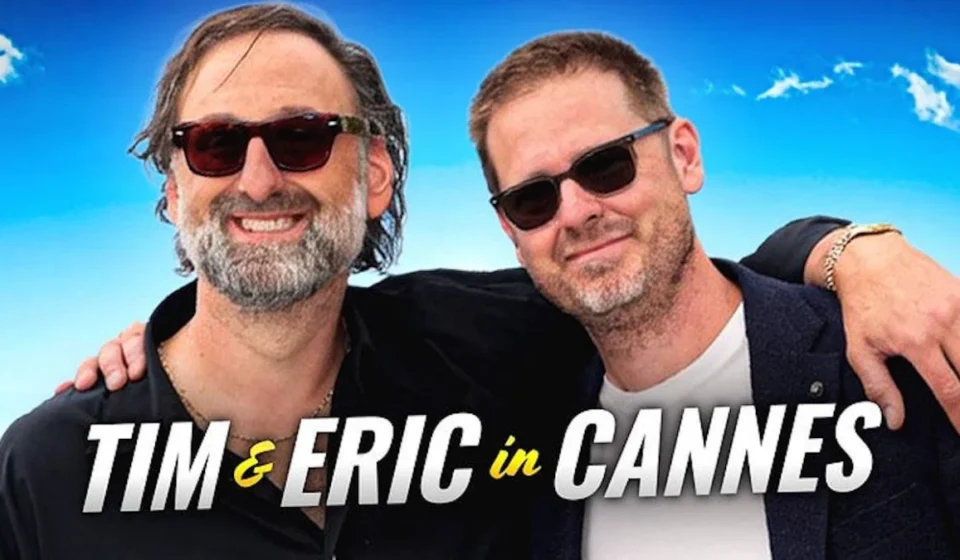
In the pantheon of absurdist comedy, few names evoke as visceral a reaction as Tim Heidecker and Eric Wareheim. From their humble beginnings as Temple University students in Philadelphia to their status as the architects of a post-ironic, surrealist comedy empire, the duo has spent two decades dismantling the conventions of television. Now, in a move that feels both entirely logical and profoundly bizarre, they have arrived at the 79th Cannes Film Festival. Their presence on the French Riviera is not merely a vacation; it is a manifestation of their evolution from niche internet provocateurs to internationally recognized auteurs.
The Evolution of an Iconic Double-Act
The trajectory of Heidecker and Wareheim is a study in creative endurance. Their breakthrough, Tim and Eric Awesome Show, Great Job! (2007–2010), functioned as a "cracked funhouse mirror" held up to public-access television. For a generation of viewers, the show served as a bizarre rite of passage, fundamentally altering the grammar of American humor. By blending the grotesque with the mundane, they crafted a "gleefully psychoactive" aesthetic that paved the way for the modern creator economy.
Following the conclusion of their seminal Adult Swim work, the duo diverged, yet their creative footprints remained intertwined. Heidecker expanded his reach through On Cinema at the Cinema—a multimedia psychodrama that has become a cult institution—while simultaneously pursuing a prolific career as a touring musician with six studio albums. Most recently, Heidecker has entered the high-stakes world of corporate satire, appointed as the new creative director of InfoWars as The Onion moves to dismantle Alex Jones’s media empire.
Wareheim, conversely, has leaned into the persona of the bon vivant. Having transitioned from a director of visually arresting music videos to a connoisseur of fine wines and culinary arts, he has recently reinvented himself as a "garden-plant guru," specializing in the curation and importation of exotic, resilient flora.
The Cannes Connection: Quentin Dupieux and ‘Full Phil’
The catalyst for their appearance at Cannes is the new film Full Phil, directed by the prolific French surrealist Quentin Dupieux. A long-time admirer of the duo’s brand of meta-comedy, Dupieux—who also records electronic music under the moniker Mr. Oizo—has previously collaborated with Wareheim on Wrong Cops (2013) and Reality (2014).
Full Phil is being billed by the director as "Emily in Paris in hell." The narrative centers on a wealthy, disconnected father (Woody Harrelson) attempting to reconcile with his estranged daughter (Kristen Stewart) during a luxury trip to the French capital. Within this film exists a "film-within-a-film," a horror pastiche that echoes the creature features of the 1930s and 50s. In these sequences, Heidecker and Wareheim portray "screwy scientists" in the vein of Victor Frankenstein, engaging in theatrical, scenery-chewing performances as they hunt a reptilian monster.
A Chronology of Collaboration and Creative Independence
To understand the current professional standing of Heidecker and Wareheim, one must look at the timeline of their production company, Abso Lutely. Founded in 2007, the company served as a sanctuary for "weird" television, allowing the duo to bypass traditional studio interference.
- 2007–2010: The height of Awesome Show, Great Job!, establishing a new visual language for sketch comedy.
- 2011: Launch of On Cinema at the Cinema, a project that would eventually spawn the HEI Network, a blueprint for independent, direct-to-consumer content.
- 2013–2014: Wareheim’s early collaborations with Dupieux solidify an international appreciation for their specific brand of surrealism.
- 2020–2025: Facing shifting network landscapes post-COVID, the duo began to pivot away from large-scale corporate production, leading to the eventual sale of Abso Lutely to Jimmy Miller’s media group.
- 2026: Their arrival at Cannes for Full Phil marks a formal entry into the global prestige festival circuit.
Implications: The Future of the "Creator Economy"
During a keynote at the festival’s American Pavilion, Heidecker and Wareheim were lauded as the "progenitors of the creator economy." However, their attitude toward the festival’s gilded machinery remains one of "healthy suspicion."
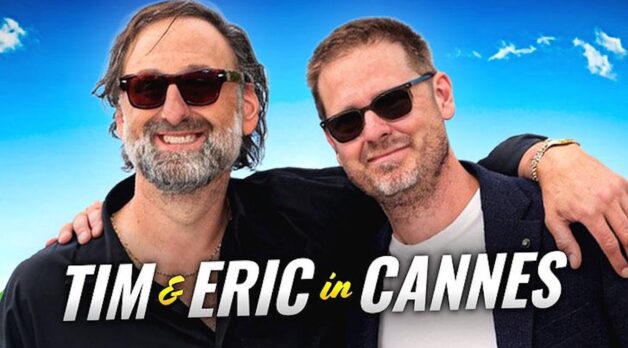
"Cannes is very celebrity-driven in a way that I don’t really understand," Heidecker remarked during our interview. Despite their influence, the duo remains acutely aware of the disconnect between their status as comedy icons and the mainstream obsession with traditional stardom. They speak with a mix of awe and skepticism about the spectacle—the tuxedos, the evening gowns, and the sheer performative nature of the festival itself.
Their decision to move away from the "development hell" of major studios like FX reflects a broader shift in the entertainment landscape. As Heidecker notes, "It’s hard to get the good stuff made right now, the weird stuff." Consequently, both men have doubled down on autonomy. Whether through the HEI Network’s direct-to-consumer model or Wareheim’s pivot to botanical imports, the duo is choosing to prioritize creative integrity over the traditional, often soul-crushing, Hollywood pipeline.
Official Perspectives and Behind-the-Scenes Realities
The production of Full Phil was defined by a unique, low-pressure atmosphere. Unlike the rigid demands of American television development, Dupieux’s set was characterized by "long lunches and short days."
For the actors, the challenge lay in the script’s origins. Dupieux, writing in French, utilized translation software to generate English dialogue, resulting in a text that was intentionally "odd." Heidecker and Wareheim found that the lack of standard script formatting actually empowered their performances. "It’s a weird, cool universe he creates," Wareheim observed, "but it’s harder, because you can’t lean on the skills you have with the English language. It makes everyone odd."
When asked about the future, both men were candid. Heidecker is focused on the InfoWars project, which he views as a temporary, high-impact "proof-of-concept" for independent satire. Wareheim, meanwhile, is finding fulfillment in his new career as a plant importer. He draws a direct line between his past in comedy and his present in horticulture: "Comedy and winemaking and even plant stuff is about giving someone this beautiful feeling."
Conclusion: Still "Goofing Around"
Despite their professional divergence and the weight of their respective legacies, the chemistry between Heidecker and Wareheim remains unchanged. Minutes after reuniting at a swanky Cannes hotel, they were already filming bits on their phones, mocking the very environment they were currently participating in.
They remain, at their core, the same two students from Philadelphia who saw the absurdity in everything. Whether they are being referenced by Alex Jones as "demonic pedophiles" in a bizarre cultural collision or walking the red carpet at the world’s most prestigious film festival, Heidecker and Wareheim continue to navigate the landscape of modern media on their own terms. They are no longer just the guys from Adult Swim; they are the survivors of the industry, proving that with enough grit, talent, and a refusal to play by the rules, one can indeed "make it" to Cannes—even if the main takeaway is just how funny the whole thing really is.