
By Alex Billington
August 4, 2026
"You know you cannot escape death, but immortality can be obtained."
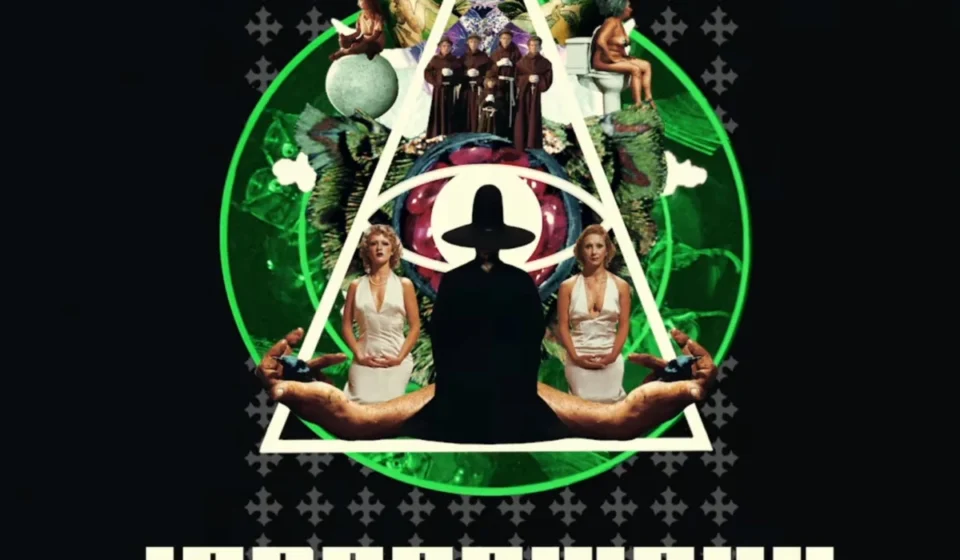
These words, echoing the surrealist ethos of Alejandro Jodorowsky, serve as the perfect mantra for a monumental achievement in home media. Umbrella Entertainment, the Australian boutique label renowned for its high-end physical media restorations, has announced the definitive "Jodorowsky Collection"—a massive 10-film 4K Blu-ray box set that serves as a cinematic reliquary for one of the most enigmatic figures in the history of the medium. At 97 years old, the Chilean-born visionary remains a living legend, and this collection acts not merely as a compilation, but as a comprehensive, ritualistic retrospective of a career spent challenging the boundaries of the human psyche.
The Visionary’s Arsenal: Main Facts of the Collection
The "Jodorowsky Collection" is a staggering achievement in curation. Eschewing the standard "best-of" approach, Umbrella Entertainment has compiled a holistic portrait of Jodorowsky’s output, ranging from his early, transgressive works that defined the midnight movie circuit to his recent, more introspective autobiographical explorations.

The set features:
- The Surrealist Foundations: Fando y Lis (1968), El Topo (1970), and the magnum opus The Holy Mountain (1973).
- The Experimental Years: Tusk (1980) and The Rainbow Thief (1990), both presented in their definitive Director’s Cuts.
- The Masterpiece of Horror: Santa Sangre (1989), arguably his most accessible yet equally haunting work.
- The Modern Retrospective: The Dance of Reality (2013) and Endless Poetry (2016).
- The Non-Fiction Explorations: Psychomagic, A Healing Art (2019) and the essential documentary Jodorowsky’s Dune (2013).
Beyond the films themselves, the set includes a 100-page hardbound book featuring new critical essays, a custom die-cut rigid case, and an exhaustive suite of new special features. Priced at $350 AUD (approximately $250 USD), the set is currently positioned as an Australian and New Zealand exclusive, though its production quality rivals—and perhaps exceeds—the standard set by Criterion or Arrow Video.
A Life in Frames: The Chronology of an Alchemist
To understand the weight of this collection, one must understand the trajectory of Jodorowsky’s career, which has spanned nearly seven decades.
The Midnight Years (1968–1973)
Jodorowsky burst onto the global stage with Fando y Lis, a film that sparked a riot at the Acapulco Film Festival. However, it was El Topo that solidified his reputation. Often cited as the first "midnight movie," it combined the iconography of the American Western with Eastern philosophy and occult symbolism. This was followed by The Holy Mountain, a film so visually dense and philosophically challenging that it remains the benchmark for psychedelic cinema. These films were not just movies; they were initiations.

The Transitional Period (1980–1990)
Following the collapse of his ambitious Dune project—a failure that would ironically become the most famous "unmade" film in history—Jodorowsky moved toward more stylized narratives. Tusk and The Rainbow Thief showcased his ability to work within slightly more traditional frameworks while maintaining his signature surrealist flourishes. Santa Sangre stood out during this era as a masterful fusion of Giallo, religious trauma, and circus melodrama, cementing his status as a master of the grotesque.
The Return to the Self (2013–2019)
After a long hiatus from feature filmmaking, Jodorowsky returned with The Dance of Reality and Endless Poetry. These films were a radical departure: they were autobiographical, intimate, and deeply tender. They allowed the aging filmmaker to confront his own upbringing, his father, and the scars of his childhood in Tocopilla, Chile. Psychomagic, A Healing Art serves as the final piece of this puzzle, documenting his life’s work in therapeutic performance art.
Supporting Data: Why This Set Matters
The significance of this release is not merely in the volume of content, but in the restoration efforts required to bring these films to 4K resolution. Jodorowsky’s cinematography is famously painterly; the vibrant, saturated colors of The Holy Mountain require impeccable color grading to avoid losing the "alchemical" quality of the image.
In the modern landscape of streaming, where films are often subject to compression and variable aspect ratios, a 4K physical set provides a static, high-fidelity experience that respects the filmmaker’s intent. For cinephiles, the inclusion of Jodorowsky’s Dune is particularly poignant. While Jodorowsky did not direct the documentary, it provides the necessary context for the "mythic failure" that shaped the latter half of his career. Seeing his early, explosive works alongside his later, wiser reflections offers a narrative arc that few filmmakers are privileged to curate for themselves.

Official Responses and Industry Context
Umbrella Entertainment describes the collection as an entry into the "visionary universe" of a man who is "one of cinema’s great alchemists." In their promotional materials, the label emphasizes that these films are not merely entertainment, but rituals. "Jodorowsky crafts cinema as ritual: bold, symbolic, transgressive, and wholly unforgettable," the studio states.
Industry experts have noted that the release highlights a shift in the boutique home media market. As streaming services continue to rotate content based on licensing agreements, there is a growing, desperate demand for permanent, physical archives of auteur-driven work. By releasing a 10-film box set, Umbrella is essentially declaring these works as "essential heritage," placing them alongside the most prestigious collections in film history.
Implications: The Legacy of the Master
The release of this collection during the 2026 calendar year—a year in which Jodorowsky is 97—is a profound moment of reflection. It forces the film community to grapple with the reality of an artist who has spent his life working outside the studio system.
Preservation of the Avant-Garde
The primary implication of this set is the institutionalization of avant-garde cinema. For decades, Jodorowsky’s films were difficult to source, often relegated to poor-quality bootlegs or sporadic festival screenings. By aggregating these into a definitive 4K set, Umbrella is ensuring that the visual language of the 1960s and 70s surrealist movement is preserved for future generations of filmmakers who may never have access to the original celluloid prints.

The Geographic Divide
The unfortunate reality of this release is its exclusivity to Australia and New Zealand. This has sparked a lively, if somewhat frustrated, discourse among global collectors. It highlights the complexities of international rights management, where even in an age of globalization, physical media often remains tethered to regional borders. For the international community, the implication is simple: the hunt for these specific, high-quality masters continues, or it necessitates the growth of a robust, albeit expensive, secondary import market.
A Final Testament
Perhaps the most significant implication is the validation of Jodorowsky’s "Psychomagic." Throughout his career, critics often dismissed him as a charlatan or a provocateur. However, the inclusion of his recent work suggests that he has successfully transitioned from a rebel to a sage. He is no longer just the man who shocked the world with El Topo; he is the man who invited us to look inward at our own trauma.
As we look at the trailer released by Umbrella, we see a montage that bridges the gap between the chaotic, desert-bound violence of his youth and the soft, dreamlike colors of his elderly years. It is a reminder that cinema, at its best, is not a static medium, but a living, breathing entity that evolves alongside its creator.
For those in the Australian and New Zealand territories, this collection is not just a purchase; it is a duty to the history of film. For the rest of the world, it is a tantalizing beacon of what can be achieved when a studio treats a filmmaker not as a brand, but as a legend. Alejandro Jodorowsky may have been obsessed with immortality, and with this definitive, sprawling, and beautiful box set, he has—in the eyes of his audience—truly achieved it.