A Circle of Shadows: Juliette Lewis on Returning to the ‘Cape Fear’ Universe

Editor’s Note: The following interview contains spoilers for the entirety of Apple TV’s “Cape Fear” series.
The television adaptation of "Cape Fear"—a visceral, sun-drenched exploration of Southern Gothic dread—arrived on Apple TV+ with a distinct sense of narrative symmetry. At the center of this psychological maelstrom is Javier Bardem, stepping into the formidable shoes once worn by cinematic titans Robert De Niro and Robert Mitchum. However, for one key member of the cast, the project represents more than just a high-profile reboot; it is a profound, full-circle moment in a career that has consistently blurred the lines between vulnerability and menace.
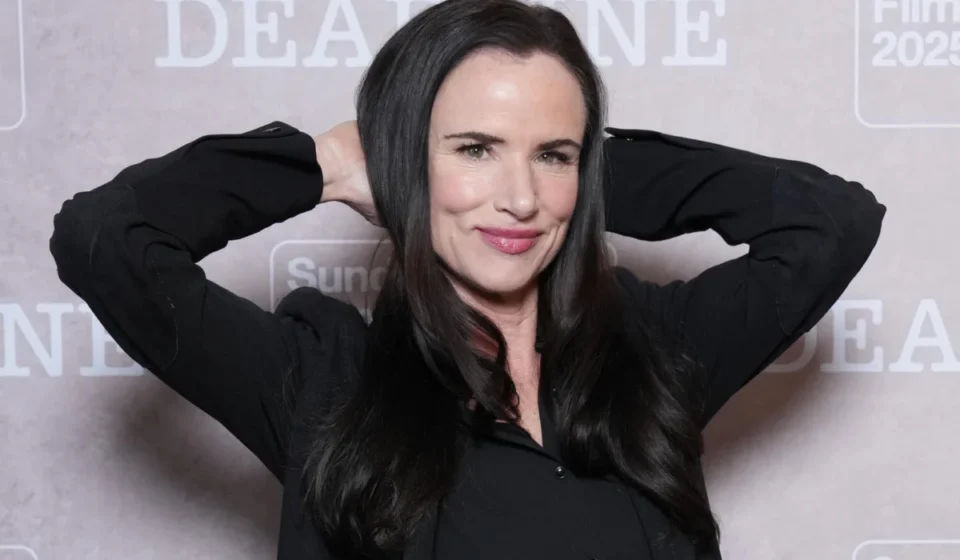
Juliette Lewis, whose breakout performance as the doomed, teenage Dani in the 1992 Martin Scorsese film earned her an Academy Award nomination, has returned to the world of Cape Fear. While her younger self was the target of Max Cady’s grooming and manipulation, her current role in Nick Antosca’s series sees her on the other side of the razor wire. Lewis portrays Crystal Cady, the perpetually cloaked, deeply unwell half-sister of Bardem’s Max. It is a haunting performance that bridges three decades of acting evolution, signaling a homecoming that is as unsettling as it is masterful.
The Evolution of a Modern Classic
When showrunner Nick Antosca first approached the prospect of adapting the source material—John D. MacDonald’s 1957 novel The Executioners—critics and fans alike were rightfully skeptical. With two definitive cinematic versions already etched into the cultural consciousness, the "why" behind a 10-episode series required a compelling justification.

For Lewis, the answer lay in the thematic density that only a long-form narrative could provide. "The themes are biblical," Lewis noted in a recent conversation. "They’re as old as time: seeking justice, revenge, being done wrong, and the blurred lines between evil and goodness."
Unlike the black-and-white moral clarity of the original 1962 film, or even the heightened, operatic intensity of the 1991 remake, the 2026 series leverages the modern landscape of paranoia. By expanding the story, Antosca invites the audience to explore how stalking and psychological terror manifest in an era of constant digital connectivity. "You can explore it in a full hour-long episode," Lewis explained. "All of the different forms of fear—through your phone, through staying in someone’s house—these are all topical themes today."
A Chronology of Deception: Crystal’s Secretive Path
The series, which concluded its inaugural run this past weekend, is defined by its slow-burn revelation of character motivations. For Lewis, maintaining the secret of her identity as Crystal Cady was a personal challenge she embraced with relish.
"I’m one of those personalities—if you say, ‘Don’t tell so-and-so,’ I’ll do the opposite because I’ll forget," she laughed. "This was actually really fun to keep secret." To ensure the reveal held its weight, Lewis worked on the auditory nuances of her performance, intentionally pitching her voice to disguise her signature cadence. Coupled with the production’s decision to omit her name from the early credits, the strategy created a genuine "aha!" moment for viewers.

The narrative arc of the final episodes, "The Scar" and "The Executioners," brings the story to its boiling point. The climax reveals the true depth of Crystal’s pathology: she had murdered Max’s wife, abducted their child, and raised the boy, Max Mattern, as her own. The ensuing confrontation between the two siblings—a claustrophobic, violent argument that results in Max locking Crystal in her own burning houseboat—mirrors the infamous climax of the 1991 film. Yet, in the tradition of prestige television, the door remains slightly ajar. When asked if the audience had truly seen the last of Crystal, Lewis teased, "I could come back as a burn victim and haunt him for all his days."
Examining the Craft: Professionalism and Method
Lewis’s career has been a trajectory of high-stakes, iconoclastic roles. Since her 1991 nomination, she has avoided the trap of being typecast, navigating between indie dramas, comedies, and the dark, visceral characters for which she is now legendary.
Reflecting on her early days, Lewis discussed the experience of working with Robert De Niro and Martin Scorsese as an 18-year-old. While other contemporaries, like Jodie Foster, have described their initial experiences with De Niro as alienating, Lewis recalls a different dynamic.
"De Niro was really kind to me. He was really respectful," she shared. "He was really sweet. I remember I had a birthday; he wrote me a birthday card." Lewis credits that environment with fostering her own professional ethics. "With Scorsese, they all just treated me as an equal and as a peer. It helped a lot because it made me more brave in my choices."

She also noted the intensity of De Niro’s process, acknowledging that while he was a gentleman to her, he was simultaneously diving deep into the darkness of the Max Cady character. "I heard Marty tell me he had an organ player and was speaking in tongues in his trailer one day. All these other wild things he was doing, I didn’t know about. Maybe he was being ‘Method’ with me because, in the movie, he’s kind to her and he’s trying to win her over."
Implications of the "Cape Fear" Legacy
The success of this series—and specifically the inclusion of Lewis—serves as a commentary on how we revisit our cultural touchstones. By casting the "victim" of the 1991 film as the "architect of terror" in 2026, the production acknowledges the weight of history while simultaneously deconstructing it.
The relationship between Crystal and Max in the series is described by Lewis as "very Sam Shepard." She drew parallels to her stage work, noting that the dynamic of siblings who have spent their lives torturing one another adds a layer of familial trauma that the previous films only touched upon. "Eventually, he became an equal, and then he surpassed her," Lewis said of the character trajectory. "I liked this back and forth of how these two might have tortured each other."
Beyond the Cape: A Call for Rediscovery
While the Cape Fear series marks a significant moment in her current filmography, Lewis is keen to steer audiences toward other, perhaps overlooked, corners of her work. She pointed specifically to The Thicket, a Western where she took on the role of "Cutthroat Bill."

"My whole career, I always wanted to be able to disappear into a role where even I get so lost, I’m unrecognizable," she said. In The Thicket, she played a character with scarred vocal cords—a role originally written for a man—and sought to avoid the tropes of camp in favor of visceral realism. "I’m not trying to do Captain Hook. I want to make something so breathtaking and real and really visceral."
As Cape Fear finishes its run, the conversation surrounding the series continues to emphasize the power of reinvention. Whether or not Crystal Cady returns to haunt the screen remains a question for the future, but for now, Juliette Lewis has successfully closed one circle while opening a new, equally compelling chapter of her career.
All episodes of "Cape Fear" are now streaming on Apple TV+.