
By Editorial Staff
July 20, 2026
In the landscape of contemporary horror, the most effective scares often derive not from the bombast of high-budget visual effects, but from the claustrophobic constraints of minimalism. French filmmaker Tomas Palombi has masterfully tapped into this vein with his haunting short film, The Cost of Flesh (Au prix de la chair). A visceral experiment in perspective and narrative restriction, the film has finally made its way to online audiences following a triumphant, multi-year run on the international festival circuit.
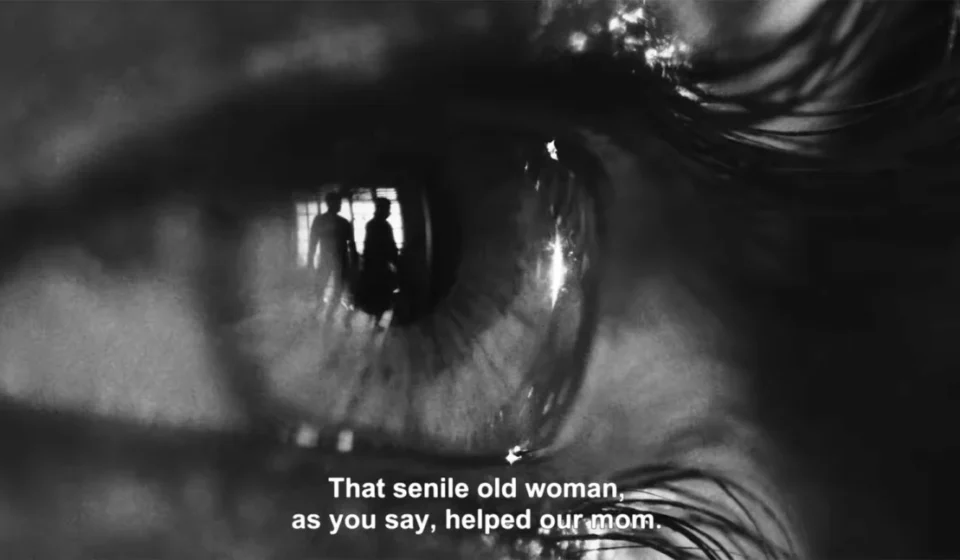
With a runtime of just ten minutes, the film manages to evoke a sense of dread that many feature-length projects fail to achieve. By anchoring the entire narrative within the reflection of a single, unblinking human eye, Palombi forces the audience into an involuntary state of voyeurism—and imprisonment.
The Core Premise: A Window into Paralysis
The narrative setup of The Cost of Flesh is deceptively simple, echoing the gothic sensibilities of classic suspense. The story centers on a teenage girl, completely paralyzed and trapped within her own body. Her only window to the world—and her only method of communication—is the movement of her eyes.
The horror, however, is not rooted in her condition alone, but in the desperate actions of those around her. Seeking a miracle, her brother and sister resort to an obscure, occult-adjacent magical ritual. They believe this ceremony will purge the "evil" hindering her progress. As the ritual begins, the audience is tethered to the protagonist’s perspective. We hear the dialogue, we feel the shifting tension of the room, and we observe the erratic, often grotesque movements of the siblings through the distorted, curved mirror of the girl’s pupil.
Starring Nayla Berrada, whose performance is restricted entirely to the micro-expressions of her eye, the film is a masterclass in physical acting. Berrada conveys volumes of terror, confusion, and realization without the benefit of dialogue or body language, making her "eye performance" one of the most memorable elements of 2026’s short film slate.
Chronology: From Festival Darling to Viral Horror
The journey of The Cost of Flesh began well before its current digital release. Its development trajectory follows the classic path of a successful independent genre project, moving from conceptualization to critical acclaim.

- 2024 (Premiere): The film officially debuted at the prestigious Gérardmer Fantastic Film Festival in France, a hub for high-quality genre cinema. Its reception there was immediate and intense, marking Palombi as a director to watch.
- 2024 (International Exposure): Following its French debut, the film was selected for the 2024 Tribeca Film Festival. This marked a significant milestone, introducing Palombi’s work to a wider North American audience and solidifying its reputation as a "must-watch" horror short.
- 2024–2026 (The Circuit): For the past two years, The Cost of Flesh has navigated a rigorous international festival circuit, picking up accolades for its cinematography and technical audacity.
- July 2026 (Digital Debut): After an extensive run in physical theaters and festival venues, the film was released online via YouTube, hosted by Short of the Week. This digital release marks the conclusion of its exclusive festival run and the beginning of its broader cultural impact.
Technical Innovation: The Aesthetics of the Eye
To understand the impact of The Cost of Flesh, one must look at the technical choices made by Palombi and his production team, including cinematographer Tomas Palombi himself and camera operator Olivier Lechat.
The Influence of Surrealism
Cinephiles will immediately draw parallels between Palombi’s work and the 1929 surrealist masterpiece Un Chien Andalou. The infamous "eye-slitting" scene by Luis Buñuel and Salvador Dalí remains a foundational trauma in cinema history. While Palombi’s work does not replicate that specific imagery, it pays homage to the idea that the eye is the ultimate vessel for cinematic horror. By focusing on the eye as the sole lens, Palombi invokes a lineage of transgressive filmmaking that challenges the viewer’s comfort.
Distorting Reality
In a formal statement regarding his stylistic choices, Palombi explained the methodology behind the film’s unique framing:
"It allowed me to subtly distort reality, turn off-screen space into a source of tension, and draw the audience into an intimate and unsettling point of view."
By keeping the camera locked on the eye, the "off-screen space" becomes a psychological minefield. The audience must mentally reconstruct the horror happening in the room based on the sounds and the distorted, reflected images appearing in the pupil. This forces the viewer to become an active participant in the horror, constantly trying to piece together the narrative from fragmented, warped information.
Supporting Data: Production and Creative Team
The success of a short film often hinges on the cohesion of a small, focused team. The Cost of Flesh is a testament to collaborative genre-building.
- Director: Tomas Palombi
- Screenplay: Tomas Palombi and Flores Desbiens
- Producers: Marc-Eliel Chouraqui, Willfried Fedida, and Florian Pannetier
- Lead Performer: Nayla Berrada
- Cinematography: Tomas Palombi (with camera operation by Olivier Lechat)
The production values, despite the minimalism, are high. The use of black-and-white cinematography strips away the distraction of color, emphasizing texture, contrast, and the stark physicality of the eye. It is a calculated aesthetic choice that elevates the film from a simple "gimmick" to a cohesive piece of visual art.

Official Responses and Critical Reception
Since its debut, the critical consensus has been overwhelmingly positive. Short of the Week, which hosted the film’s digital premiere, noted the film’s ability to "turn off-screen space into a source of tension."
Festival judges have consistently praised the film for its technical audacity. At the Gérardmer Fantastic Film Festival, reviewers noted that while the premise is simple, the execution is harrowing. The film’s ability to sustain fear for ten minutes using only one visual reference point is widely considered an anomaly in modern filmmaking, where "more is more" is the prevailing philosophy.
Audiences, particularly those active on social media platforms like Instagram and YouTube, have responded with a mix of awe and discomfort. Many have cited the "unblinking" nature of the film as a source of genuine physiological unease, proving that Palombi achieved exactly what he set out to do: make the audience feel the same trapped, helpless sensation as his protagonist.
Implications: The Future of Minimalist Horror
The success of The Cost of Flesh carries broader implications for the horror genre. As audiences become increasingly desensitized to standard jump scares and high-budget CGI monsters, there is a clear appetite for "concept-first" storytelling.
- The Rise of the "Concept Short": Palombi proves that a single, powerful visual conceit can sustain a narrative better than a sprawling plot. This encourages young filmmakers to focus on perfecting one "hook" rather than attempting to over-engineer their scripts.
- The Return of Practical Restriction: The film demonstrates that restricting the camera—a hallmark of early cinema—can actually heighten modern engagement. By denying the audience a full view of the room, Palombi forces the viewer’s imagination to fill in the blanks, which is often far more terrifying than anything a director can show on screen.
- The Digital Festival Model: The partnership between filmmakers and platforms like Short of the Week highlights a new, effective distribution model. By utilizing the festival circuit for prestige and then moving to a high-traffic digital platform, filmmakers can build a dedicated audience that respects the artistic integrity of the work.
In conclusion, The Cost of Flesh is not merely a horror film; it is a clinical dissection of fear. By stripping away the ability to move, to speak, or to see the full picture, Tomas Palombi has created an experience that is as intellectually stimulating as it is terrifying. As it finds its home online, it serves as a reminder that the most profound horrors are often those reflected in the simplest of places—right before our eyes.