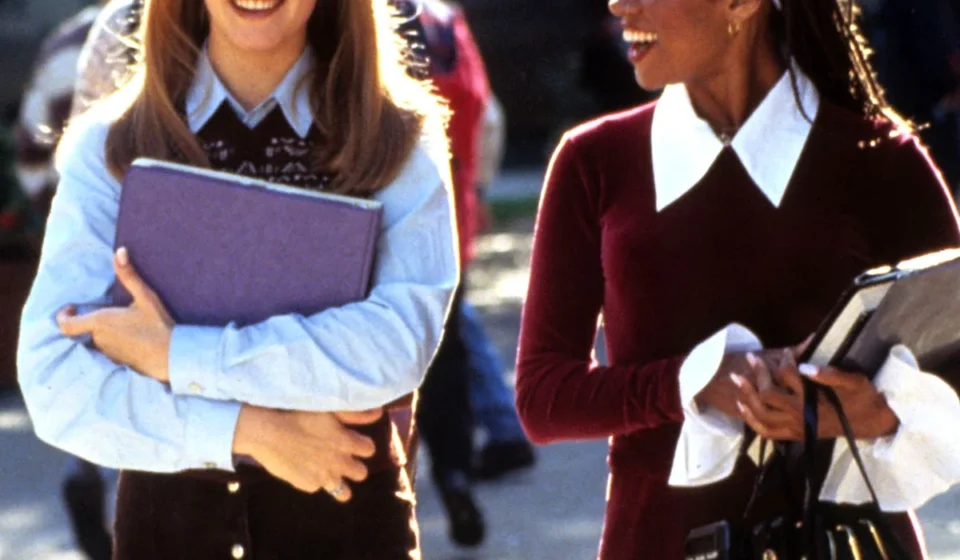

It has been more than three decades since a "total Betty" named Cher Horowitz sauntered into our collective consciousness, forever altering the vernacular of the American teenager. With her dreamiest computer-operated closet, a heart of gold, and a wardrobe that would make a fashion historian weep, the protagonist of Amy Heckerling’s 1995 masterpiece, Clueless, became a permanent fixture in the cinematic zeitgeist.
Beyond the plaid skirts and the "Monet" critiques, the film serves as a poignant, coming-of-age masterclass that continues to resonate with each new generation that stumbles upon it. As we look back on the film’s legacy, we aren’t just celebrating a movie—we are celebrating a cultural touchstone that redefined the teen comedy genre.
The Genesis of a Modern Classic
Coming off the heels of the gritty Fast Times at Ridgemont High and the commercially successful Look Who’s Talking, writer-director Amy Heckerling was tasked by Fox’s television department to pitch a project focused on the "cool kids" of high school. The industry standard at the time was to portray high schoolers as nerds; Heckerling had a different vision.
Drawing inspiration from Jane Austen’s Emma—a novel she had connected with deeply during her college years—Heckerling reimagined the 19th-century socialite as a confident, eternally optimistic Beverly Hills teenager. Cher and her best friend, Dionne, were crafted as symbols of affluence and fashion-forward thinking, yet beneath the surface-level vanity, they possessed a genuine desire to do good.
The film’s production was, by all accounts, a lightning-in-a-bottle moment. Studio head Sherry Lansing famously recalled her first screening of the film, noting that her notepad remained blank because the film was, quite simply, genius. Raking in $55 million at the box office, Clueless cemented its status as a sleeper hit that would eventually become a generational anthem.
Casting Cher: The Hunt for the Perfect Icon
The casting process for Clueless is now the stuff of Hollywood legend. Alicia Silverstone was, by almost every account, the only person capable of embodying Cher’s unique blend of vulnerability and vapidity. Heckerling first spotted the actress in a series of Aerosmith music videos and was so captivated that she used them as a visual reference when pitching the script.
However, the studio was hesitant, urging Heckerling to consider a wider net. The list of "near misses" reads like a roster of 90s icons: Reese Witherspoon, Gwyneth Paltrow, Keri Russell, and Tiffani Thiessen were all considered for the role. Yet, as Heckerling famously noted, "Alicia is Cher." The decision was finalized during a dinner where Silverstone’s charming, natural demeanor—specifically the way she sipped a drink through a straw—convinced the creative team they had found their lead.
The supporting cast, too, was a perfect storm of emerging talent. Paul Rudd, who has famously defied the aging process, was cast as Josh, Cher’s ex-stepbrother. Interestingly, Rudd initially auditioned for the role of Murray, the boyfriend of Dionne. The role of the lovelorn Christian, Cher’s unrequited crush, went to Justin Walker, who famously received the news via a payphone outside Madison Square Garden and celebrated by sprinting down Eighth Avenue.
The 40-Day Party: Behind the Scenes
The 40-day shoot in the winter of 1994 felt less like a production and more like a carefree high school experience. For the younger cast members, including Donald Faison, Breckin Meyer, and Elisa Donovan, the set was a dream. Trailers were treated as social hubs where dividers were pulled back to allow for day-long hangouts, naps, and movie marathons.
This chemistry bled into the performances. The rapport between Faison and Stacey Dash, who played the iconic couple Murray and Dionne, was palpable. Faison, in particular, was so enamored with his costar that his joy in their scenes—including his first on-screen kiss—was entirely genuine.
However, the experience wasn’t all play. For Alicia Silverstone, the burden of carrying the film was immense. As the lead, she was in nearly every scene, often working grueling hours while her costars enjoyed the camaraderie of the ensemble. Even off-camera, the "Cher" lifestyle had its challenges, with stories of Silverstone’s pet dog causing mischief outside the makeup trailers, requiring associate producer Twink Caplan to intervene.
Linguistic Innovation and Cultural Impact
Clueless was more than a visual feast; it was a linguistic laboratory. Amy Heckerling, an amateur linguist, spent years compiling slang. Phrases like "As if!" were pulled from the gay community and integrated into the script, becoming instantly iconic. The film’s dialogue—"You’re a virgin who can’t drive," "That was way harsh, Tai," and the "Monet" reference—became part of the standard American lexicon.
The film also served as a catalyst for a fashion revolution. Moving away from the grunge aesthetic that dominated the early 90s, the costume design team, led by Mona May, created an explosion of plaid, knee-high socks, and vibrant colors that inspired hordes of young people to redefine their personal style.
Implications and Future Outlook
When asked about the possibility of a sequel, Alicia Silverstone has remained pragmatic, noting that she has given it "zero thought." Despite this, she remains proud of the film’s legacy. The cast frequently participates in reunions, and Silverstone continues to recreate iconic scenes for social media, acknowledging that "people love the movie."
The enduring appeal of Clueless lies in its optimism. Heckerling, when asked in recent years what a 2020s-era Cher would be like, suggested she would be a fierce advocate for equality, environmental reform, and social justice. "She would be for equality, equal pay, immigration reform, prison reform," Heckerling remarked. This vision aligns with the character’s core: despite her flaws, Cher was a woman who stood up for what she believed in.
Perhaps most tellingly, when asked if Cher and Josh would still be together, the cast and crew offer a heartening perspective. While Paul Rudd joked that they might not have survived the California lifestyle, Silverstone envisions a happy, domestic life for them, perhaps with Cher working as a professional organizer.
Conclusion: A Feminist Icon in a Plaid Suit
Thirty years later, Clueless stands as a testament to the power of the teen comedy. It proved that a film about young women could be both vapid and profound, both funny and intelligent. By elevating the high school experience to a realm of art, Amy Heckerling created a film that doesn’t just age; it evolves.
As we raise our imaginary bowls of Special K to our favorite valley girl, we are reminded that Clueless is a reminder that in a world that often demands we be cynical, there is real power in being a "total Betty" who believes in the good of others. Whether you are a first-time viewer or a fan who has watched it a hundred times, the message remains as relevant today as it was in 1995: ’tis a far, far better thing doing stuff for other people.
And that is, unequivocally, the ultimate mark of a classic.