Bridging the Dynamic Range Gap: Beeble’s SwitchHDR Redefines AI-Powered Restoration for Professional Pipelines

In the modern landscape of high-end cinematography, the "HDR divide" has become a persistent friction point. While current production standards demand the expansive luminance and color fidelity of High Dynamic Range (HDR), a vast ocean of legacy media, archival footage, and stock assets remains trapped in the rigid constraints of Standard Dynamic Range (SDR). For colorists and VFX artists, the task of integrating this older material into a contemporary HDR master has historically been a source of compromise—resulting in banding, noise, or unnatural highlight roll-offs.
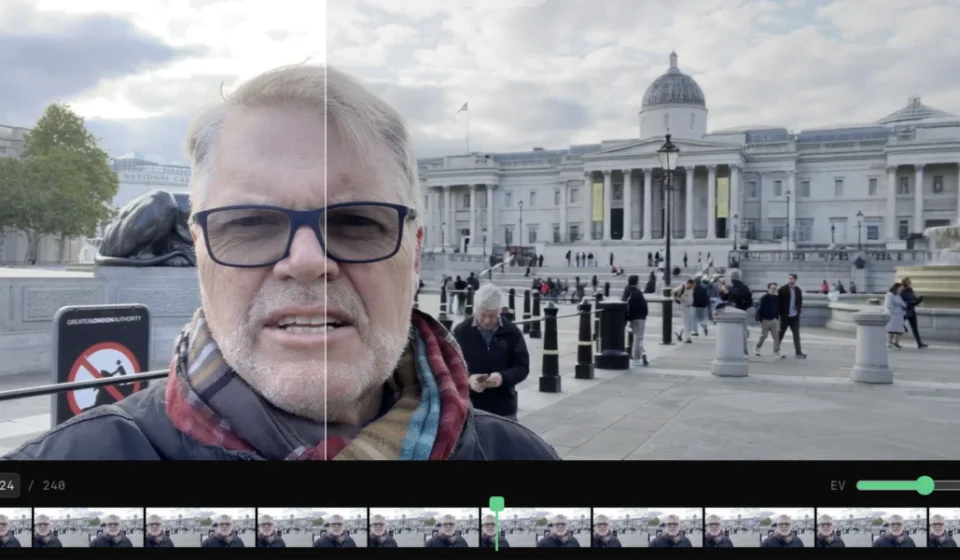
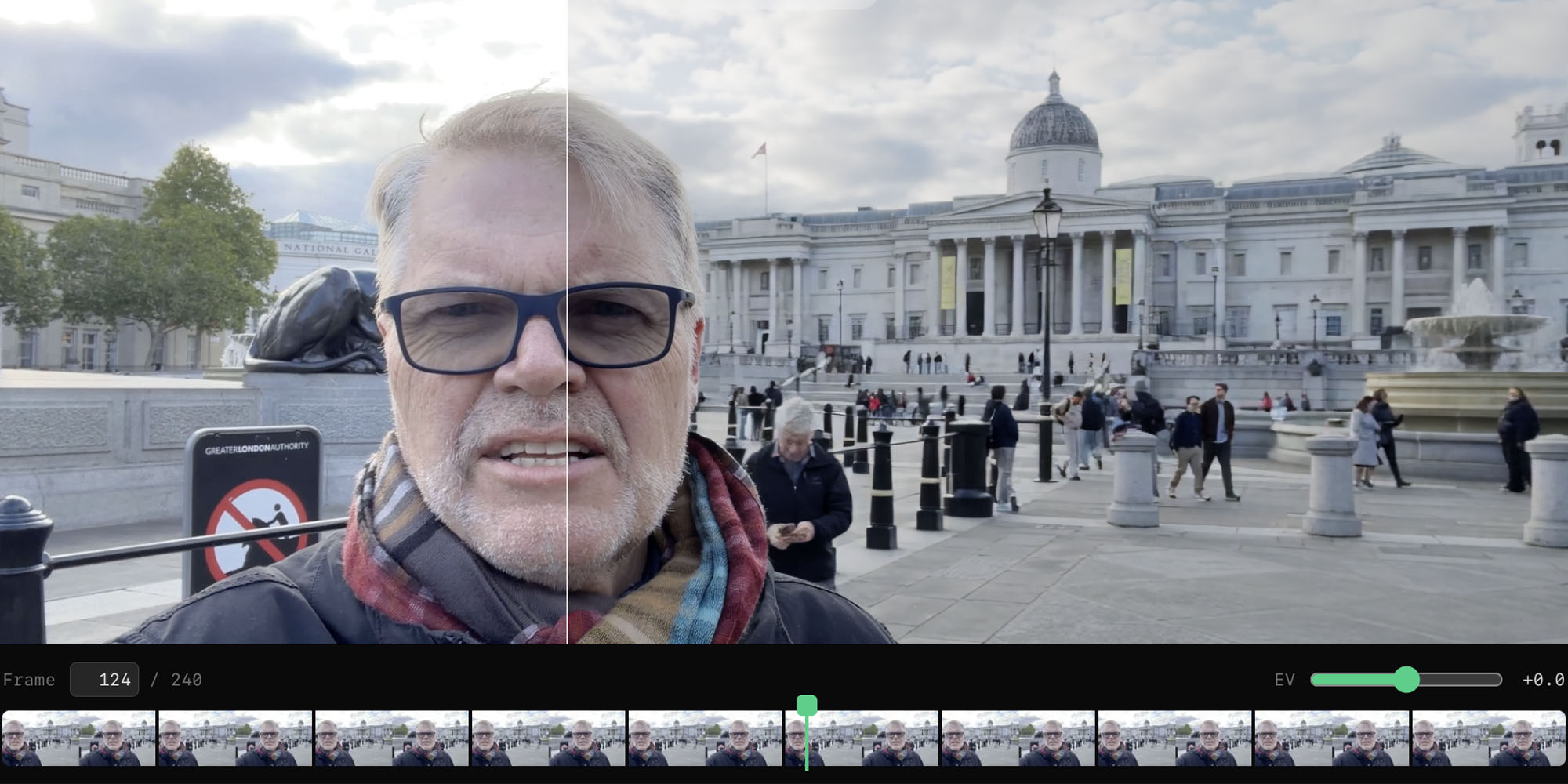
Enter Beeble, the Seoul-based machine learning outfit that has just unveiled SwitchHDR, a sophisticated AI-driven model designed to reconstruct HDR imagery from conventional SDR sources. Unlike consumer-grade upscaling filters that simply stretch pixel values, SwitchHDR is engineered for the demands of the cutting-room floor, outputting scene-linear 16-bit EXR sequences. It represents a fundamental shift in how post-production houses handle the legacy-to-modern transition.
The Core Innovation: Beyond Simple Upscaling
To understand the significance of SwitchHDR, one must distinguish between "remapping" and "reconstruction." Most SDR-to-HDR tools operate on a mathematical assumption: they take existing pixel values and expand them into a wider container. However, as physics dictates, once a highlight has clipped or shadow detail has been crushed into noise, that data is permanently lost. Traditional expansion tools simply redistribute this limited information, often exacerbating artifacts.
Beeble’s approach is fundamentally different. By training its model on vast datasets of actual HDR footage rather than the internet-standard SDR corpus, the AI has learned the "logic" of high-radiance scenes. It does not look for missing pixels; it infers a plausible, high-fidelity HDR representation based on learned environmental lighting behaviors.
"From day one, we built SwitchHDR around what post-production actually requires, not what makes a good demo," says Hoon Kim, Founder and CEO of Beeble. "That meant 16-bit EXR in ACES2065-1, temporal consistency across full sequences, and giving artists explicit control."
A Chronology of Innovation: From Relighting to Reconstruction
The release of SwitchHDR is the latest milestone in an aggressive development trajectory for Beeble. The company, founded in 2022, has rapidly evolved from a specialized research entity into a provider of a comprehensive, production-ready AI suite.
- June 2023: Beeble first gained industry traction with the introduction of SwitchLight, an AI-powered relighting tool that allowed creators to dynamically adjust light sources in 2D video. This was a proof-of-concept for the company’s ability to manipulate light in a 3D-aware manner.
- 2024–2025: As the company scaled, it began focusing on the integration of its tools into professional pipelines. The development of SwitchLight 3.0 saw the addition of video-to-PBR (Physically Based Rendering) capabilities, while SwitchX introduced mask-guided video-to-video manipulation.
- August 2026: Beeble presented Canvas at ACM SIGGRAPH, a node-based interface designed to unify their AI models with third-party industry standards.
- Current Day: With the launch of SwitchHDR, Beeble has completed a trifecta of essential post-production needs: relighting, compositing, and now, HDR restoration.
"When we first emerged in 2023, we were focused on a single relighting model," Kim reflects. "Three years later, we have a full toolset. The pace of development has been staggering, but our north star remains the same: building tools that respect the artist’s need for control and the studio’s need for format compatibility."
Technical Specifications and Workflow Integration
For the professional VFX artist, a tool is only as good as its output. SwitchHDR’s decision to output in 16-bit EXR (ACES2065-1) is a strategic move to ensure the model isn’t relegated to a "black box" solution. By providing data in the AP0 color space, Beeble ensures that the output can be ingested directly into Nuke, DaVinci Resolve, or Flame without requiring convoluted color space transformations.
Controlled Reconstruction
One of the primary critiques of AI-assisted post-production is the loss of agency. SwitchHDR mitigates this through:
- Luminance Masking: Users can isolate specific areas of the frame—such as windows or high-contrast highlights—to receive the HDR treatment, leaving the rest of the image untouched.
- Text-Prompt Guidance: By providing semantic context to the AI, artists can steer the reconstruction, ensuring that the inferred highlights match the director’s creative intent.
- Regional Processing: This prevents the "blanket" effect where an entire image is processed, which often leads to unintended temporal noise or texture degradation.
Implications for the Industry: The Death of the "Stock Footage" Look
The implications for the archival and documentary industries are profound. Historically, using non-HDR stock footage in an HDR master was a "tell"—the viewer could instantly identify the lower-quality source due to the lack of highlight roll-off and the compressed shadow range.
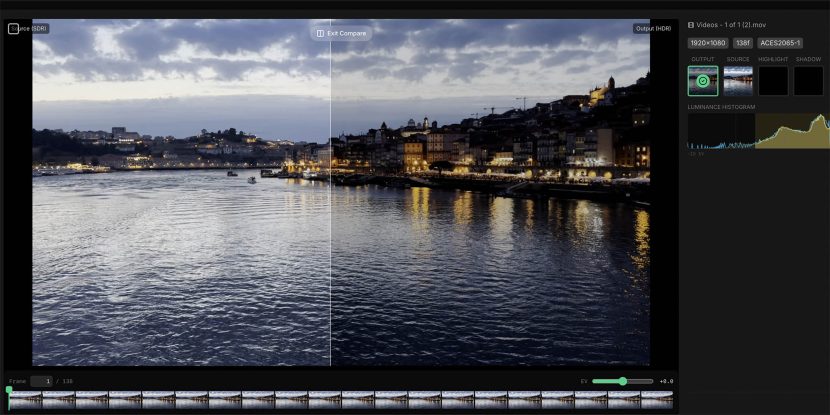
With SwitchHDR, this barrier is lowered. Filmmakers can now take 10-year-old archival plates and give them a "contemporary finish" that matches modern cinematography. For the VFX industry, this allows for the seamless insertion of older assets into high-end, HDR-graded composites. If the AI can avoid the classic pitfalls of SDR expansion—namely, clipped skies, posterized shadows, and temporal instability—it essentially allows for the "re-mastering" of historical content at a fraction of the traditional cost.
Official Perspective: Hoon Kim on the AI-Artist Relationship
During our interview with Hoon Kim, it became clear that Beeble views their technology as a partner in the creative process rather than a replacement for it.
"Most of the world’s video exists in SDR, yet today’s productions expect HDR-quality assets," Kim notes. "We aren’t suggesting the AI ‘knows’ what the original light was. We are suggesting that we have built a tool that provides a believable, usable, and high-latitude starting point for an artist. The artist then takes that, grades it, composites it, and makes it theirs. That is the definition of a production-grade workflow."
Kim’s emphasis on "production-grade" is telling. While many AI tools are built for the viral, social-media-driven market, Beeble has firmly planted its flag in the world of high-end post-production. They are selling to studios that require reliability, standard color spaces, and consistent output across hundreds of frames—a standard that few AI companies have managed to meet.
Limitations and Future Outlook
While SwitchHDR is currently categorized as one of the best tools of its kind, the technology is not without its hurdles. As with most generative models, temporal consistency remains a challenge when dealing with complex, high-frequency textures (such as fine fabric or rust). While the model is highly effective, it still requires the vigilant eye of an experienced compositor to ensure that the reconstruction remains stable over a long duration.
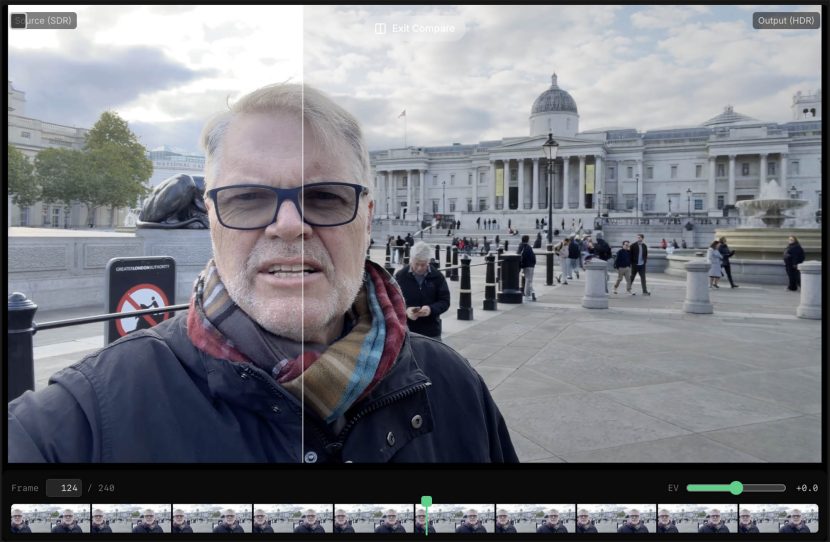
Looking ahead, the integration of SwitchHDR into the Canvas node-based interface is the next logical step. By allowing users to chain their relighting models with their HDR reconstruction models, Beeble is building a proprietary ecosystem that could eventually replace the need for several disparate third-party plugins.
Conclusion
SwitchHDR is not just a technological achievement; it is a pragmatic solution to a growing industry headache. As the industry moves further away from SDR as a delivery standard, the need to revitalize older content has shifted from a "nice to have" to a necessity. By prioritizing 16-bit EXR outputs and artist-driven control, Beeble has successfully bridged the gap between the chaotic, unpredictable world of AI and the rigid, high-performance requirements of professional VFX pipelines.
Whether it is for documentary restoration, commercial finishing, or the seamless integration of archival plates into modern blockbusters, SwitchHDR offers a glimpse into a future where "resolution" and "dynamic range" are no longer fixed properties of the camera, but fluid variables that can be shaped in the digital darkroom.