Carrying the Torch: Andrew Scott and the Resonant Legacy of Ian Charleson in Elsinore

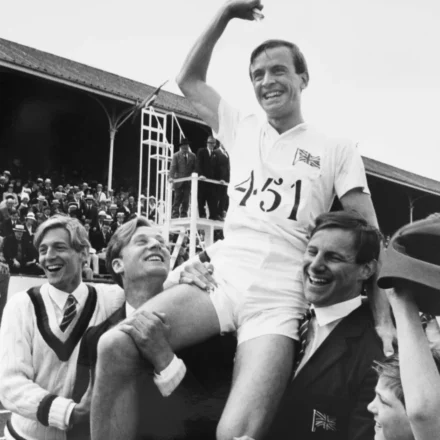
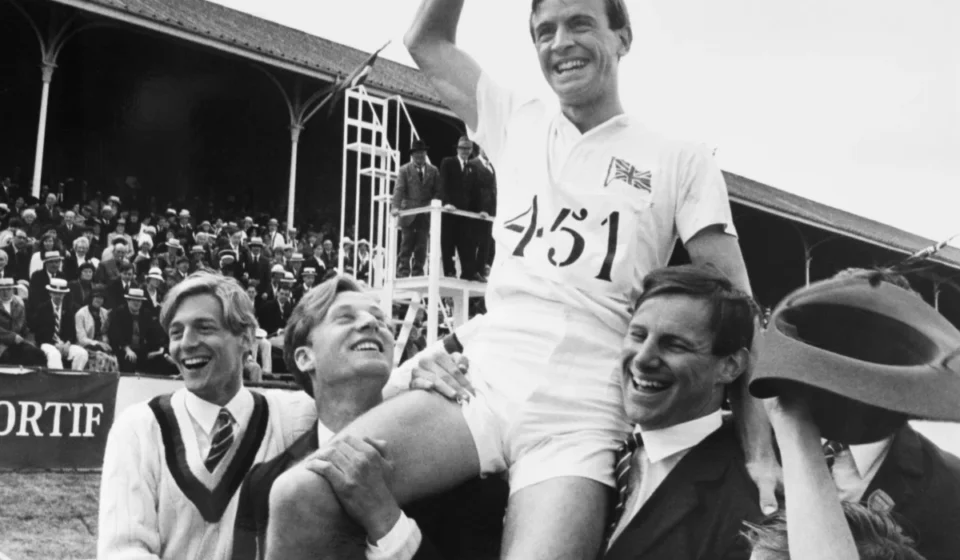
In the annals of cinematic and theatrical history, few figures loom as large—or as quietly—as Ian Charleson. Best known for his triumphant portrayal of Eric Liddell in the 1981 Oscar-winning masterpiece Chariots of Fire, Charleson’s life was tragically cut short by the AIDS epidemic. Now, nearly four decades after his passing, his story is being brought to the screen in the poignant drama Elsinore. At the heart of this cinematic resurrection is Andrew Scott, an actor whose own journey as an openly gay performer provides a profound, meta-textual layer to the project.
The Weight of Memory: From Dublin to the Global Stage
For Andrew Scott, the HIV/AIDS crisis was not a historical abstraction, but a distant, shadowy specter of his youth in Dublin. He recalls the formative influence of media in shaping his early understanding of the epidemic, citing the pivotal role played by Oprah Winfrey.
"I would have been incredibly young, but I remember Oprah Winfrey talking about it," Scott reflects. "She did quite a lot. She had Magic Johnson on her show, and she spoke about the crisis. She had people who were living with HIV. It seemed kind of far away at the time, but the emotional gravity was undeniable."
This early exposure to the conversation—mediated through the screen—has now come full circle. Scott, currently a leading contender in the Academy Award race for Best Actor, finds himself anchoring a narrative that is both a tribute to a fallen pioneer and a testament to the seismic shifts in cultural representation.
A Chronology of Silence and Artistry
To understand the significance of Elsinore, one must understand the environment in which Ian Charleson operated. In 1989, at the height of his career, Charleson was cast in a landmark production of Hamlet at London’s National Theatre. At the time, he was secretly battling AIDS.
The timeline of his final months is a testament to the stoicism required of artists in the late 1980s. Charleson never publicly disclosed his sexuality, nor the nature of his illness, during his lifetime. He completed his run as the Prince of Denmark, delivering a performance that many critics described as transcendent, only to pass away just weeks later.
Elsinore captures this specific, harrowing window of time—a period where the professional demands of the stage collided with the private, physical devastation of a then-stigmatized disease. By focusing on the Hamlet production, the film highlights a man who, despite his failing body, chose to channel his remaining vitality into one of the most demanding roles in the theatrical canon.

Supporting Data: A Production Defined by Empathy
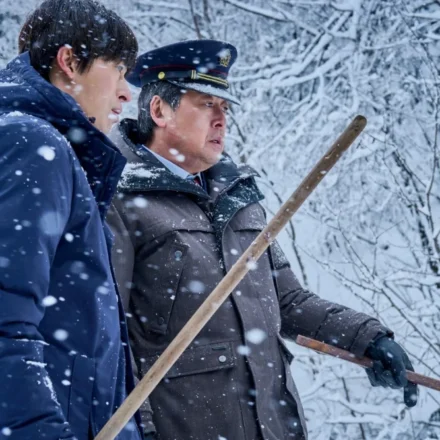
The production of Elsinore was marked by an intentional, almost sacred atmosphere. Director Simon Stone and the ensemble cast, including Billie Piper, Olivia Colman, and David Dawson, approached the subject matter with a reverence that permeated the set.
Billie Piper, who plays Patsy, Charleson’s real-life best friend and primary caretaker, describes the environment as uniquely protective. "It was a very sensitive set," Piper explains. "Simon was very good at setting a very peaceful environment. People were in their socks, padding around. It felt like a womb; it felt like a nest. People could be extremely emotional. I think a lot of the crew were very upset watching takes. For the actors, sometimes you’re so adrenalized that you’re just in it. Reflection is something that comes later."
This atmosphere was bolstered by the exhaustive research of screenwriter Stephen Beresford. Beresford sought out those who knew Charleson intimately, including the real-life Patsy. The screenwriter notes that the process was an exercise in collective memory, with many of those who knew Charleson coming forward despite their own health challenges to ensure his story was told with accuracy and dignity.
The Dual Realities of Performance
One of the most challenging aspects of Scott’s performance was the physical manifestation of Charleson’s illness, specifically the Kaposi sarcoma lesions that accompanied the advanced stages of AIDS. Makeup department head Nadia Stacey was tasked with recreating these marks, a process that Scott navigated with a deliberate, detached focus.
"In some ways, a little bit like Ian, I had to try and think, ‘Well, they aren’t there,’" Scott admits. "He did what he had to do, but he was determined to get on with the business of living. He threw himself into Hamlet, and I threw myself into Elsinore. It was very important to me to not fetishize Ian’s death, but to really think about his living. If everybody else was playing the tragedy around him, he was certainly looking toward the light, and in some ways, I tried to mirror that."
This "looking toward the light" is perhaps the most profound theme of the film. Elsinore is not merely a tragedy about an early death; it is a film about the relentless, creative spirit that persists even when the walls close in.
Implications: The Evolution of Representation
The casting of Andrew Scott, who came out publicly in a 2013 interview with The Independent, was a deliberate choice by director Simon Stone to bridge the gap between the past and the present.

"I think the message that sends to the world is that times have changed, and that we’re not going to apologize for the story that we’re telling here," Stone asserts. "Andrew has had the huge benefit of the pioneering work of so many actors before him, such that his career was not disadvantaged at all by being openly gay. He’s probably the first generation of actors who can say that."
Scott views this evolution with a mixture of humility and celebration. "I relate to it deeply," he says, "and I relate to it as a professional who wants to just do my job and as somebody who feels very grateful to get those opportunities that Ian and his counterparts didn’t."
The film serves as a poignant mirror. It features a robust cast of out gay actors, including David Dawson (who plays filmmaker Derek Jarman) and Joe Locke (who plays a fellow patient). As Scott notes, there is a certain poetic justice in having a cast of openly gay actors telling a story about a time when such openness was professionally suicidal.
"I feel celebratory that I can look around and that there are out gay actors who are growing in number, and not placing us in this insidious heaviness burden about separating actors in that way," Scott says. "It feels really wonderful that we have a lot of out gay actors in a movie about there not being a lot of out gay actors."
A Legacy Reclaimed
Elsinore stands as a vital addition to the cinematic record of the AIDS crisis. By centering Ian Charleson not as a victim, but as a titan of the stage who chose art over the shadows of stigma, the film offers a nuanced portrait of resilience.
The collaboration between Scott and the production team has succeeded in doing more than just documenting a biography; it has created a space for mourning and celebration. As Scott recently discussed on The Oprah Podcast, the process of making the film allowed him to engage with the legacy of the men who paved the way for the current generation of queer artists.
In the final assessment, Elsinore is a triumph of empathy. It reminds audiences that behind the headlines and the historical statistics of the AIDS epidemic were vibrant, complex, and immensely talented individuals who were fighting to tell their stories until their final breaths. Through Andrew Scott’s portrayal, Ian Charleson’s voice—once silenced by fear and society—is finally given the platform it deserves. The film serves as a reminder that while the landscape for LGBTQ+ actors has shifted dramatically, the courage of those who endured the hardest winters remains the bedrock upon which current success is built.