The Unlikely Heart of Hollywood: Elizabeth Debicki’s Defining Turn in ‘The Further Mis-Adventures of Cliff Booth’

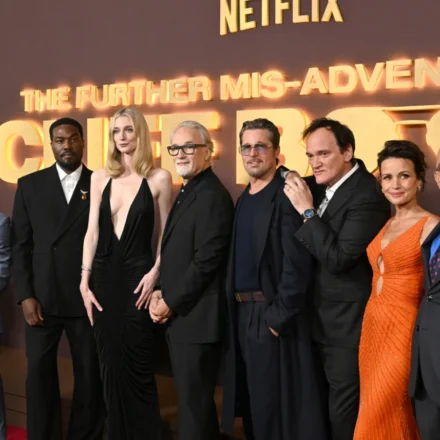
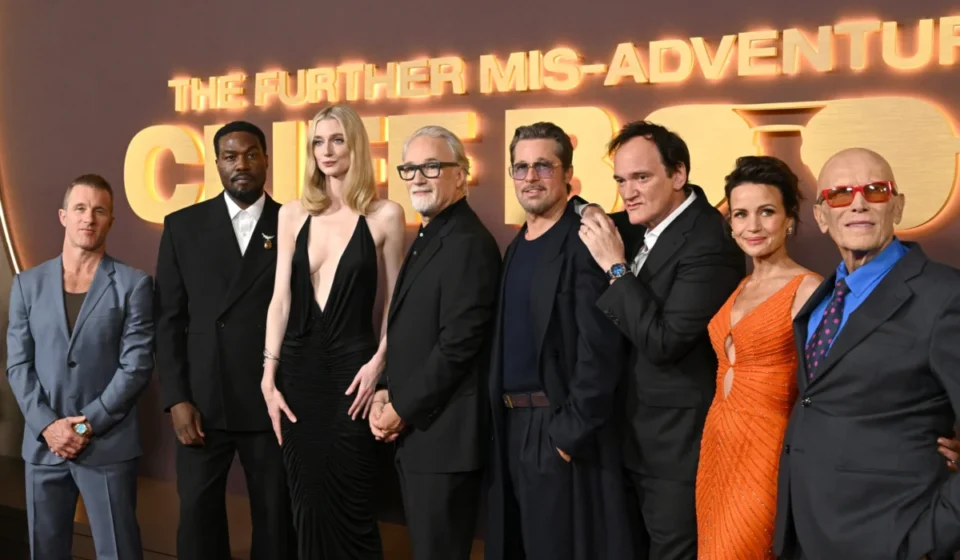
The landscape of modern cinema is rarely graced by the collision of two such distinct creative titans as Quentin Tarantino and David Fincher. Yet, in The Further Mis-Adventures of Cliff Booth, the long-awaited sequel to 2019’s Once Upon a Time in Hollywood, the two directors have birthed a project that defies easy categorization. While the title suggests a lighthearted romp through the life of Brad Pitt’s iconic stuntman, the film is anchored by a revelatory performance from Elizabeth Debicki. As Karen Crosby, a sharp-witted Hollywood agent who becomes the anchor of Cliff’s chaotic existence, Debicki does more than hold her own; she arguably steals the film, prompting critics and fans alike to wonder if a spin-off, The New Adventures of Karen Crosby, is already in order.
The Evolution of an Icon: From Stuntman to Survivor
Picking up nearly a decade after the events of the original film—a movie that secured an Oscar for Pitt’s portrayal of the rugged, mysterious stuntman—the sequel finds Cliff Booth in a state of professional flux. He is no longer just a stuntman; he is dabbling in projection, bartending, and, in his own words, “a bit of contract killing.”
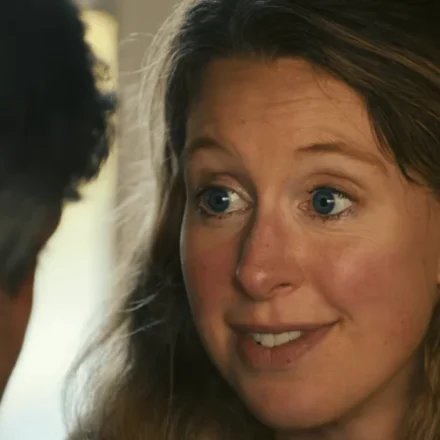
The narrative tension escalates when Cliff finds himself in an unexpected meeting with Karen Crosby, played by Debicki. The character is a masterclass in professional poise and hidden depth. Unlike the often-stoic characters that inhabit the Tarantino universe, Crosby is articulate, weary of the industry’s vanity, and possessed of a dry, biting wit that manages to disarm the notoriously unshakeable Cliff. Their dynamic is the engine that drives the film, moving from a tense, transactional business relationship to something far more intricate and emotionally resonant.
A Convergence of Visionaries
The production of The Further Mis-Adventures of Cliff Booth was a collaborative endeavor, characterized by a two-week intensive rehearsal period that saw both Tarantino and Fincher working in tandem with the cast. For Debicki, the process was a "normalization" of working with two of the most significant figures in film history.

"We had Quentin for that whole period," Debicki noted in an exclusive interview. "It was very, very collaborative. A part of me wonders whether it was that thing where they have sat with the material for so long and had their full body relationship to it, and then I was fresh. My memories of those rehearsal periods were really all three of them—Fincher, Tarantino, and Pitt—just turning to me and saying, ‘What do you think?’"
This level of creative autonomy allowed Debicki to shape Karen into a multi-dimensional figure. The character is not merely a foil for Cliff; she is a mirror held up to the industry itself, a woman who once dreamed of being a critic, influenced by the legendary Pauline Kael, before the harsh realities of Hollywood forced her into the role of an agent.
Chronology of a Character: Karen’s "Pig Monologue"
Central to the film’s critical acclaim is the now-iconic "pig monologue." The scene, which serves as a turning point for both characters, requires Karen to reconcile her intellectual love for film with the absurdity of her daily reality. When Cliff, in his characteristically eccentric manner, discusses the process of killing a pig, Karen is forced to drop everything—including her own professional aspirations—to accommodate his bizarre needs.
"It’s this absurd ask, but it’s folded into ‘that’s what I need for my process,’" Debicki explains. "Quentin and David are so fascinating because they are Hollywood. They are Hollywood, and also they sit outside it, and they observe it from these very, very unique vantage points."

The scene is a balancing act of comedy and tragedy. It highlights the "dancing bear" nature of talent representation, where agents are often reduced to performing for the whims of their high-profile clients. For the audience, it provides a crucial insight into Karen’s psyche: she is a woman who, through a series of "bad knocks," has learned to bury her heart to survive the machinations of the studio system.
The Art of the Slap: A Study in Power Dynamics
One of the most talked-about sequences in the film involves a physical confrontation between Cliff and Karen. It is a moment of raw vulnerability for Pitt’s character, one that physically forces the power dynamic of the relationship to shift.
"It’s a very beautiful face, and we had to do it," Debicki says of slapping her co-star. "We had to do it. And Brad is a very good sport and a very good stuntman. We shot the dialogue for two days, and we were just in almost this sort of trance of the two of them."
Despite the intensity of the scene, the production remained surprisingly efficient. Debicki recalls that the slapping sequence took only five or six takes—a rare instance of brevity on a David Fincher set. "We were so pleased with ourselves," she laughs. "We all ran around to the monitor, and we watched it in playback, and we were like, ‘Oh, my God, it’s so good.’"

Supporting Data: The Fincher Touch
For those familiar with David Fincher’s meticulous approach to filmmaking, the rigorous attention to detail in The Further Mis-Adventures of Cliff Booth comes as no surprise. The director’s penchant for excessive takes is legendary, and this project was no different.
"If you have four actors in a scene, like the hamburger monologue, let’s say there’s four setups on each actor, you do 10 takes per setup," Debicki explains. "So, that becomes a lot."
However, this precision serves a narrative purpose. In scenes where Debicki’s character is simply listening or reacting off-camera, Fincher insisted on the same level of coverage as the lead actors. The result is a performance that feels lived-in and reactive, with subtle, non-verbal cues—like the crunch of a Tic Tac—that define Karen as the "only grown-up in the room."
Implications for the Industry: Art vs. Commerce
The film engages deeply with the shifting nature of the industry, particularly the 1977 debate over whether commercial success can coexist with artistic integrity. Karen’s monologue regarding movies as "hamburgers" is a direct reflection of this tension. It is a dialogue that feels strikingly modern, despite being set nearly 50 years ago.

"This is a big conversation that people are having as the industry shifts and changes," says Debicki. "It also was a huge conversation that was happening in 1977. There was this big question of, ‘Is that art still if it’s commercial?’"
By situating Karen at this crossroads, the film invites viewers to consider the soul of cinema. Is Karen a cynical sell-out, or is she simply a pragmatist in a world that demands one? The ambiguity is intentional, allowing the audience to project their own experiences onto the character.
Official Release and Final Reflections
As The Further Mis-Adventures of Cliff Booth prepares for its theatrical run, the industry is buzzing with anticipation. The film represents a unique moment where the "auteur" spirit of Tarantino meets the technical perfectionism of Fincher, all anchored by a performance that breathes new life into a beloved cinematic world.
When asked if the film constitutes a "rom-com," Debicki remains circumspect. "I don’t think it’s a rom-com, but I think it’s romantic, and I think they’re funny. It’s sort of undefinable, but I do think it’s really romantic. It’s the best-case scenario romance, that you think you have it all together, and this person walks in that you absolutely dismiss, and then little by little they reveal this thing."

The film serves as a reminder that even in the most cynical corners of Hollywood, there is still room for genuine connection—even if it starts with a slap and ends with a search for a pig in Malibu.
Release Details:
The Further Mis-Adventures of Cliff Booth will be released in IMAX theaters on Wednesday, November 25, 2026. It will be available for streaming on Netflix beginning Wednesday, December 23, 2026.