From Cannes to Mumbai: Julie Bertuccelli’s Fight for Artistic Integrity in the Age of AI

Introduction: The Resilience of a Visionary
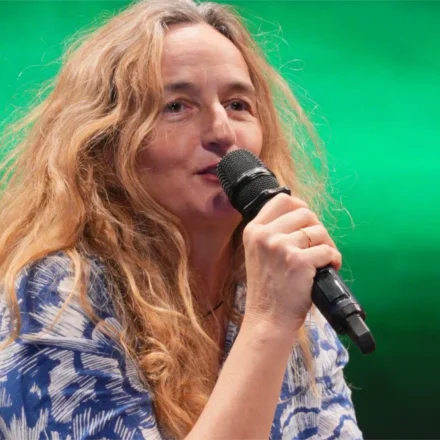
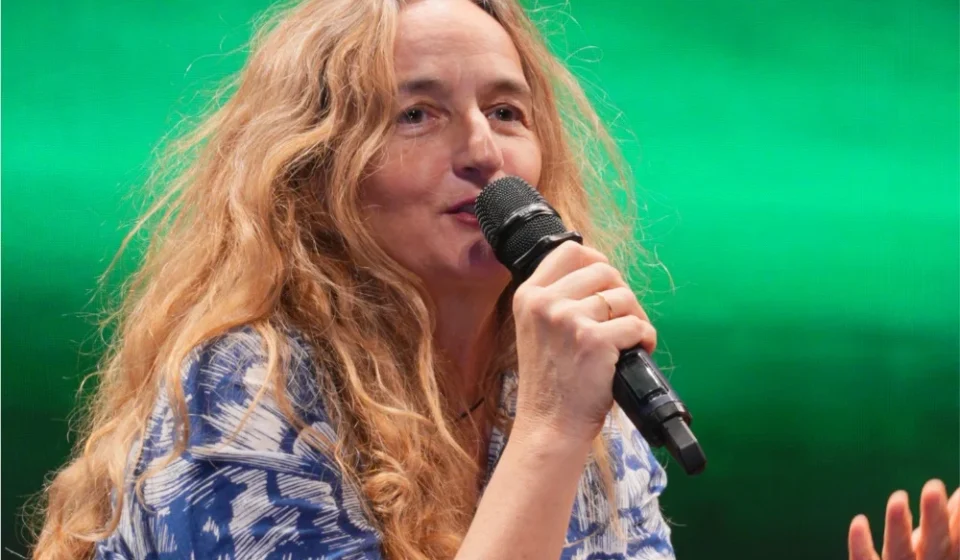
French filmmaker Julie Bertuccelli, a distinguished voice in both documentary and fiction cinema, has long been a champion of the auteur’s vision. Best known internationally for her 2010 Cannes closing film, The Tree, Bertuccelli recently took the stage at the International Film Festival of India (IFFI) in Goa. During a masterclass titled "From Witness to Change: The Social Responsibility of Documentary Cinema," moderated by Indian filmmaker Haobam Paban Kumar, Bertuccelli offered a raw, unflinching look at the hurdles of the industry, the moral weight of filmmaking, and her future aspirations in the Indian subcontinent.
However, her visit was marked by a startling revelation: a five-year labor of love, an adaptation of Henning Mankell’s acclaimed novel Italian Shoes, was systematically stripped from her by a producer she describes as having "stolen" the project. This incident, while devastating, has not deterred the director. Instead, it has served as a catalyst for her to pivot toward a new, ambitious feature set in the heart of Mumbai.
Chronology of a Lost Project
Bertuccelli’s ordeal began half a decade ago when she secured the rights to Mankell’s Italian Shoes. A novelist best known for his gripping crime thrillers, Mankell’s foray into more introspective, character-driven literature provided a canvas that Bertuccelli felt compelled to translate to the screen.
- The Development Phase (2019): Bertuccelli spent years meticulously crafting the screenplay, navigating the complexities of adaptation, and finalizing a cast for a film slated to shoot in the rugged landscapes of Canada.
- The Pandemic Stagnation (2020): As COVID-19 brought global production to a standstill, the project entered a period of forced hibernation. It was during this period of vulnerability that the production dynamics soured.
- The Alleged Betrayal (2021–2023): According to Bertuccelli, a Canadian producer exploited the administrative paralysis of the pandemic to seize control of the project. While the director has declined to name the individual, citing the legal and emotional fatigue of the situation, she noted that the loss was total. "I worked for four or five years for nothing because they stole from me," she told the audience in Goa. "They stole the movie, and I could not do it. It was very hard."
- The Pivot (2024–Present): Rather than succumb to the bitterness of the betrayal, Bertuccelli has channeled her creative energy into a new narrative. She is currently writing an original feature about a French woman living in Mumbai who, facing the onset of blindness, embarks on a final, poignant journey with her half-Indian, half-French son.
The Moral Weight of Documentary Cinema
The core of Bertuccelli’s IFFI masterclass was not merely the recounting of her professional woes, but an examination of the "social responsibility" inherent in documentary work. Having served two terms as the president of La Scam (the French authors’ society for documentary makers) and having founded the La Cinémathèque du documentaire in Paris, she speaks with the authority of an institution builder.
The Power of Witness
Bertuccelli emphasized that the documentary form acts as a "last line of defense" for objective truth in an increasingly fragmented media landscape. She pointed to her own film, School of Babel, as a prime example. By documenting a classroom of immigrant children in France, the film did more than entertain; it became a political shield.
"I told the Education Ministry: ‘I made a film to show that France is great, but don’t touch it. Now you can’t destroy this,’" she recalled. The film forced policymakers to confront the human faces behind their budget cuts, ultimately helping to preserve those educational programs. This, for Bertuccelli, is the "contract" between filmmaker and audience: a promise of reality and truth that fiction often seeks to emulate but rarely mirrors.
The Specter of Artificial Intelligence
The conversation inevitably turned to the technological upheaval currently facing the film industry: Artificial Intelligence. While some filmmakers see in AI a tool for efficiency, Bertuccelli holds a position of profound skepticism, viewing it through both an ethical and an ecological lens.
Why the Auteur Opposes AI
- Intellectual Property Theft: Bertuccelli draws a direct line between the producer who stole her film and the developers of AI models. "They steal," she asserted. "They stole the author rights." For her, AI is a technological manifestation of the same parasitic behavior she encountered in the Canadian production sector.
- The Erosion of Memory: She expressed a deeper, philosophical concern: that reliance on AI will atrophy the human capacity for independent thought. "We will forget how to have memory, how to think by ourselves," she warned.
- The Ecological Crisis: Perhaps most uniquely, she condemned AI for its environmental footprint, labeling it an "ecological, horrible thing." She argues that the massive energy consumption required to train and run generative models is fundamentally at odds with the values of a medium that seeks to document the preservation of the world.
Looking East: A New Chapter in India
Bertuccelli’s decision to film her next project in India is not a random choice but the culmination of a long-standing fascination with the country’s cultural fabric. Despite her decades-long career—which includes serving as an assistant to legendary directors like Krzysztof Kieślowski and Bertrand Tavernier—this marks her first professional foray into India.
Her commitment to the region is further evidenced by her work with the Golden Eye (L’Œil d’or) documentary prize at Cannes, which she helped create. The award has highlighted the excellence of Indian documentary filmmaking, honoring works like Payal Kapadia’s A Night of Knowing Nothing and Shaunak Sen’s All That Breathes. She is currently planning a retrospective of Indian documentary cinema in Paris, hoping to foster a stronger dialogue between the French and Indian film communities.
Implications for the Global Film Industry
The story of Julie Bertuccelli highlights several critical issues currently plaguing the global film industry:
- The Precarity of Authorship: Even established directors with Cannes-winning pedigrees remain vulnerable to predatory production practices. The "theft" of a project is a reminder that in the high-stakes world of international co-productions, legal protections for creators often lag behind the speed of deal-making.
- The Future of the "Author" in the Digital Age: The industry is at a crossroads. As AI tools become more prevalent, the defense of "author rights" is becoming the primary battleground for the next generation of filmmakers. Bertuccelli’s stance serves as a rallying cry for those who believe that cinema must remain a distinctly human endeavor.
- Documentary as Political Action: The assertion that the "21st century will be the one of documentary" suggests a shift in audience consumption. As global crises proliferate, the desire for "truth" over "spectacle" is driving a resurgence in the documentary format, positioning it as an essential tool for social change.
Conclusion: A Legacy of Persistence
Julie Bertuccelli concluded her masterclass with a sentiment that resonated deeply with the aspiring directors in the room. She acknowledged the immense psychological toll of the craft, noting that a director’s true test is not their talent, but their tenacity.
"It’s a fight against you, against yourself," she said. "Because you need to work, even when you are depressed or you have doubts. You need to continue, because the only thing that makes you a director is that you go on and you never stop your desire."
By invoking the Lumière brothers, the pioneers who first traveled the globe to document the mundane beauty of everyday life, Bertuccelli reaffirmed her faith in the medium. "Cinema was born documentary and it will die documentary," she declared. As she prepares to embark on her Mumbai project, her journey stands as a testament to the idea that no matter how much the industry tries to steal from an artist, the vision—if held with enough conviction—will eventually find its way to the screen.