The Artisanal Resistance: Sun Xun’s ‘Magic Atlas’ and the Decade-Long Defiance of Digital Sterility

Main Facts: A Monument to Hand-Crafted Surrealism
In an era where the animation industry is increasingly haunted by the specter of artificial intelligence and the "anaesthetizing" sheen of algorithmic perfection, Sun Xun’s Magic Atlas (also known as Luocha) emerges as a visceral, tactile counter-narrative. Produced by Singapore’s Pi Animation Studio, the film is a monumental achievement in experimental cinema, representing a decade of labor-intensive creation.
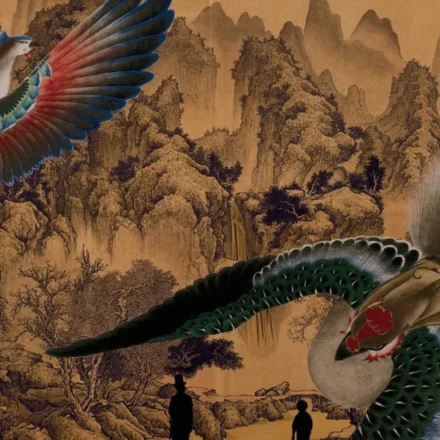
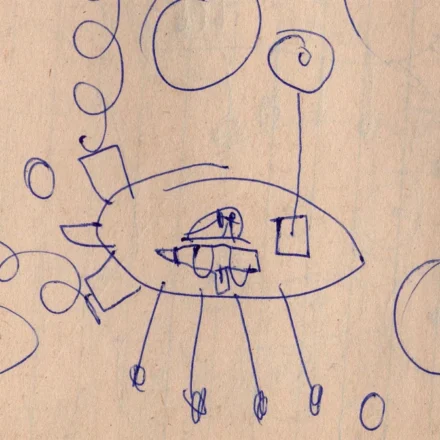
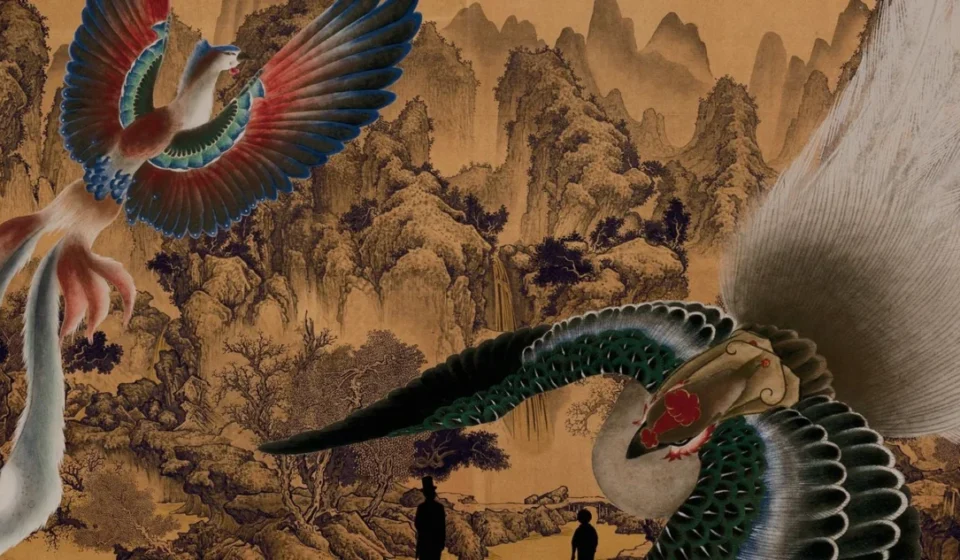
Magic Atlas is not merely a film but a sprawling, shifting gallery of medium and texture. Sun Xun, a world-renowned contemporary artist known for his mastery of woodcuts and ink-wash animation, has utilized an unrestrained palette of materials to bring this vision to life: traditional Chinese ink on paper, oil paint on canvas, woodcut carvings, and even charcoal sketches on found newspapers. The result is a feature-length "fever dream" that prioritizes the "genuine human feeling" imprinted on its materials over the polished, often hollowed-out aesthetics of modern CGI.
The narrative, though secondary to the film’s atmospheric power, centers on a dystopian coal empire known as Luocha. Ruled by a cabal of fascist industrialist despots, the realm is explored through the eyes of Xiao Zhi, an orphan boy. Xiao Zhi is initiated into the empire’s darkest secrets by an imprisoned magician—a man incarcerated for the subversive act of returning stolen memories to the citizenry. It is a story of suppressed truths, Orwellian surveillance, and the metaphysical struggle for the soul of a world choked by industrial soot.
Chronology: A Ten-Year Odyssey of Ink and Wood
The journey of Magic Atlas began over ten years ago, long before the current global discourse on generative AI had taken hold of the creative industries. Sun Xun’s process has always been one of slow, methodical craftsmanship, a rejection of the "fast art" culture that dominates digital platforms.
- 2014–2017: Conceptualization and World-Building: Following the success of his previous shorts, such as 21 Grams, Sun Xun began drafting the world of Luocha. Drawing inspiration from the Avatamsaka Sutra and the satirical literature of the Qing Dynasty (specifically Pu Songling’s Strange Tales from a Chinese Studio), the director sought to create a world where the boundaries between the past, present, and future were fluid.
- 2018–2019: The Expansion of Style: During this period, the production moved into a more experimental phase. Sun Xun and his team at Pi Animation Studio began incorporating a wider variety of "western" painting styles, creating a stylistic friction between traditional Eastern ink-work and the detailed, grotesque aesthetics of Flemish masters like Pieter Bruegel.
- 2020–2022: The Pandemic and Global Collaboration: The COVID-19 pandemic significantly altered the film’s trajectory. Rather than halting production, Sun Xun turned the isolation into a creative catalyst. A standout sequence in the film was born from an international collaboration of artists working remotely, responding to the global state of stasis and fear. This period solidified the film’s theme of "fragmented reality."
- 2023–2024: Post-Production and Festival Circuit: The film underwent a rigorous assembly process, where the disparate styles—woodcuts, pen drawings, and oil paintings—were woven together with an abstract electronic score. The film recently began its journey through international film festivals, sparking intense debate about the role of the "human hand" in 21st-century animation.
Supporting Data: The Visual and Technical Tapestry
The technical complexity of Magic Atlas is grounded in its refusal to adhere to a singular visual language. The film’s "technical merits," as critics have noted, prevent it from becoming alienating, even when the plot becomes opaque.
Material Diversity
Unlike standard animation which relies on digital layers, Sun Xun’s work is built on physical layers. The production utilized:
- Ink and Wash: Used primarily for the sequences involving the "everywhere narrator," creating a sense of ancient, timeless wisdom.
- Woodcuts: Employed to depict the "oppressive obsidian lines" of the Luocha government, mirroring the harsh, indelible nature of authoritarianism.
- Newspaper Backgrounds: In several scenes, characters move across the "financial pages" of real-world newspapers, grounding the fantasy in a critique of modern capitalism and industrial decay.
The Iconography of the Surreal
The film’s imagery is a dense web of symbols. Notable visual motifs include:
- Hybrid Creatures: A horse with a camera for a head serves as a literalization of the surveillance state.
- The Mosquito Surveillance System: A mass surveillance network comprised of giant, grotesque mosquitoes, blending folkloric horror with science fiction.
- The Monochrome Palette: Much of the film orbits a palette of heavy, inky black shading with white outlines, creating a high-contrast environment that feels both historic and futuristic.
Narrative Pacing and Structure
The film deliberately avoids the "Hero’s Journey" tropes. Xiao Zhi, the protagonist, frequently disappears from the frame, allowing the "fluctuating, inky illustrations" to dictate the pace. The opening sequence, featuring the Avatamsaka Sutra, sets a metaphysical tone, suggesting that "the past, the present, and the future lie in the present." This non-linear approach requires a high degree of "audience patience" but rewards it with a sensory experience that approaches the "divine."
Official Responses: Sun Xun on Artifice and Understanding
Sun Xun has been characteristically candid regarding the reception of his work and the complexities of its narrative. In various press engagements and director’s notes, he has emphasized that Magic Atlas is an experience to be felt rather than a puzzle to be solved.
"I am not particularly concerned if everyone understands everything in the film," Sun has stated, a sentiment that reflects his background in fine arts rather than commercial cinema. For Sun, the "possession of false memories"—a central accusation leveled against the protagonist by the state—is a metaphor for the way modern society consumes history and media.
The director has also addressed the film’s "Western" influences, noting that the homages to Pieter Bruegel and the inclusion of a silhouette resembling Mickey Mouse (seen during a festival sequence) are critiques of cultural co-option. The "man in a mouse costume" serves as a jarring symbol of how entertainment can be used as a tool for pacification by an authoritarian regime.
Collaborators at Pi Animation Studio have highlighted the "refreshingly unrestrained" nature of the production. They describe a studio environment that functioned more like an atelier than a traditional animation pipeline, where the director’s voice (who also narrates the film) guided the shifting aesthetic "to meet the needs of the moment."
Implications: The Future of the "Hand-Made" in a Digital Age
The release of Magic Atlas carries significant implications for the broader landscape of contemporary animation and visual storytelling.
1. The Rejection of AI and Automation
As the industry grapples with the ethics and aesthetics of AI, Magic Atlas stands as a definitive argument for "tactility." By foregrounding "real texture" and "materials imprinted with genuine human feeling," Sun Xun challenges the notion that efficiency is the ultimate goal of animation. The film suggests that the "glitches" and irregularities of a woodcut or a hand-drawn line are where the "soul" of the medium resides.
2. Political Allegory and Modern Suppression
The film’s portrayal of the Luocha empire and its "Orwellian nature" resonates deeply with contemporary concerns regarding the suppression of truth. The concept of a government that permits only certain memories to exist serves as a stark allegory for the "post-truth" era and the manipulation of historical narratives. Magic Atlas posits that art—in its most malleable and unrestrained form—is the only weapon capable of breaking through "oppressive obsidian lines."
3. The Convergence of Fine Art and Cinema
Magic Atlas represents a successful bridge between the gallery space and the cinema screen. It challenges the "standardization" of feature film structures, suggesting that there is a global audience "hungry for the hand-crafted." Its success (or at least its critical impact) may pave the way for more experimental, artist-led feature films that prioritize visual philosophy over commercial digestibility.
4. Metaphysical Reflection
Finally, the film’s "metaphysical" turn—where it pokes fun at its own artifice—suggests a growing trend of self-reflexive storytelling. By questioning the state of the world "as we have been taught to view it," Sun Xun encourages viewers to look past the "blue water and black whales" of the surface and contemplate the deeper, often dissonant, electronic tones of our own reality.
In conclusion, Magic Atlas is a "surrealist fever dream" that demands to be seen as a labor of love and a defiant act of artistic preservation. In its kaleidoscope of blue water, exploding paintings, and coal-dusted landscapes, it finds a way to make the ancient feel new and the digital feel "criminally outmoded."