The Return of the Good Guy: Don Mancini Pivots Back to Feature Films for Chucky’s Next Chapter

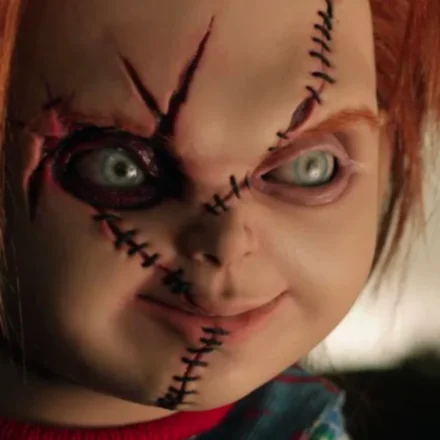
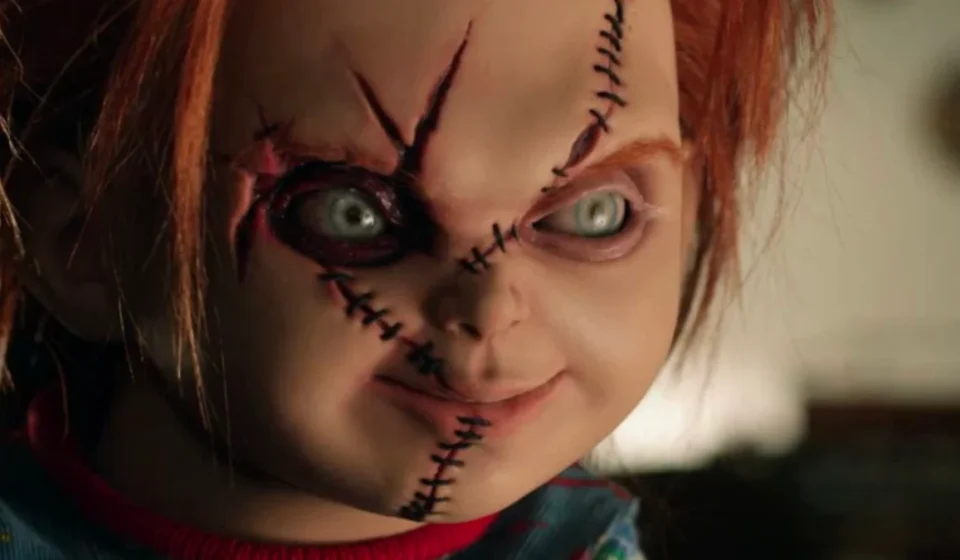
For nearly four decades, the horror landscape has been dominated by a select group of icons: Michael Myers, Jason Voorhees, Freddy Krueger, and, most resilient of all, Charles Lee Ray—better known as Chucky. While his peers have faced endless reboots, remakes, and varying levels of creative stagnation, Chucky has remained under the singular, protective, and inventive vision of his creator, Don Mancini. After a transformative three-season run on television, the pint-sized slasher is finally preparing to sharpen his knife for a return to the silver screen.
The News: Mancini Signs with Independent Artist Group
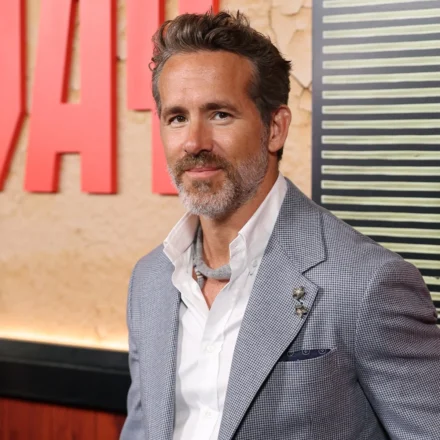
Recent reports from Deadline have confirmed that Don Mancini has officially signed with the Independent Artist Group (IAG). While a talent agency signing is usually routine industry business, the accompanying announcement carries significant weight for horror aficionados. According to the report, Mancini’s primary focus moving forward will be the development of the "next iteration" of the Chucky franchise on the big screen.
This pivot marks a strategic shift for the filmmaker. Since 2017’s Cult of Chucky, Mancini has dedicated his creative energies to the small screen, spearheading the critically acclaimed Chucky television series. Now, as he expands his footprint into original film and television projects, the "Good Guy" doll is slated to move from the episodic format back to the cinematic scale that first birthed the franchise in 1988.
A Legacy of Consistency: The Chronology of Chaos
To understand why this news is so pivotal, one must appreciate the rare relationship between Don Mancini and his creation. In an era where intellectual properties are often stripped from their originators and passed through the hands of corporate committees, Mancini has remained the architect of Chucky’s journey for 36 years.
The Original Trilogy (1988–1991)
Mancini penned the original Child’s Play (1988), which introduced the world to the voodoo-possessed doll. He followed this with the increasingly campy yet terrifying Child’s Play 2 (1990) and Child’s Play 3 (1991). During this era, Chucky was a singular threat, a supernatural force of nature that cemented his status as a cultural phenomenon.
The Creative Pivot (1998–2004)
After a seven-year hiatus, Mancini leaned into the character’s dark humor with Bride of Chucky (1998), introducing Jennifer Tilly as Tiffany Valentine. This was followed by the cult classic Seed of Chucky (2004), where Mancini took over directorial duties. This transition allowed the franchise to evolve into a meta-commentary on the horror genre itself.
The Revival and Expansion (2013–2017)
Following a period of uncertainty, Mancini returned to the franchise’s roots with Curse of Chucky (2013), a return-to-form slasher that brought the doll back to his terrifying, grounded origins. Cult of Chucky (2017) further expanded the lore, introducing the concept of multiple dolls and complex supernatural stakes, setting the stage for the television transition.

The Television Era (2021–2024)
The Chucky TV series allowed Mancini to explore long-form storytelling. By spending hours with his characters rather than a tight 90-minute runtime, Mancini was able to explore themes of adolescence, queer identity, and trauma, all while maintaining the series’ signature blend of gore and wit.
Supporting Data: Why the Move Back to Film Matters
The "Mt. Rushmore of Horror" status is not awarded lightly. Chucky’s longevity is an anomaly in film history. According to box office tracking and critical aggregation sites, the Child’s Play franchise has consistently performed well, with the series grossing over $250 million worldwide across eight films, a staggering figure for a horror franchise that has largely remained independent of major studio blockbusters.
The transition to television was a gamble that paid off, with the series maintaining a high "Fresh" rating on Rotten Tomatoes throughout its three-season run. However, the limitation of the television medium is the lack of "event cinema." Horror films thrive on the communal experience of the theater, and fans have long clamored for a return to the wide-screen spectacle that only a feature-length film can provide.
Official Responses and Creative Vision
Don Mancini has long maintained that his relationship with Chucky is not just a job, but a lifelong conversation. In previous interviews, Mancini has noted that he views the doll as a "living character" who evolves alongside his audience.
"I have always felt that the beauty of Chucky is that he can be anything," Mancini remarked in a recent industry panel. "He can be a slasher, he can be a villain in a gothic horror, he can be a camp icon. The only rule is that he must remain authentic to his own nihilistic, hilarious spirit."
By signing with IAG, Mancini is positioning himself to secure the resources necessary to elevate the franchise’s production value. While no plot details for the upcoming film have been revealed, industry insiders suggest that Mancini is looking to push the boundaries of what a Chucky film can achieve in a modern cinematic landscape, potentially blending the practical effects heritage that fans love with the high-concept storytelling he perfected in the TV series.
The Implications: What Lies Ahead
The return of a filmmaker to his most successful franchise is rarely a simple affair. However, the implications of this move are largely positive for the genre:

- Maintaining the Canon: Because Mancini has written every script (excluding the 2019 remake which he was not involved in), the "Chucky-verse" remains the most coherent long-running horror franchise in existence. A new film ensures that the complex narrative threads established in the TV show are woven into the larger cinematic tapestry.
- The Evolution of the Slasher: The slasher genre is currently undergoing a renaissance, with films like Halloween and Scream proving that legacy sequels are highly profitable. Mancini is in the unique position of not needing a "legacy sequel" because his original story never actually ended.
- Creative Freedom: Mancini’s expansion into a "slate of original projects" suggests that his deal with IAG is designed to protect his creative autonomy. Fans of the franchise can breathe a sigh of relief knowing that the next installment will likely be a product of his vision rather than a studio-mandated reboot.
The Cultural Significance of Chucky
As we approach the 40th anniversary of Child’s Play, it is essential to recognize why Chucky remains a staple of pop culture. Unlike Freddy or Jason, who are often portrayed as silent, unstoppable juggernauts, Chucky is a chatterbox—a character defined by his personality. He is a reflection of our own anxieties, a doll that embodies the worst of human nature, yet does so with a sarcastic grin.
For nearly four decades, Mancini has proven that the horror genre does not have to be static. He has successfully navigated the shift from 80s practical effects to 21st-century digital storytelling without losing the soul of the project. The decision to bring Chucky back to the big screen is not just a nostalgic move; it is a declaration that the character has more to say, more to kill, and more to offer the next generation of horror fans.
Final Thoughts: Friends Till the End
The horror community is notoriously protective of its icons, and the news of a new Chucky film has been met with overwhelming enthusiasm. Whether this new project serves as a cinematic finale to the television arcs or a brand-new adventure remains to be seen. What is certain is that Don Mancini is not finished with his "best friend."
As the industry prepares for this next chapter, one thing is clear: the Good Guy doll is coming back, and he is likely to be hungrier than ever. For those who have followed the journey from the toy aisles of the 80s to the streaming wars of the 2020s, the prospect of seeing Chucky back on the big screen feels less like a corporate decision and more like a homecoming.
Don Mancini and Chucky have indeed remained friends till the end, and it seems that "the end" is a concept that simply does not apply to a killer who has mastered the art of resurrection. We wait with bated breath to see what new, twisted masterpiece awaits us in the theater. As for the fans? They’ll be there, ready to see the Good Guy strike again.