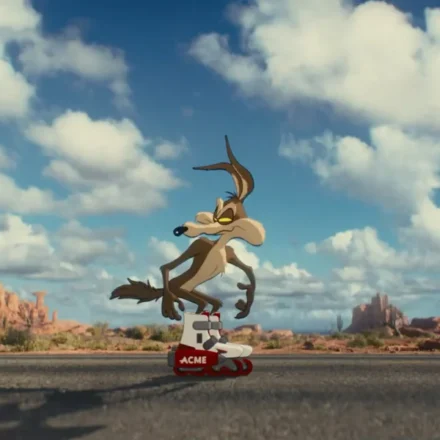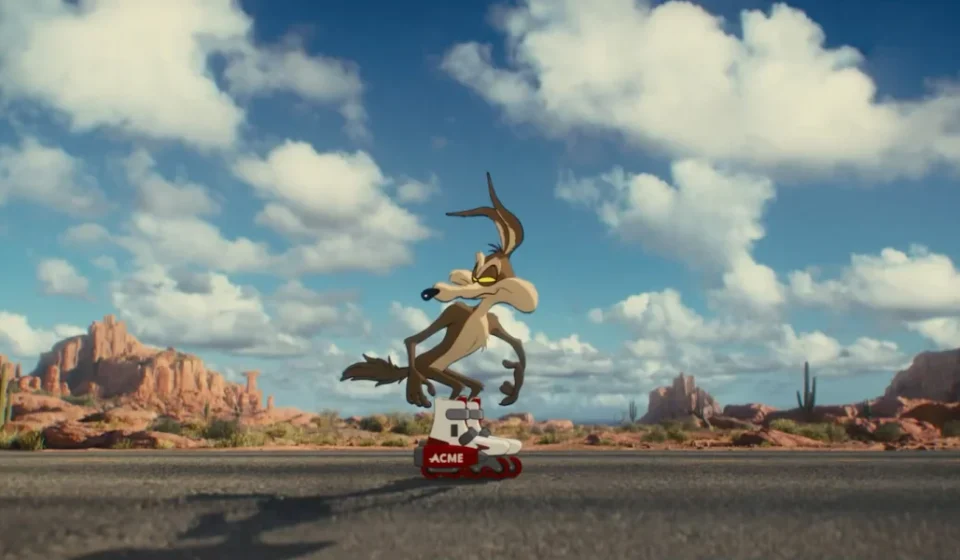

After decades of plummeting from desert mesas, detonating defective rockets, and enduring the most catastrophic customer service in cinematic history, Wile E. Coyote has finally found a champion in the legal profession. In the highly anticipated feature film Coyote vs. Acme, the iconic "Super Genius" of the Looney Tunes universe steps out from the shadows of his perpetual failures and into a courtroom.
This week, the VFXShow—featuring hosts Matt Wallin, Jason Diamond, and Mike Seymour—conducts a deep-dive forensic analysis of the film. They investigate not just the legal theatrics of the plot, but the monumental animation and visual effects (VFX) challenges inherent in grafting the chaotic, rubber-physics world of the Looney Tunes onto the grounded reality of live-action cinematography.
The Genesis of a Legal Battle: Main Facts
Directed by Dave Green, Coyote vs. Acme represents a bold stylistic departure for the franchise. The screenplay, penned by Samy Burch from a story developed by Burch, James Gunn, and Jeremy Slater, draws its primary inspiration from Ian Frazier’s seminal 1990 New Yorker article.
The narrative centers on Kevin Avery, a down-on-his-luck personal injury attorney played by Will Forte. Avery is approached by an unlikely client: a coyote with an extensive, well-documented history of product-related grievances against the Acme Corporation. Bolstered by the youthful optimism and technical savvy of his niece and intern, Paige (Lana Condor), Avery decides to take on the corporate behemoth. Standing in his way is the shark-like Acme legal counsel, Buddy Crane, portrayed with antagonistic flair by John Cena.
The premise is deceptively simple: How does one litigate against a company whose products are designed to fail in the most spectacular ways imaginable? As the film explores, serving a subpoena to a bird that moves at supersonic speeds—the Road Runner—presents a logistical nightmare that serves as the comedic engine of the film.
A Chronology of Cartoon Evolution
The journey to bring Coyote vs. Acme to the screen has been as complex as one of Wile E.’s blueprints. For years, the industry grappled with how to translate 2D "squash-and-stretch" animation into a three-dimensional, photorealistic space without losing the soul of the character.

The Early Stages: From Sketch to Screen
In the early development phases, the production team prioritized the "Looney" aesthetic over pure realism. The goal was to maintain the "gloriously impossible physical logic" that defines Wile Ethelbert Coyote. The production utilized a unique methodology known as "SketchViz"—hand-drawn, illustrated visualizations used to map out the comedic timing and physical beats before a single frame of high-end CG was rendered.
The Production Integration
Once the sequences were blocked out, the production turned to DNEG to bridge the gap between the hand-drawn concept and the final render. To ensure the live-action actors were genuinely interacting with their animated counterpart, the production employed the services of puppeteer Dave Barclay. Barclay operated a life-size, physical Coyote puppet on set, providing actors like Will Forte with a tangible focal point for eyelines and physical contact. This hybrid approach allowed for a "grounded" performance that the animators could then layer over in post-production.
Supporting Data: The VFX Infrastructure
The challenge of this film lies in the compositing. In a traditional Looney Tunes short, physics are a suggestion, not a law. In a live-action world, the audience subconsciously expects gravity, lighting, and textures to behave according to the laws of our universe.
The DNEG Pipeline
The VFX team faced the monumental task of rendering Wile E. Coyote in a way that felt tactile. This required:
- Asset Consistency: Maintaining the Coyote’s iconic silhouette while adapting his fur and anatomy to look "real" in a high-resolution environment.
- Lighting Sync: Using HDRI (High Dynamic Range Imaging) data captured on set to ensure the Coyote reflected the light of the desert sun or the harsh neon of a courtroom accurately.
- The "Cartoon" Threshold: A primary discussion point for the VFXShow is the balance between realism and caricature. If the Coyote looks too real, he loses his charm; if he looks too cartoonish, he fails to integrate with the live-action environment. The team ultimately landed on a "stylized realism," where the Coyote follows physical laws until the exact moment he needs to defy them for a gag.
Official Responses and Creative Direction
Director Dave Green has noted in pre-release discussions that the film is a love letter to the history of animation. By hiring Samy Burch—whose background leans into character-driven narrative—the production sought to elevate the film beyond a simple "slapstick" comedy.
John Cena’s portrayal of Buddy Crane adds a layer of corporate satire to the film. According to behind-the-scenes reports, Cena was instructed to play his character with the same level of commitment one would find in a high-stakes legal drama. The juxtaposition of a human lawyer acting with complete, humorless sincerity while his client (Acme) sells products like "Instant Holes" and "Giant Magnets" creates the central friction of the film’s tone.

Implications: The Future of Hybrid Cinema
The success of Coyote vs. Acme carries significant weight for the future of hybrid films.
- The Renaissance of Physical Puppetry: The return of on-set puppetry, as seen with Dave Barclay’s work, suggests that even in an age of AI and deep-learning animation, the human element—the "eye-line partner"—remains irreplaceable for actor performance.
- The "Looney" Logic Standard: By successfully integrating 2D physics into a 3D environment, the production has set a new benchmark for how legacy characters can be rebooted. It proves that audiences are willing to accept the "impossible" if the technical execution is grounded in high-quality lighting and compositing.
- Narrative Depth: Perhaps most importantly, the film proves that even the most "disposable" characters—those who exist only to fail—can serve as the emotional anchor of a film. By giving Wile E. a voice (in a legal sense) and a quest for justice, the film transforms a victim of product failure into a protagonist.
Expert Analysis: The Verdict
As the VFXShow team prepares to weigh in, the consensus seems clear: Coyote vs. Acme is a masterclass in modern visual effects.
- Matt Wallin (Counsel for the Coyote): Focuses on the integration of performance capture and the delicate art of making a digital asset feel "weighted" within the frame.
- Jason Diamond (Expert Witness): Analyzes the cinematography and the specific challenges of shooting in environments that require extensive digital set extensions.
- Mike Seymour (Acme Product Tester): Breaks down the physics engines used to simulate the "spectacular failures" of Acme products, ensuring that when an anvil drops, it feels both dangerous and hilarious.
The film is not merely a technical showcase; it is a thoughtful meditation on the relationship between creator and creation, consumer and corporation, and the enduring resilience of a character who has been hit by a falling piano more times than history can record.
As the team concludes their analysis, they remind us all of the golden rule of this production: All rise. And, for heaven’s sake, check for anvils first.
For those interested in the technical breakdown, the full discussion can be found on the fxguide YouTube channel. Subscribe to the VFXShow on your preferred podcast platform for further analysis into the visual effects landscape of modern cinema.