The Lens and the Soul: How a Decade of Correspondence Transformed into the Intimate Documentary The White Devil

For decades, Robert Richardson has been the silent architect of modern cinema’s most visceral visual landscapes. As a three-time Academy Award-winning cinematographer—lauded for his collaborations with titans like Martin Scorsese, Oliver Stone, and Quentin Tarantino—Richardson has spent his career fielding inquiries about the technical wizardry behind the frames of JFK, The Aviator, and Hugo. He has mastered the art of light, shadow, and movement, turning lenses into storytellers. Yet, in 2016, a simple email from a Czech film student named Jana Hojdová shifted the trajectory of his life, moving him from behind the camera to a position of profound, and often uncomfortable, vulnerability.
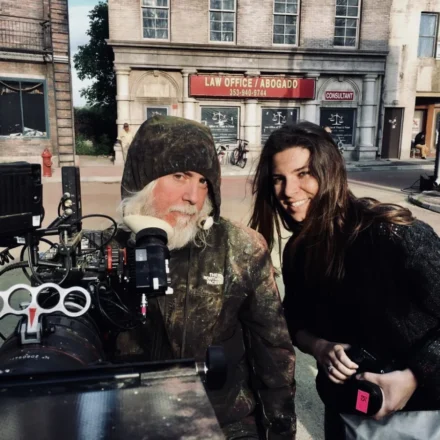
Hojdová did not ask about f-stops, lighting rigs, or the complexities of working with high-profile directors. She asked about the man holding the camera. This divergence from the norm caught the legendary cinematographer’s attention, sparking a decade-long odyssey that culminated in the documentary feature Robert Richardson: The White Devil.
A Decade of Unfolding: The Chronology of an Unlikely Bond
The genesis of the film was deceptively simple. Hojdová, a student at Prague’s prestigious FAMU film school, was raised in a household steeped in cinema—her father was both a director and a cinematographer. She grew up idolizing Richardson’s work, viewing his films as a foundational education in visual language. When she reached out to him in 2016, she was seeking input for her master’s thesis. To her astonishment, the reclusive master of light responded.
"I get a number of requests for this kind of work, and I am not really interested," Richardson remarked during a recent post-screening Q&A at Soho House West Hollywood. "There wasn’t one that was technical. It was, ‘Who are you? Where do you come from? What’s your life like?’"

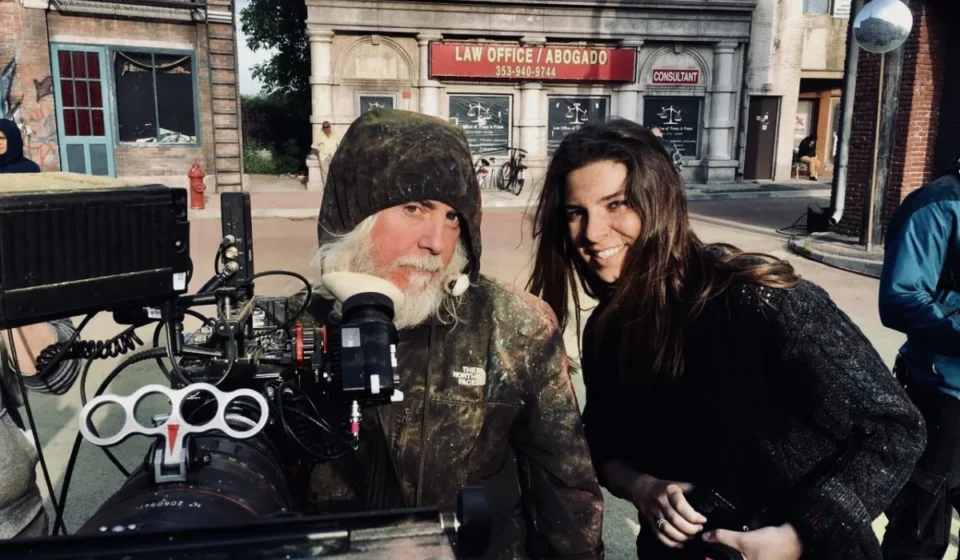
The correspondence blossomed into a genuine mentorship and, eventually, a professional collaboration. By 2017, Hojdová had traveled to New Zealand to visit the set of Baltasar Kormákur’s Adrift, where Richardson was working. What she expected to be an observational project quickly evolved. As she watched him navigate the mundane realities of production—the long drives, the meal breaks, the solitary moments of contemplation—she realized she was capturing something far more compelling than a typical "making-of" feature.
However, the project truly caught fire during the COVID-19 pandemic. A brief visit to Richardson’s Cape Cod home to archive photographs and personal records turned into a months-long residency. Forced into isolation by the global lockdown, the pair lived under the same roof, with Hojdová granted unprecedented access to Richardson’s private life, his basement archives, and his introspective musings.
"If we didn’t have COVID, it wouldn’t be a movie," Richardson admitted. "It wouldn’t be the same movie in any way at all."
The Intellectual Arsenal: Research and Record-Keeping
The documentary is merely the tip of the iceberg in what has become a gargantuan effort to chronicle a legendary career. Hojdová and Richardson are currently collaborating on a book project that aims to synthesize the vast intellectual and visual archives stored in his Massachusetts residence.

During the October 29 screening in Los Angeles, Hojdová revealed that the manuscript has already surpassed 350 pages, with no end in sight. "This is our homework in Los Angeles," she noted. "That we need to finish our book."
The process of assembling this legacy has been grueling. Faced with over 650 hours of raw footage, Hojdová had to distill the essence of a complex, multifaceted artist. The production required the licensing of nearly 400 distinct images and clips, a legal and logistical "nightmare," according to the filmmaker, that required the support of executive producer Matej Chlupáček.
Transparency and the "Shadow Side"
Perhaps the most striking element of The White Devil is its refusal to sanitize its subject. The documentary delves into the difficult terrain of Richardson’s personal life, including his often-strained relationships with his five children, his past struggles with substance use, and the heavy toll that his absolute devotion to his craft has taken on his interpersonal connections.
For Richardson, watching the film is an exercise in profound discomfort. During the Q&A, he was candid about his reaction to seeing his life laid bare. "I don’t like watching this movie because it’s a very transparent approach to who I am," he said. "Most times, you would think the documentary wouldn’t necessarily have as much of the shadow side."

Hojdová, however, remained firm in her vision. She argued that the film’s power lies in that very transparency. "You told me that if this film can tell someone something, it needs to be transparent," she reminded him.
This push-and-pull defined their creative process. Initially, Hojdová was hesitant to include herself in the narrative, preferring to stay invisible. But as she began the editing process, she realized that the audience needed a proxy—someone to guide them through the labyrinthine mind of a cinematic genius. "I had to fight for me being in the film," she admitted. "I realized it was a great choice because I think people can connect more with me than with Bob."
Official Reflections: A Mutual Education
The relationship between the two has evolved from master-student to a deeply intimate, albeit complicated, friendship. Richardson, typically known for his intensity on set, has found in Hojdová a persistent, and at times "spying," confidante. He famously joked that she was like a spy, convincing him to reveal his vulnerabilities bit by bit.
Their conversations in the film reflect a man in the twilight of a storied career attempting to make amends with the past. When asked what he learned from the experience of making the documentary, Richardson was somber. "I learned pain and I learned that now I should try to work harder, try to make the family work better."

This maturity is mirrored in the growth of the director herself. "She started in her 20s in this film. Now she’s in her 30s," Richardson said, reflecting on their decade-long journey. "She’s seen all the worst sides of me anybody could see. She’s probably been the second longest relationship with a female in my life."
Implications for the Future of Documentary Cinema
The release of The White Devil serves as more than just a portrait of a cinematographer; it is a case study in the power of the "long-form" documentary. In an industry that often demands fast-turnaround, surface-level content, the ten-year gestation of this film allowed for a level of depth that is increasingly rare.
By allowing the subject to "age" into the camera, and by allowing the filmmaker to grow alongside her subject, The White Devil achieves a rare intimacy. It challenges the traditional boundaries of documentary filmmaking, suggesting that the most honest work happens not when the camera is running for a few weeks, but when the filmmaker is allowed to become a fixture in the subject’s life.
For audiences, the film offers a sobering look at the cost of artistic greatness. It demands that we look at the icons we admire not as untouchable gods of the screen, but as human beings grappling with the consequences of their own obsessions.

As the film prepares for its North American premiere at DOC NYC on November 14 and 16, it stands as a testament to the fact that the most revealing stories are rarely the ones we set out to tell. Sometimes, they are the ones that happen when we stop asking technical questions and start asking the ones that truly matter.
“Robert Richardson: The White Devil” is currently touring the festival circuit and will be available for streaming in the U.S. through November 29 for those who purchase an online screening ticket.