The Anarchic Icon Reimagined: A Critical Analysis of the New Animated "The Cat in the Hat"

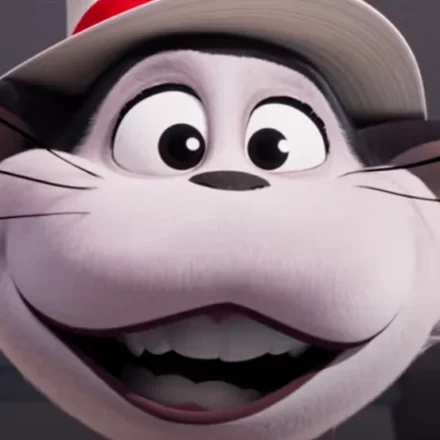
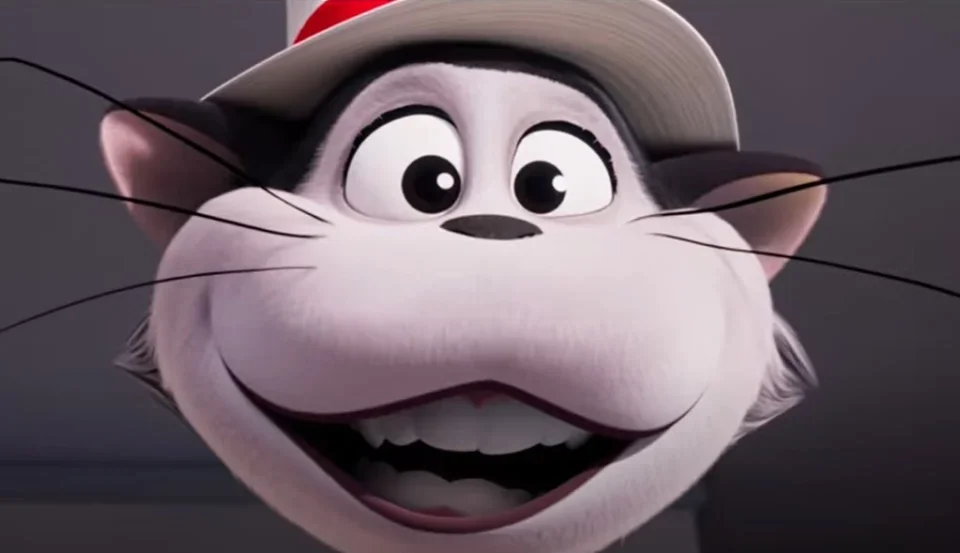
The transition of beloved literary icons from the printed page to the silver screen has always been a fraught endeavor, particularly when the source material possesses the whimsical, almost sacred status of Dr. Seuss’s work. The latest attempt to modernize Theodor Geisel’s most famous creation, the digitally animated The Cat in the Hat, directed by Alessandro Carloni and Erica Rivinoja, represents a fascinating, if somewhat disjointed, evolution in the franchise’s history. Starring Bill Hader as the titular feline, the film seeks to find a middle ground between the sterile safety of modern corporate animation and the chaotic, often terrifying energy of previous adaptations.
Main Facts: A New Vision for a Classic Mischief-Maker
The new The Cat in the Hat is a stark departure from the 2003 live-action iteration that left a lingering bad taste in the mouths of critics and audiences alike. This version opts for a sleek, high-energy digital animation style, positioning itself as a potential franchise-starter for a new generation of viewers who are more accustomed to the "multiverse" storytelling of Marvel than the quiet, rhythmic pacing of 1950s children’s literature.
The film features a high-profile voice cast, led by Bill Hader as the Cat. Hader, who also serves as an executive producer, is joined by America Ferrera as Carmen (the single mother), Xochitl Gomez as the teenage protagonist Gabby, Tiago Martinez as her younger brother Sebastian, and Matt Berry as Waffles, the family’s hyper-articulate and perpetually stressed British goldfish.
At its core, the film attempts to graft a modern emotional arc onto the Seussian framework. The plot centers on Gabby, a teenager grappling with the isolation of moving to a new city. This emotional groundedness, however, is frequently interrupted by the Cat’s arrival and a series of "world-hopping" adventures facilitated by magical boxes that act as portals to surreal dimensions. While the film manages to avoid the grotesque pitfalls of its predecessor, it arguably falls into a new trap: the homogenization of childhood wonder into a "video-game-on-Ritalin" experience.
Chronology: From Page to Live-Action Disaster to Animated Modernity
To understand the context of this new release, one must look at the timeline of the Cat’s cinematic journey.
The Literary Genesis (1957)
Dr. Seuss wrote The Cat in the Hat as a response to a debate in the United States about literacy levels among children. The book was designed to be an entertaining alternative to the "Dick and Jane" primers, using a limited vocabulary to create a story of domestic anarchy. The Cat was an agent of chaos, a blithe troublemaker who challenged the rigidity of the domestic sphere before restoring order just in time.
The Live-Action Misstep (2003)
The 2003 live-action adaptation, starring Mike Myers, remains a case study in studio miscalculation. Directed by Bo Welch, the film attempted to replicate the success of Jim Carrey’s How the Grinch Stole Christmas but ended up creating something far more abrasive. Myers’ portrayal of the Cat—complete with a thick "New Yawk" accent reminiscent of a 1960s Catskills comedian—was widely criticized as being "scary rather than inviting." The film’s "adult" humor and frantic energy led to the Seuss estate reportedly banning any further live-action adaptations of Geisel’s books.
The Animated Pivot (Present Day)
Recognizing the limitations of live-action, the current production team turned to digital animation. Directors Alessandro Carloni and Erica Rivinoja, veterans of the industry, aimed to strip away the "marshmallow with teeth" look of the Myers era. However, in doing so, they have replaced the "spiky" personality of the original Cat with a "capital-F Friendly" version that feels designed for maximum merchandise potential rather than narrative depth.
Supporting Data: Narrative Mechanics and Character Dynamics
The film’s structure relies heavily on tropes established by modern animation powerhouses like Pixar and Illumination. This is evidenced by several key narrative components:
The "Inside Out" Emotional Template
The protagonist, Gabby (Xochitl Gomez), is portrayed with a specific type of adolescent melancholy that feels directly lifted from Riley in Pixar’s Inside Out. She is a trumpet player who fears being labeled a "band nerd" and resents her mother, Carmen (America Ferrera), for the family’s recent move. This provides the "emotional stakes" that modern audiences expect, but it often feels at odds with the surrealist, low-stakes mischief of the original book.
The "Marvel-ization" of the Seuss Universe
The film introduces the "Go-Backer," a layered stopwatch that functions as a time-travel device, and a "Supply Closet" that acts as a Mary Poppins-style infinite bag of gadgets. These elements transform the story from a domestic fable into a "junior Marvel" surrealist action movie. The climax involves a battle with a "giant leaping demon monster" known as the Something—a creature that bears a striking resemblance to the lava demon Te Kā from Disney’s Moana.
The Franchise Strategy: Thing One and Thing Three
In a blatant nod to the Minions franchise, the film introduces the Cat’s assistants, Thing One and Thing Three (notably skipping Thing Two for a plot-related surprise). These characters communicate through non-verbal percussive sounds, a move clearly intended to make them universally marketable. The film even includes a meta-joke about the Things having their own franchise, acknowledging the corporate drive to move "plush toy" merchandise.
Official Responses and Creative Philosophies
While the studio has remained focused on the film’s "innovation" and "modern appeal," the creative choices have sparked a debate among critics and purists regarding the "voice" of the Cat.
The Daniel Day-Lewis Comparison
A recurring point of critique involves the hypothetical "voice" of the Cat. Much like Daniel Day-Lewis spent months crafting the specific timbre for his portrayal of Abraham Lincoln—unveiling it to Steven Spielberg as if it were a designed skyscraper—there is a sense that the Cat requires a specific, nuanced inflection. The original literary Cat was often imagined as aristocratic, effete, and consciously obnoxious—a "blithe troublemaker" who knew his mischief was ultimately harmless.
Bill Hader’s "Safe" Approach
In contrast, Bill Hader’s performance has been characterized as "ingratiating." While Hader is a gifted voice actor, his Cat is portrayed as an "office drone" for a massive company that assigns him clients to cheer up. This bureaucratic backstory strips the character of his inherent mystery. Critics have noted that while Hader’s version is more "safe" than Myers’, it lacks the "audacious" and "spiky" personality that a more transformative actor—or a more daring script—might have provided.
The Directors’ Defense
Alessandro Carloni and Erica Rivinoja have argued that their departure from a faithful adaptation was necessary for a "buzzed, mercurial, attention-crashing" era. They contend that a literal translation of the book’s 61-page plot would be too "quaint" for a feature-length film in the 2020s. Their goal was to create a "mish-mosh of pop recycling" that feels familiar to children raised on video games and YouTube.
Implications: The Future of Literary Adaptations
The release of The Cat in the Hat raises significant questions about the future of children’s literature in the age of "corporate diligence."
The "Mess-o-Meter" of Quality
The film’s own internal metric, the "Mess-o-Meter," serves as an apt metaphor for its reception. While the movie "delivers" on a technical level—providing a "hectic, bumptious, and overcrowded" spectacle—it often feels "underfelt." By prioritizing "franchise-ready" elements over the "innocent wildness" of the original Seuss books, the film risks becoming another "one-note meh" in a crowded marketplace of animated content.
The Erosion of Narrative Simplicity
The shift toward "The Cat in the Hat Saves the Universe" storytelling suggests that studios no longer trust simple, domestic stories to hold a child’s attention. The inclusion of "glowy-eyed giant monsters" and "motorized red couches" indicates a belief that the "magic" of the original—the simple idea of a stranger bringing fun to a rainy day—is no longer enough.
The Legacy of Dr. Seuss
Ultimately, The Cat in the Hat is a film "talking through its hat." It uses the iconography of Dr. Seuss to sell a product that feels fundamentally different from the author’s intent. While it successfully avoids the "black hole of misjudgment" that plagued the 2003 version, it settles for a polished, "capital-F Friendly" mediocrity. As the industry continues to mine classic literature for content, the challenge remains: how to modernize a character without losing the very soul that made them a classic in the first place. For now, the Cat remains a character caught between two worlds: the whimsical ink-and-wash drawings of 1957 and the hyper-saturated, merchandise-driven digital landscapes of 2024.