The Sound of the Gridiron: Marcelo Zarvos Tapped to Score David O. Russell’s ‘Madden’ Biopic

The intersection of legendary sports history and high-caliber cinematic storytelling is set to collide this November with the release of Madden, an expansive biographical drama directed by Academy Award-nominated filmmaker David O. Russell. In a significant creative development, acclaimed composer Marcelo Zarvos has been confirmed to score the film, lending his signature melodic depth to the life of the late, iconic NFL coach and broadcaster, John Madden.
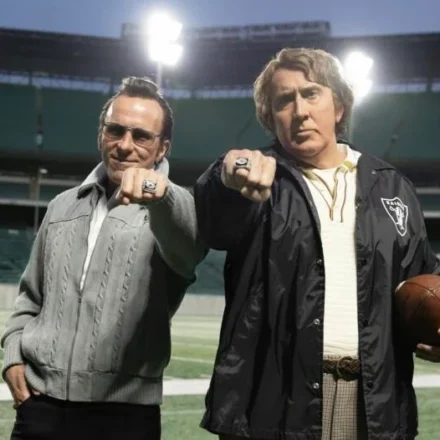
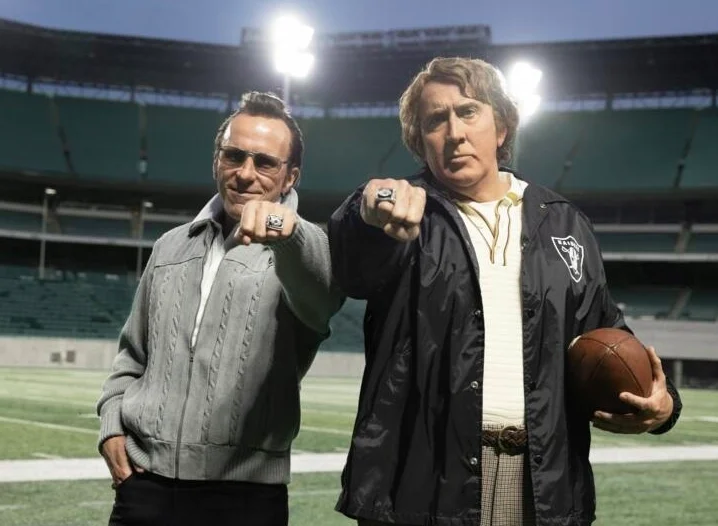
With a cast led by Nicolas Cage as the titular legend and Christian Bale as his longtime collaborator Al Davis, the film promises to be one of the most anticipated releases of the year. As Madden prepares for its dual-platform debut in select theaters and on Prime Video on November 18, 2026, the inclusion of Zarvos—a composer known for his sophisticated, emotionally resonant work—signals a production aiming for both historical gravity and wide-reaching cultural impact.
The Main Facts: A Convergence of Talent
The announcement of Marcelo Zarvos’s involvement in Madden comes as the project moves into its final stages of post-production. Zarvos, whose extensive résumé includes acclaimed scores for Fences, May December, and Wonder, brings a versatile compositional style to the table. His ability to navigate the tension between intimate character portraits and grand historical landscapes makes him a strategic choice for a film tasked with covering the vast, multifaceted life of John Madden.
Directed by David O. Russell, known for his kinetic storytelling in Silver Linings Playbook and The Fighter, the film explores the metamorphosis of a Super Bowl-winning coach into a pop-culture titan. Joining Cage and Bale are Kathryn Hahn, John Mulaney, Sienna Miller, and Shane Gillis, rounding out a cast that reflects the complexity of the figures orbiting Madden’s professional life.
The screenplay, penned by Russell and Cambron Clark, traverses several decades, focusing heavily on the professional and personal synergy between Madden and Al Davis. This partnership was not merely a professional alliance; it was the bedrock upon which the modern era of the NFL—and eventually the billion-dollar Madden video game franchise—was constructed.
Chronology: From the Sidelines to the Console
The narrative arc of Madden is structured to highlight three distinct phases of the coach’s career, a timeline that poses a unique challenge and opportunity for a film score.
Phase I: The Raiders Era
The story begins with Madden’s tenure as the head coach of the Oakland Raiders. This period is defined by the high-stakes, aggressive culture of 1970s football. For a composer like Zarvos, this phase necessitates a soundscape that captures the grit and intensity of the gridiron. The score must echo the raw physicality of a sport that was still defining its modern identity.
Phase II: The Voice of the Game
The second movement of the film tracks Madden’s transition into the broadcast booth. This transition is arguably the most critical shift in his life, where his larger-than-life personality—often characterized by his enthusiasm, his unique vocabulary, and his legendary "Boom!"—became the soundtrack for millions of Americans’ Sunday afternoons. This era requires a score that balances the technical requirements of television production with the warmth and accessibility that made Madden a household name.
Phase III: The Virtual Revolution
The final act focuses on the creation of the Madden NFL video game. This period represents the technological democratization of the sport, where Madden’s name became synonymous with the digital evolution of football. This segment of the film explores the bridge between real-world athletes and their virtual counterparts, a narrative beat that likely calls for a score that bridges traditional orchestral elements with modern, perhaps even synthesized, textures.
Supporting Data: The Zarvos Signature
Marcelo Zarvos is no stranger to prestige projects. His career has been marked by a transition from contemporary classical music to one of the most reliable and sought-after voices in Hollywood film scoring.
- Diverse Portfolio: Zarvos has demonstrated a unique range, moving from the quiet, jazz-infused intimacy of The Affair to the sweeping, political urgency of The Diplomat and the high-tension environment of Ray Donovan.
- The "Russell" Factor: Collaborating with David O. Russell requires a specific type of musical intuition. Russell’s films often lean into erratic, fast-paced dialogue and deeply flawed human characters. Zarvos’s work on Fences proved he could handle high-intensity, dialogue-heavy scenes without overwhelming the performances.
- Production Strength: The film is bolstered by a production team that includes Todd Black and Jason Blumenthal (The Equalizer), Steve Tisch (Forrest Gump), and Matthew Budman (Amsterdam). Their track record for delivering commercially viable, critically respected films suggests that the score for Madden will be a focal point of the film’s overall production quality.
Official Responses and Creative Direction
While specific details regarding the musical themes of Madden remain under wraps, industry insiders suggest that Zarvos has spent the better part of the year developing a "leitmotif" for Madden and Davis that evolves as the two men grow older and their relationship shifts.
In his recent professional output, Zarvos has shown an increased interest in the intersection of character-driven drama and high-concept biopics. His upcoming work on 1972 and his continued tenure on Netflix’s The Diplomat—which has already secured a fifth-season renewal—underscore his status as one of the most prolific composers currently working in the medium.
Regarding the film’s distribution strategy, the decision to release Madden simultaneously in select theaters and on Prime Video on November 18 suggests a "day-and-date" strategy designed to maximize reach. By leveraging the Prime Video platform, the film is positioned to capture not just cinema-goers, but the millions of gamers who have grown up with the Madden franchise, effectively bridging the gap between historical documentary-style drama and modern entertainment consumption.
Implications: The Legacy of a Legend
The cultural significance of a John Madden biopic cannot be overstated. Madden did not just coach football; he redefined how the American public consumed the sport. The inclusion of Al Davis as a central figure suggests that the film will be as much about the "Mavericks of the NFL" as it is about the game itself.
The Impact on Sports Cinema
Biopics have struggled in recent years to find a balance between hagiography (the worshipful portrayal of a subject) and honest, warts-and-all storytelling. With David O. Russell at the helm, audiences can expect a portrayal that leans into the eccentricities of the real figures. Zarvos’s score will serve as the emotional anchor for these choices, ensuring that even in the most intense or comedic moments, the underlying humanity of Madden is preserved.
The Evolution of the Soundtrack
Historically, football films have relied on bombastic, brass-heavy scores meant to evoke the feeling of a stadium. However, by selecting Zarvos—a composer who favors piano, strings, and nuanced textural layers—the production team is signaling that Madden will be a character study first and a sports film second. This is a departure from the traditional sports movie playbook, implying a desire for the film to resonate with audiences who may have no interest in football but a great interest in the evolution of American icons.
Future Outlook
As Zarvos continues to balance his work on major features with long-form television—including the upcoming second season of S.W.A.T. Exiles—his work on Madden stands out as a potential career highlight. The film will serve as a litmus test for how modern biopics can utilize sound to bridge the gap between historical figures and the modern digital landscape.
As the November 18 release date approaches, the industry will be watching closely. Whether the film succeeds as a box office draw or a streaming powerhouse, the collaboration between Russell and Zarvos ensures that the auditory experience of John Madden’s life will be as memorable as the man himself.
The stage is set. With the legendary coach’s voice still echoing in the minds of football fans, and a new cinematic score waiting to be heard, Madden is poised to be a definitive entry in the pantheon of sports cinema. Whether through the lens of a coach, a broadcaster, or the architect of a digital empire, the story of John Madden is one of constant reinvention—a theme that Marcelo Zarvos is uniquely positioned to translate into music.