The Unspoken Language of Connection: Matsumura Shingo’s Between Us at the Tokyo International Film Festival

In the quiet, deliberate frames of Between Us, director Matsumura Shingo crafts a meditation on the heavy, invisible baggage of the human experience. Playing as part of the Nippon Cinema Now section at the Tokyo International Film Festival (TIFF), the film marks a significant evolution in the filmmaker’s career, serving as a poignant exploration of how past traumas, left unresolved, continue to dictate the rhythm of the present.
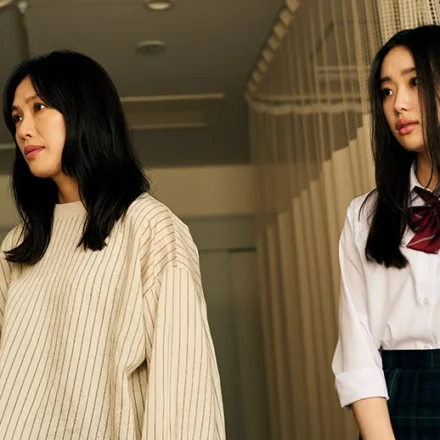
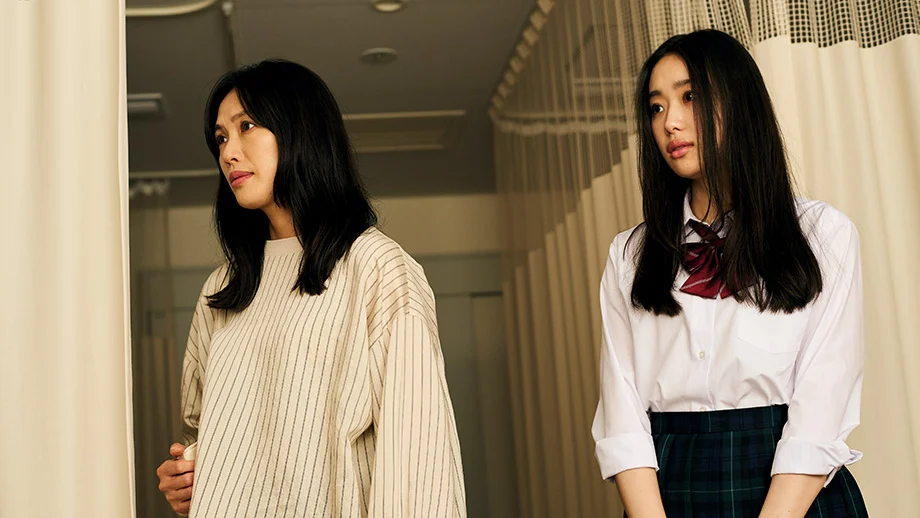
Starring a compelling ensemble including Kawashima Ririka, Kurasawa Anna, Kikuchi Akiko, Usuda Asami, Saito Yoichiro, and Miura Takahiro, the film navigates the fractured history of two childhood best friends, Makoto and Kasumi. Their bond, severed by an enigmatic incident during a joint family camping trip, remains dormant for six years until a serendipitous reunion within the confines of their high school drama club forces a reckoning with the past.
The Anatomy of Stillness: A Filmmaker’s Philosophy
Matsumura, whose previous work includes the 2023 feature The Lump in My Heart, has established a distinct visual signature characterized by extreme restraint. Perhaps the most radical element of his craft is his self-imposed mandate: a total ban on handheld camerawork. In an era where digital content is often defined by the kinetic, unstable energy of smartphone cinematography, Matsumura’s insistence on a locked-off, tripod-mounted camera feels like a deliberate act of defiance.
“All the cameras are becoming more compact right now, and you see all these videos on YouTube and social media shot with that equipment,” Matsumura explains during an interview at the festival. “I wanted to differentiate what I show on the big screen from that kind of content. That is the first reason. The second reason is that I want to capture the emotion of the actors truthfully, slowly.”
By eschewing the shaky-cam aesthetic, Matsumura forces the audience to observe the characters with an intensity that borders on clinical. He utilizes the stillness of the frame to turn the physical space between characters into a narrative device. In Between Us, distance is not merely a setting; it is a manifestation of the psychological divide between Makoto and Kasumi. The director meticulously blocks his scenes to reflect their emotional fragmentation, using the environment to emphasize that even when they share a room, they exist in separate, unspoken realities.
Chronology of a Mending Bond
The narrative arc of Between Us is one of slow accretion. Following the initial rift in their childhood, the story picks up in the high-school setting. Kasumi has become a perfectionist—an intense, demanding presence within the drama club—to the point that her peers find her difficult to collaborate with. When Makoto arrives, the film captures their reunion not through dramatic confrontation, but through the delicate, often agonizing process of communication.
The brilliance of Matsumura’s editing lies in his ability to reconcile this distance. In a key sequence, he cuts between the two girls performing separate read-throughs of a script. By splicing their isolated rehearsals together, the edit creates the illusion of a conversation. Though they remain physically separated, the rhythm of the dialogue—the "trading of lines"—bridges the gap.
“The play they are working on is a fiction, but they are speaking in their own language,” says Matsumura. “By saying their lines, they are able to say what they were not able to say in the real world. Through that process, the physical and emotional distance between them begins to shrink.”
Global Trauma and Personal Resolution
While Between Us is a character-driven drama, its origins are rooted in a broader, more existential malaise. Matsumura conceived the film during a period marked by global instability, citing the 2011 Great East Japan Earthquake, the subsequent pandemic, and the proliferation of international conflicts as catalysts for his creative inquiry.
“It was a period in my life when I felt it was nearly impossible for one human to truly connect with another,” he admits. “I wanted to create a simple film about two people facing away from each other, and then explore what happens when they finally choose to look at one another. What kind of energy is born from that?”
Matsumura is quick to clarify that the film is not a literal allegory for these disasters. Instead, he uses the "unresolved" nature of his characters’ childhood trauma as a metaphor for the way modern society processes tragedy.
“I think it reflects our current situation. Whether it’s an earthquake, a nuclear crisis, or a war, we consume these events through the media. But once the news cycle moves on, we convince ourselves that the issue is in the past—that it’s ‘solved.’ In reality, that trauma is never truly gone. It remains, festering beneath the surface, just as the events of that camping trip haunt Makoto and Kasumi.”
Performance and the Art of Listening
The film’s emotional weight is bolstered by the nuanced performances of its leads. Matsumura adopted a minimalist approach to direction, favoring an environment where his actors could find the characters organically rather than adhering to rigid, pre-planned emotional beats.
“There was no specific direction I gave them,” the director notes. “The actors share a common trait: they have a profound interest in others. They listen closely. They take in the words of their scene partners and make them their own. It was very natural for them to inhabit these roles, and I simply allowed them the freedom to perform what they felt in the moment.”
This "naturalistic" approach creates an intimacy that prevents the film from feeling like a staged drama. It captures the awkwardness of reconciliation—the pauses, the glances, and the hesitations—that are often polished away in more commercial productions.
The State of Japanese Cinema: A Fragmented Landscape
The inclusion of Between Us in the Nippon Cinema Now section highlights the diversity currently defining the Japanese film industry. According to Matsumura, the landscape is currently devoid of a single, monolithic "mainstream." Instead, the industry is characterized by a high degree of fragmentation, driven in large part by economic necessity.
“The budget for a film in Japan is very limited—it isn’t like the U.S. industry,” Matsumura observes. “Because of that, there is a physical limit to the scale of the concepts we can portray. But that isn’t necessarily a negative. We are all trying to make films about subjects within our reach, and because those reaches are all different, the resulting cinema is incredibly varied. We aren’t all chasing one big, overarching subject; we are each exploring a myriad of small, intimate realities.”
Future Implications: The Artist’s Crossroads
As the film makes its rounds at the festival, Matsumura finds himself at a personal and professional juncture. The success of his recent work has prompted him to reflect on his future trajectory. He acknowledges a fundamental tension between the pursuit of artistic purity and the desire to connect with a wider, perhaps more traditional, audience.
“I am at a crossroads,” he reflects. “I could continue to follow my instincts and make artistic, internal films that express exactly what is inside me. Or, I could pivot to make a film for a mass audience—a project where I am not looking inward, but facing outward toward society and the viewers. I honestly don’t know which path I will take.”
Between Us serves as a compelling argument for the former path. It is a film that refuses to offer easy catharsis, choosing instead to honor the complexity of human connection. Through its measured pace, its refusal of visual gimmicks, and its deep empathy for its characters, the film stands as a testament to the power of the "small" story in a world that often demands grand, loud gestures. Whether Matsumura continues to walk this path of austere introspection or ventures toward more populist shores, Between Us remains a powerful, lingering reflection on the wounds we carry and the, at times, quiet work required to heal them.