The Spell That Failed: Why ‘Yaga’ Struggles to Conjure Magic in the Modern Mystery Landscape

When the title "Yaga" first appears on screen, it carries with it a certain baggage—the heavy, kinetic weight of a pop-culture juggernaut. In the cultural lexicon of 2026, the name "Baba Yaga" is inextricably linked to the high-octane, neon-soaked violence of the John Wick franchise. For the uninitiated, the initial reaction to the series’ title is almost uniform: "Wait, is this a John Wick spinoff?"
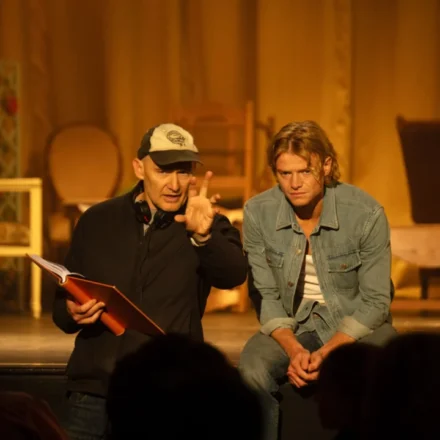
It is an acknowledgement of the massive shadow cast by Keanu Reeves’ legendary assassin, and a preemptive explanation for the show’s abbreviated title. Kat Sandler, the visionary behind the new series, is clearly aware of this confusion. By stripping the title down to "Yaga," the show attempts to pivot away from hyper-stylized action and toward the murky, ancient roots of Slavic folklore. However, as the series unfolds across its eight-episode run, the title begins to feel less like a deliberate stylistic choice and more like a metaphor for the show itself: incomplete, elusive, and ultimately lacking the necessary potency to fully entrance its audience.
Main Facts: A Genre-Defying Mismatch
Adapted from Sandler’s own acclaimed play, Yaga serves as a reimagining of the Baba Yaga myth. Rather than a straightforward period piece or a high-fantasy epic, the series opts for a detective-driven mystery set in the moody, rain-swept Canadian countryside. The premise is intriguing: the legendary witch—a figure historically depicted as either a kindly grandmother or a child-eating terror—is woven into a modern-day investigation involving the disappearance of a wealthy heir.
Despite its premise, Yaga finds itself trapped in a stylistic limbo. It lacks the visceral, sustained dread required to succeed as a horror series, yet it fails to provide the complex, labyrinthine plotting necessary to anchor a compelling detective procedural. It leans heavily on traditional crime drama tropes, stretching its central whodunit thin over a series of half-hour installments that often feel as though they are merely stalling for time.

Chronological Breakdown: The Disappearance of Henry Park
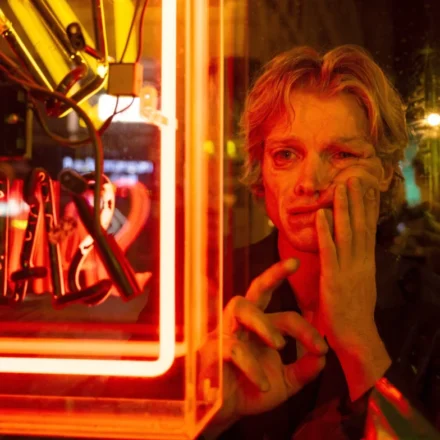
The narrative kicks off with the sudden disappearance of Henry Park, the scion of a prominent family fishing empire. Played by Hudson Williams, Henry is a quintessential small-town "bro," a man defined more by his extravagant parties than his professional contributions. Williams pulls double duty in the series, also portraying Logan, Henry’s roommate and a mirror image of his own personality.
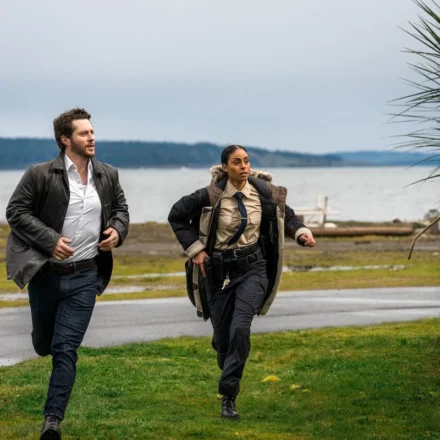
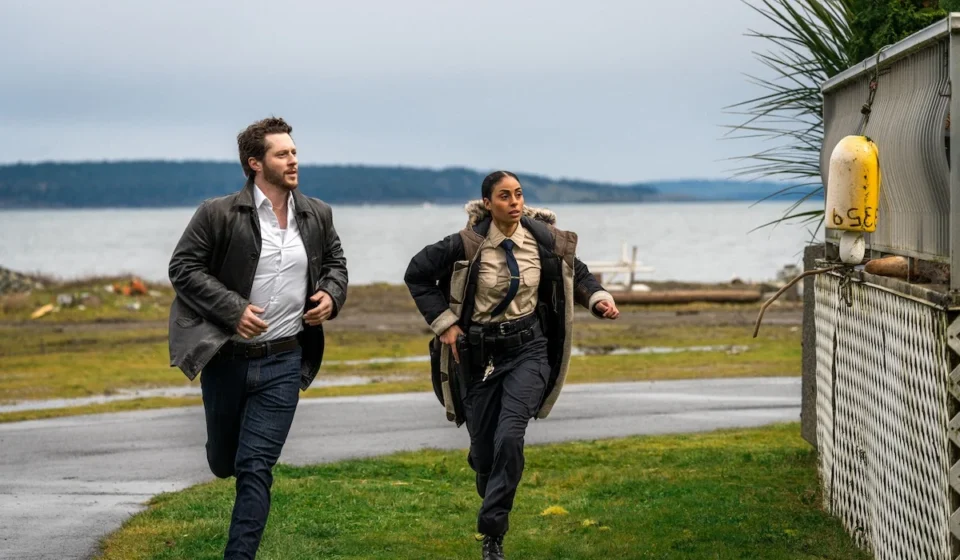
The investigation introduces us to our central duo: Carson (Clark Backo), a by-the-book local officer whose personal life remains frustratingly opaque, and Rapp (Noah Reid), a private investigator hired by the Park family. The dynamic is designed to be antagonistic—the rigid, local law enforcement versus the arrogant, jet-setting investigator. When Rapp arrives at the scene via helicopter, clad in an out-of-place urban ensemble of leather and skinny ties, the friction is immediate. While the series attempts to position Rapp as a "cool," maverick investigator, the audience is quickly invited to view him through Carson’s eyes: as an insufferable, over-privileged interloper.
As the chronology progresses, the investigation meanders through the predictable beats of small-town secrets. Rapp ignores protocol, pursues his own reckless leads, and manages to charm the local women, much to the chagrin of the audience. The pacing feels sluggish, as the show spends an inordinate amount of time establishing Rapp’s "bad boy" appeal, failing to realize that this archetype has long since exhausted its welcome in contemporary television.
Supporting Data: Character Dynamics and Performative Archetypes
The cast of Yaga features several seasoned performers, most notably Carrie-Anne Moss, who plays a professor with an obsession for anatomy—and a book titled Sexy Bones to her name. Moss brings a necessary gravity to her scenes, acting as a beacon of intrigue in an otherwise hollow narrative. Yet, even her presence is hampered by the show’s inability to integrate its supernatural themes with its terrestrial investigation.

The chemistry between Backo and Reid is meant to be the show’s heartbeat, but the writing leaves them stranded. Carson is written as a blank slate, a character who lacks the interiority to challenge Rapp’s toxic energy effectively. Without a strong, grounding force in the lead, the show’s attempts at subtext—the commentary on the historical persecution of women and the danger of "bad men with good hair"—fall flat. These themes are introduced with earnest intent, but they are never given the room to breathe, feeling more like buzzwords than the foundation of a cohesive story.
Official Responses and Creative Intent
In early interviews regarding the adaptation of her play, Kat Sandler emphasized the desire to explore the duality of the witch archetype—the tension between the "helper" and the "monster." The series does, at times, capture this tension. The characters are presented as enigmas, their motivations oscillating between genuine assistance and sinister manipulation.
However, the "official" output of the show—its promotional material and its pilot episodes—suggests a tonal confusion that the creative team never quite resolves. By attempting to marry the dark, fairy-tale elements of the Baba Yaga legend with a gritty, modern-day murder mystery, the show ends up diluting both. The horror is too tepid, and the mystery is too derivative. When the series attempts to lean into its feminist underpinnings, it does so with a heavy hand, lacking the narrative nuance required to make those points land with the force they deserve.
Implications: A Cautionary Tale for Genre Hybridization
The failure of Yaga to find its footing has broader implications for the current landscape of television production. We are living in an era where "genre-bending" is the standard, with streaming platforms clamoring for high-concept premises that can be easily marketed. However, Yaga serves as a stark reminder that a strong concept is not a substitute for rigorous character development and tight, disciplined plotting.

When a show spends seven of its eight episodes pretending that the answer to its mystery won’t involve the very supernatural elements it teased in the opening, it loses the trust of its audience. By the time the viewer reaches the final act, the "double, double toil and trouble" of the finale feels unearned rather than cathartic.
Furthermore, the casting of Noah Reid—an actor capable of immense depth—as a one-dimensional, cocksure investigator feels like a missed opportunity. If the show intended to deconstruct the "bad boy" archetype, it failed to provide enough distance between the character and the trope to make the critique clear. The audience is left waiting for a "comeuppance" that feels perpetually delayed, leaving us with a protagonist who is more frustrating than compelling.
Ultimately, Yaga is a series of incantations without the ensuing magic. It has all the ingredients—a legendary myth, a talented cast, and a moody setting—but it lacks the alchemy required to bring them together. It is a show that invites us to look for depth in the shadows, only to find that the shadows are as hollow as the people casting them. As it stands, Yaga remains an interesting experiment that ultimately fails to cast a spell, leaving viewers to wonder what might have been had the show dared to be as strange and dangerous as its titular inspiration.
Grade: C
Yaga premieres Friday, October 23, on AMC+ with two episodes. New episodes will be released weekly through the two-episode finale on Friday, November 27.