
As the calendar turns toward the final quarter of the year, the horror genre often pivots to seasonal themes. This year, director Kevin Lewis—best known for the cult-hit Willy’s Wonderland—attempts to gift audiences a dark, holiday-themed romp with Christmas at the Kringles. Arriving in theaters on October 30th via Briarcliff Entertainment, the film promises a twisted suburban nightmare, but as the final credits roll, it becomes clear that this particular package is more aesthetic than substance.
Despite a star-studded comedic cast, the film ultimately serves as a cautionary tale about the dangers of over-committing to a concept that lacks the narrative muscle to support its own runtime.
Main Facts: A Suburban Nightmare Gone Sour
At its core, Christmas at the Kringles attempts to satirize the "over-the-top" suburban holiday enthusiast—the neighbor who turns their front lawn into a blinding, neon-lit testament to seasonal excess. Written by Zack Imbrogno, the screenplay follows Mark (Ron Livingston), a man whose move to the suburbs with his wife, Julie (Rachel Bilson), and son, Bobby (Jack Jewkes), is intended to save his fraying family life.
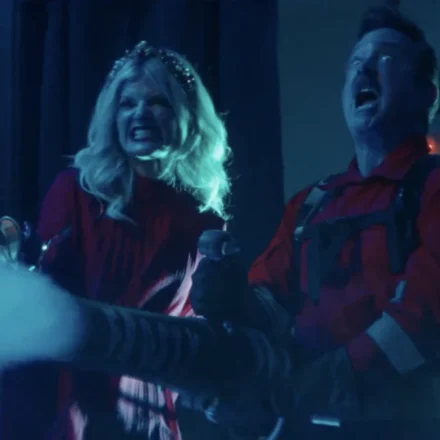
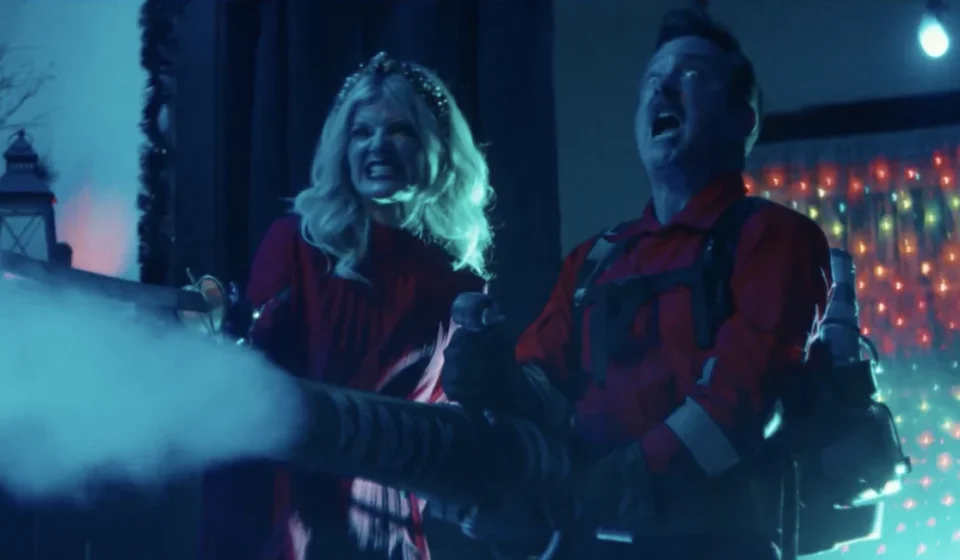
The trouble begins immediately upon their arrival. Their new neighbors, Nick (Thomas Lennon) and Carol (Thomas Myrin) Kringle, maintain a household that exists in a perpetual state of yuletide celebration. The irony, of course, is that beneath the layers of tinsel and relentless cheer lies a homicidal streak. The film positions itself as a genre-bending comedy-horror, but it frequently falters, failing to lean hard enough into the horror elements to be frightening, or the comedic elements to be truly side-splitting.

Chronology of a Failed Festivity
The narrative arc of Christmas at the Kringles is, in many ways, as predictable as a holiday Hallmark movie, albeit with significantly more blood.
- The Arrival: The film opens with the protagonists moving into a new neighborhood, setting the stage for the initial culture clash between the cynical, work-obsessed Mark and the hyper-optimistic Kringles.
- The Inciting Incident: As Mark’s family life continues to deteriorate due to his neglect and lack of transparency, the Kringles step in to fill the void. Nick’s performative generosity—arriving in a Santa suit to provide gifts when Mark fails—is the hook that draws the family into the Kringles’ orbit.
- The Investigation: Realizing something is fundamentally wrong, Mark aligns with two eccentric neighbors: a disgraced member of a secret society of mall Santas (Rob Riggle) and an unemployed basement-dweller named Daryl (Donald Faison).
- The Climax: When the Kringles kidnap his family on Valentine’s Day, Mark is forced into a confrontation that attempts to mirror the chaotic energy of films like The Burbs, though it lacks the sharp wit and cohesive direction of Joe Dante’s classic.
Supporting Data and Production Analysis
The strength of Christmas at the Kringles—what little exists—is undoubtedly its cast. Kevin Lewis has assembled a group of performers who possess a natural, infectious comedic rhythm. Thomas Lennon is particularly noteworthy, fully embracing the "madman" archetype with a manic energy that provides the film’s only genuine sparks. Arden Myrin serves as a perfect foil, blending the "joyful Christian mom" persona with a cold, cutthroat demeanor that provides the film’s most unsettling moments.
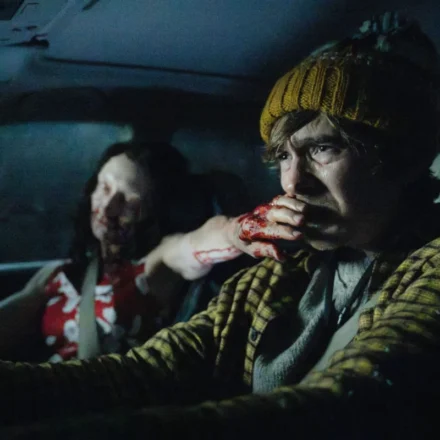
However, the production design and script fail to capitalize on this talent. While the film uses Dutch angles and heavy neon atmospherics to create a sense of unease, these stylistic choices feel borrowed rather than earned. The "horror" is remarkably sanitized. An early, promising sequence involving a woman being impaled by a Christmas tree sets a high bar for gore that the rest of the film refuses to meet. By the second act, the movie abandons the visceral for the expositional, getting lost in a convoluted backstory involving a "secret society of mall Santas" and bizarre, unnecessary subplots regarding cryptocurrency scams.
Thematic Implications: The Burden of Forced Joy
One of the most persistent themes in Christmas at the Kringles is the critique of forced performative happiness. The word "joy" is repeated with such frequency that it loses all meaning, serving as a blunt-force metaphor for the film’s own struggle to find an authentic identity.

The Kringles are not just killers; they are symbols of the modern, hollow suburban experience where image and aesthetics are curated to mask rot. The film posits that when joy is forced—when it is a product to be consumed rather than a feeling to be experienced—it becomes a weapon. Yet, this commentary remains at the surface level. The script teases a deeper exploration of the "scammer" mentality prevalent in modern society, but fails to tie it meaningfully to the horror plot.
The inclusion of bizarre visual elements, such as a "Christmas Gimp" and eerie elf masks, feels like a desperate attempt to create a cult aesthetic without providing the narrative substance to back it up. It is a film that looks like a horror movie in the trailer but functions more like a sitcom with a few light stabbings thrown in to justify the genre label.
The Verdict: A Gift Not Worth Opening
Ultimately, Christmas at the Kringles serves as a reminder that a talented cast cannot salvage a script that doesn’t know what it wants to be. It is neither a sharp satire of holiday excess nor a terrifying slasher. It exists in a purgatory of "almosts."
For audiences hoping for a high-octane, gory, or even particularly clever holiday horror film, this release will likely prove disappointing. It is reminiscent of receiving a box of socks on Christmas morning—functional, perhaps, but entirely devoid of the excitement one hopes for when tearing into the wrapping paper.

Critical Summary:
- Strengths: A highly capable comedic ensemble who elevate the dialogue beyond its clunky source material; an effective, albeit brief, opening sequence.
- Weaknesses: A sprawling, nonsensical plot; a severe lack of horror payoff; excessive reliance on exposition over action.
- Final Assessment: Christmas at the Kringles is a hollow holiday treat. It provides enough quirky energy to keep the viewer awake, but the "roast" is dry, the gifts are underwhelming, and the "joy" feels entirely forced.
As the film hits theaters on October 30th, those seeking a true horror fix for the season would be better served looking toward more substantial fare. The Kringles may want to spread cheer, but they have managed only to spread boredom.