The Quiet Gravity of Sandra Hüller: Navigating Stardom, Sovereignty, and the Art of Refusal

Editor’s note: This interview was originally conducted during the 2026 Telluride Film Festival. MUBI releases “Fatherland” in select theaters starting Friday, October 23.
In the wake of two distinct tributes at the 2026 Telluride Film Festival, Sandra Hüller finds herself in a position few international actors ever achieve: a global icon who remains fiercely protective of the mundane. Following the whirlwind of festivals, Hüller retreated to the familiar cobblestone streets of Leipzig, Germany. There, she balances the demands of an international press tour with the quiet reality of raising a 15-year-old daughter and helming a local theatrical production.
Hüller, whose career trajectory has ascended from European arthouse darling to a household name, is currently undergoing a radical professional shift. Most notably, she has stepped away from theater acting, choosing instead to pivot toward directing. It is a decision rooted in the psychological toll of fame—a state of being "exhibited" that she finds increasingly at odds with the collaborative intimacy of the stage.

A Career Defined by Paradox
Since her breakout role in the 2016 comedy Toni Erdmann, Hüller’s filmography has been a masterclass in versatility. Her 2023 was a landmark year, featuring an Oscar-nominated performance in Justine Triet’s Anatomy of a Fall and a chilling, transformative turn as a Nazi wife in The Zone of Interest.
By 2026, Hüller solidified her status as a powerhouse capable of bridging the gap between high-concept European cinema and massive Hollywood blockbusters. Her recent output includes four distinct projects: two monochromatic European features and two tentpole studio films. She secured the Berlinale Silver Bear for her lead role in Markus Schleinzer’s Rose, where she portrayed a 17th-century war veteran living as a man. Shortly thereafter, she made her first foray into studio filmmaking as Eva Stratt in the Amazon/MGM blockbuster Project Hail Mary, followed by a powerful turn as Erika Mann in Pawel Pawlikowski’s Fatherland.
Chronology of a Master at Work
Hüller’s recent filmography illustrates a deliberate, almost tectonic, movement toward characters defined by profound moral ambiguity and physical endurance.

- 2023: The world watches as Hüller navigates the courtroom in Anatomy of a Fall and the horrific banality of evil in The Zone of Interest.
- Early 2026: Hüller earns critical acclaim for Rose, tackling the gender-bending constraints of a soldier in the Thirty Years’ War.
- Mid-2026: The global release of Project Hail Mary introduces Hüller to a massive, effects-driven audience, proving her capacity to anchor high-stakes science fiction.
- Late 2026: The release of Fatherland arrives as the crown jewel of her autumn schedule, highlighting her ability to play historical figures with a modern, unflinching gaze.
The Weight of History: "Fatherland"
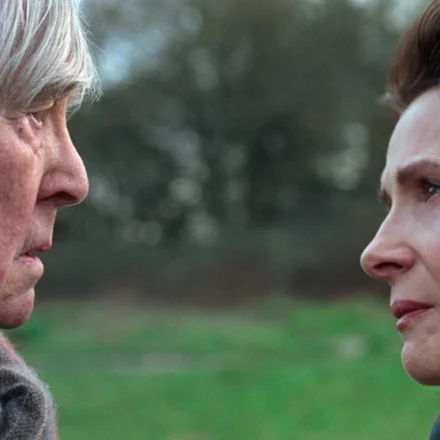
In Pawel Pawlikowski’s Fatherland, Hüller portrays Erika Mann, the daughter of Nobel laureate Thomas Mann. The film centers on a 1949 road trip across post-war Germany, where Erika acts as both assistant and guardian to her aging, ailing father.
For Hüller, the film is not merely a period piece; it is a profound exploration of privilege and moral responsibility. "What would you do if you were privileged?" Hüller asks during our conversation. "Would you use this privilege, or would you say, ‘I don’t care, I’ll stay here and watch everybody die’?"
The character of Erika is demanding—a race car driver, journalist, and author who essentially functions as the architect of her father’s final years. Hüller’s performance is marked by a physicality that mirrors the heavy, manual operation of the era’s vehicles. "It takes some muscle," she notes of the vintage Buick used in the film. That physical strain, combined with her naturally androgynous and intelligent screen presence, creates a character that feels both grounded and ethereal.

Bridging Hollywood and the Arthouse
Perhaps the most surprising turn in Hüller’s 2026 schedule was her role in the studio blockbuster Project Hail Mary. Many in the industry wondered if a performer known for her raw, intimate portrayals would struggle with the rigid, green-screen nature of a major studio production.
Instead, Hüller found an unexpected level of creative liberty. "I was surprised that there was so much freedom," she admits. "I would have expected it to be much more formal and more delivery-oriented, but it wasn’t. Chris [Miller] and Phil [Lord] are playful, open directors."
Working alongside Ryan Gosling, Hüller even managed to integrate her own musical inclinations into the film, suggesting Harry Styles’ "Sign of the Times" for a pivotal karaoke scene. This ability to inject personal, authentic emotional beats into massive, corporate-backed stories is exactly what sets Hüller apart from her contemporaries.

The Shift to Directing
Hüller’s retreat from acting on stage is perhaps the most significant revelation of this interview. Having been part of a theater collective for decades, the shift in her public image has made the stage feel like an unsafe environment.
"Because the reception of my appearance on stage has changed through this public eye, I didn’t feel safe on stage anymore," she explains. The "exhibited position" of a celebrity is incompatible with the vulnerability required for experimental theater. By moving behind the camera as a director, she has reclaimed her agency. It is a temporary retreat—or perhaps a permanent evolution—that highlights her desire to control the narrative of her own career.
Implications for the Future: The Art of Refusal
As award season approaches, Hüller faces the inevitable pressure of the industry machine. Yet, she remains famously difficult to manage, frequently turning down projects that lack "emotional value."

"I roll my eyes when I have to bring emotional value to a project that doesn’t genuinely have it," she states bluntly. "If a script isn’t good, but I’m asked to make it good with acting, that’s something that I’m not here for."
This uncompromising stance extends to her promotional obligations. While she acknowledges the need to support her films, she rejects the studio-mandated notion that her presence at every press day is a requirement of her existence. "All of these things come with responsibility," she says. "It’s hard for me to step away from that, like when a studio says, ‘But it’s your responsibility to be at that press day.’ No, it’s not."
Supporting Data and Future Projects
Looking ahead, Hüller is set to portray the German artist Wolfgang Herrndorf in Maria Schrader’s Work And Structure. This project, which sees her playing a man, further explores the androgyny she has utilized throughout her career. Additionally, she is attached to A.G. Iñárritu’s Digger, alongside Tom Cruise.

When discussing her work with Cruise, Hüller is respectful but guarded. She notes his intense focus, describing a man and a director (Iñárritu) who "chose each other" for the project. It is a testament to her professional maturity; she appreciates the craft and the energy of the set, but she does not conflate the work with her own identity.
Conclusion: The Sovereign Performer
Sandra Hüller occupies a rare space in the contemporary cultural landscape. She is an actress who can hold her own against Hollywood’s biggest stars while simultaneously directing a play in a provincial German theater. She is, in every sense of the word, a sovereign performer.
As she moves into the next phase of her career—navigating the expectations of blockbuster stardom while guarding the sanctity of her private life—Hüller remains a beacon of artistic integrity. She is not interested in being a star; she is interested in the truth of the human condition, whether it is found in the cockpit of a 1949 Buick or a high-tech laboratory at the end of the world. For Hüller, the work is the only thing that matters, and she will decide, on her own terms, when the curtain falls.