The Reconstruction of Memory: Pawel Pawlikowski’s "Fatherland" and the Anatomy of a Post-War Elegy

[Editor’s Note: This interview was originally conducted during the 2026 Cannes Film Festival. MUBI releases "Fatherland" in select theaters starting Friday, October 23, 2026.]
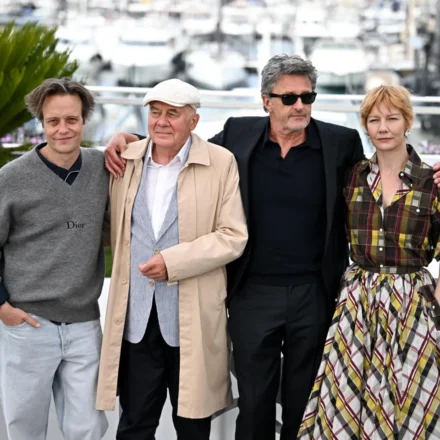
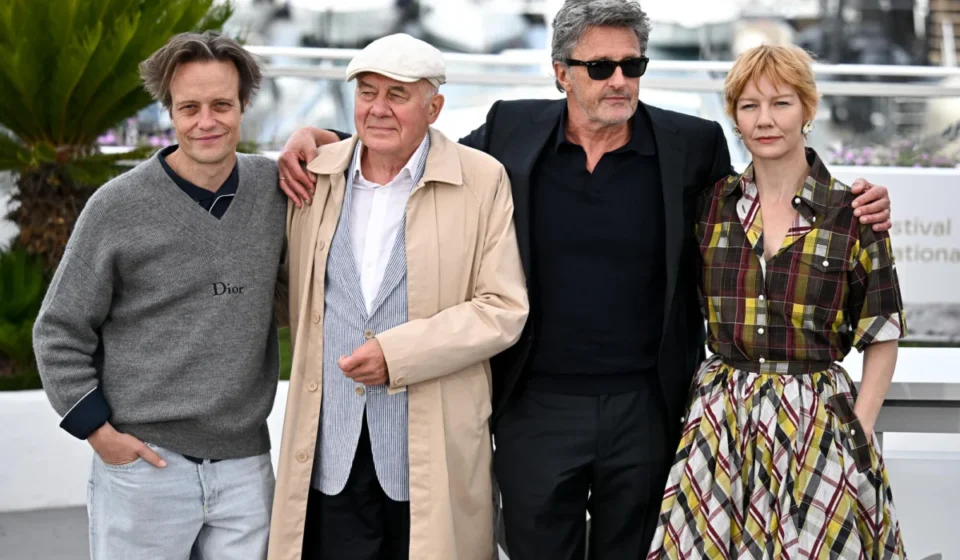
In the landscape of contemporary European cinema, few names carry the weight and aesthetic precision of Paweł Pawlikowski. Having already secured his place in the pantheon of auteurs with the Academy Award-winning Ida (2013) and the visually haunting Cold War (2018), Pawlikowski returns to the screen with his seventh feature, Fatherland. The film, which arrived at the 2026 Cannes Film Festival with the thunderous expectations surrounding a master at work, has already sparked intense discourse. Critics and audiences alike are positioning the film as a definitive contender for the festival’s top honors, with star Sandra Hüller—fresh off her Best Actress win at the Berlin Film Festival for Rose—viewed as the clear frontrunner for another major acting prize.
Fatherland is not merely a film; it is a meticulous excavation of post-World War II German trauma, viewed through the fractured lens of the Mann family. By focusing on Nobel Laureate Thomas Mann (Hanns Zischler), his daughter and staunch protector Erika (Sandra Hüller), and his son, the troubled intellectual Klaus (August Diehl), Pawlikowski has created a work that feels both historical and urgently contemporary.
The Unintentional Trilogy: A Study in Black and White
Pawlikowski has, by his own admission, fashioned an accidental trilogy. Like its predecessors, Fatherland utilizes a stark, high-contrast black-and-white palette and the intimate, boxy constraints of the Academy ratio. These technical choices are not mere stylistic flourishes; they are thematic anchors. "It wasn’t a calculated decision," Pawlikowski admits during an interview at the J.W. Marriott in Cannes. "But when you deal with European history, with the collapse of identity and the heavy weight of the past, the visual language tends to lean toward this kind of austerity. It connects the pieces of this period—the 1940s and 50s—in a way that feels organic."

The film confronts the "collapse of Europe" by anchoring its grand, historical scope to the volatile, triangular intimacy of the Mann family. While Italian producers initially approached the director with the intent of adapting Colm Tóibín’s fictionalized biography of Thomas Mann, Pawlikowski pivoted. He did not want to make a traditional biopic. Instead, he sought to isolate a specific moment of transition—a "nugget" of history—that could serve as the foundation for a character-driven drama.
Chronology of a Disintegrating Dynasty
The narrative begins with a bravura five-and-a-half-minute, locked-off single take that immediately establishes the film’s tone. We see Klaus, naked and raw, sitting on the floor of a hotel room in Cannes, speaking on the phone to his sister, Erika. He is a man untethered, a drug-addicted intellectual twin grappling with a void of feeling. Erika’s mission is clear: she must extract her brother from his nihilistic stupor and convince him to join their father on a road trip across a broken Germany, where Thomas is set to receive the prestigious Goethe Prize.
"When is the last time you felt anything?" Klaus asks, a line that resonates through the remainder of the film’s duration.
The film follows their journey as they navigate a landscape scarred by conflict. Thomas Mann, the humanist intellectual, is depicted as a man trying to mend the soul of a nation that has effectively ceased to exist in the way he once knew it. Pawlikowski highlights scenes where Mann speaks to auditoriums of skeptical or indifferent citizens. "He’s like a boxer going into the ring," the director explains. "That’s his big entry. He’s trying to regenerate a belief system in a one-man operation, attempting to transcend the ideological division that has shattered the continent."

The tension reaches a breaking point with the historical suicide of Klaus, a tragedy that Pawlikowski integrates into the family narrative as a pivotal, psychological rupture. The father’s absence from the funeral becomes the emotional fulcrum upon which the final act of the film balances.
The Architecture of Character and "Nepo-Baby" Realities
A striking sequence in the film occurs at a high-society cocktail party in West Germany. Erika encounters her ex-husband, an actor with Nazi ties, who accuses her of having lived a life of privilege facilitated by her father’s fame and wealth. When Hüller’s character responds with a visceral slap, the audience is tempted to view it as an act of political defiance.
"Everyone assumes she slaps him because he’s a Nazi," Pawlikowski notes, "but she slaps him because he hit a nerve. She slaps him because he pointed out that she was a ‘nepo baby.’ Without the father, they would have had no money, no contacts, none of this lifestyle. They lived on the Riviera, they were hyper-educated, and they held immense social capital. The irony of their anti-fascist stance is inextricably linked to their privilege."
Hüller’s performance is nothing short of transformative. Pawlikowski describes the filming of the slap scene as a moment where the boundary between actor and character dissolved. "She doesn’t seem to be acting. She has this fake smile, and then in her eyes, you see the realization. There was one take where the truth came to the surface in a way that wasn’t scripted. It mysteriously unfolded."

Technical Mastery: The "Primitive" Camera
Cinematographer Łukasz Żal, a longtime collaborator of Pawlikowski, brings a renewed sense of movement to Fatherland. However, this movement is never gratuitous. "Everything results from the material," Pawlikowski insists. "I don’t impose a style. It’s a road movie, but the camera moves only when it has to. It’s super primitive, like in silent films. When the camera moves, it is only to reach somewhere interesting."
One of the film’s most impressive technical feats is the creation of a "war-torn" environment without relying on archival footage. The production team utilized a damaged street in a region of Poland that was once German territory. By building ruins in the foreground and utilizing digital painting to remove modern elements like satellite dishes and contemporary windows, they created a tactile, authentic backdrop for the Manns’ travels. The goal, according to the director, was to contrast a "big vista" with the "small relationship" of the father and daughter inside their giant, cumbersome Buick.
Implications: The Broken Organ and the Legacy of Loss
As the film reaches its conclusion in Weimar, the Manns step away from their official itinerary to visit a ruined church. Inside, they encounter an organ being repaired. The sequence—featuring a flawed, broken, yet powerful rendition of a Bach chorale—serves as an elegy for the loss they have endured, particularly the death of Klaus.
"It’s a mutual understanding to see something that’s not official," Pawlikowski says. "It’s only more moving because the organ is broken. It’s bad, but it still works."

The implication of the film extends beyond the Mann family. It is a commentary on how we process historical trauma, how we turn our private grief into public art, and the inherent friction between the intellectual ideal and the reality of the human condition.
Looking Forward: An Awards Season Juggernaut
With the 98th Academy Awards approaching, the industry is already calculating the potential impact of Fatherland. Following recent rule changes regarding eligibility, there is significant chatter about Sandra Hüller potentially securing multiple nominations. Beyond Fatherland, her work in Project Hail Mary and the forthcoming Digger places her at the center of the conversation for the most prestigious awards in the industry.
Yet, for Pawlikowski, the accolades are secondary to the "accidental organic" nature of the filmmaking process. He emphasizes that the beauty of cinema lies in those rare moments—like the scene in the church—where the actors’ personal grief and the narrative requirements align. "That’s the beauty of cinema," he concludes. "When you have good photography and within it, you have things that seem to unfold mysteriously, rather than like pressing buttons."
Fatherland stands as a testament to Pawlikowski’s ability to find the universal in the deeply specific, a film that looks back at the wreckage of the past to find a haunting, melodic resonance for the present.